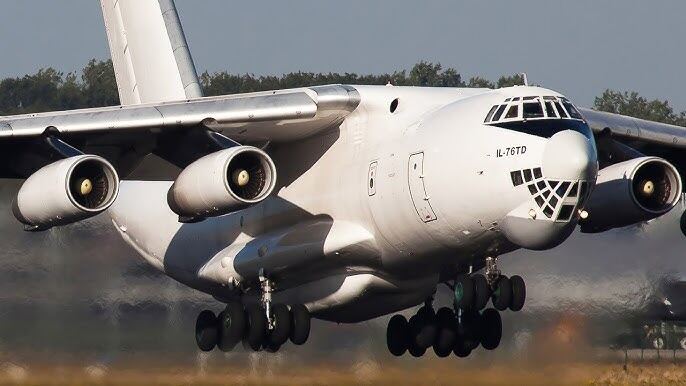
Charter aircraft taking off on an emergency time-critical mission
    24/7 Operations Desk · Active Now

    Emergency Aviation · 24/7 · Wheels-Up in Hours

    Emergency Air Charter: When the Schedule Has Already Run Out

    Time-critical air freight: AOG aircraft on ground, urgent passenger charter, evacuation and disaster relief, operated by an in-house desk staffed for the situations where the next scheduled service is not soon enough.

    Emergency air charter · time-critical air freight · urgent aircraft charter · AOG response · disaster relief aviation · evacuation and repatriation · humanitarian airlift, 24/7.

    <60 min
    Quote turnaround
    4-24h
    Typical wheels-up
    Global
    Aircraft access
    24/7
    Operations desk

    What emergency air charter actually means

    Emergency air charter is the dedicated hire of an aircraft for a mission where time is the binding constraint. The categories are different, cargo, passenger, medical, humanitarian, but the operational pattern is the same. The next scheduled service is not soon enough; the load, route or situation does not match what the scheduled network can absorb on the day; and the cost of waiting exceeds the cost of chartering an aircraft.

    The work falls into four recurring profiles. Time-critical air freight covers AOG aircraft on ground, production line stops, recall, marine industry deadlines and high-value spares. Urgent passenger charter covers evacuations, repatriations, government movements and crisis response teams. Medical evacuation covers ICU air ambulance, repatriation and remote retrieval. Disaster relief and humanitarian airlift cover the early phases of a natural disaster, conflict or public health response.

    Aviall Group's emergency aviation desk is staffed 24 hours a day. Quotes are returned in under an hour. Typical wheels-up is 4-24 hours from confirmation, and faster where positioned aircraft and pre-cleared permits allow.

    Time-critical air freight and AOG

    Time-critical air freight is the most common emergency charter category. AOG (aircraft on ground), engines, landing gear, APUs and large rotables, is the canonical example. A grounded passenger or cargo aircraft costs the operator hundreds of thousands of dollars per day and cascades into network disruption, missed connections and crew duty problems. The clock is running from the moment the maintenance message reads.

    Beyond AOG, time-critical air freight is the standard answer for production line stops in automotive and electronics manufacturing, recall response, marine industry deadlines (vessels in port for limited windows), high-value spares for mining, oil and gas, and emergency replenishment for retail and pharmaceutical inventory imbalances.

    We operate against a sub-60-minute quote standard and a 4-24 hour wheels-up window for time-critical freight. The aircraft is sized to the shipment, a 737F is often the right answer for express AOG; wide-body freighters for larger spares and consolidations.

    Urgent passenger charter, evacuations, repatriation and crisis response

    Urgent passenger charter is the operational answer when a published schedule cannot clear a group out of a country in the time available. Political instability, natural disaster, a closed airport or a sudden volume that exceeds available scheduled seats all create the same problem.

    We operate evacuation and repatriation charters from light executive aircraft for small VIP and dignitary movements through to high-density wide-body configurations exceeding 400 passengers per aircraft for large-scale evacuations. The work is operated with the appropriate diplomatic, customs and security coordination at both ends.

    Crisis response team movements, incident management, security, medical and engineering teams deploying into a developing situation, are operated against the same standard with the additional readiness for unpredictable infrastructure and changing clearance requirements at the destination.

    Disaster relief and humanitarian airlift

    Disaster relief aviation is operated against the same operational standard as commercial cargo charter, with additional readiness for damaged or unfamiliar infrastructure at the destination. The first wave of a response typically requires outsize and heavy lift aircraft moving tents, water purification, food, medical supplies, vehicles, generators and shelter materials into a damaged airport with limited apron space and reduced ground equipment.

    Subsequent waves transition to wide-body and narrow-body lifts as the operation matures and the destination's handling capacity recovers. We work with UN agencies, government foreign affairs and disaster response teams, and major NGOs. Pre-positioned standing agreements and pre-cleared flight permits at common diversion fields shorten the window from request to first wheels-up.

    What 'emergency' actually changes about how a charter is operated

    An emergency charter is operated to the same regulatory and safety standard as any other charter. What changes is the parallelism of how the threads are worked. Aircraft selection, crew duty position, overflight and landing permits, customs and immigration arrangements, ground handling and fuel at both ends, and any specialised cargo or clinical configuration are worked simultaneously rather than sequentially.

    Pre-existing relationships with operators, handlers, fuel suppliers and after-hours customs and immigration desks are what make this possible. Standing agreements, pre-filed permits at common diversion fields and a 24/7 desk with the authority to commit the operation are the difference between a four-hour and a twenty-four-hour wheels-up window.

    • Sub-60-minute indicative quote with two or three aircraft options
    • Operations desk staffed 24 hours a day with the authority to commit the mission
    • Standing relationships with operators, handlers, fuel and customs at the airports the work goes through
    • Pre-cleared and pre-filed permits at common diversion fields across Asia-Pacific
    • End-to-end mission ownership, one number, one team, single point of accountability

    How emergency charter is priced

    Emergency charter is quoted as a mission price covering aircraft hire, crew, fuel, navigation and overflight permits, landing and ground handling at both ends, and any specialised handling required. There is no published rate, what you see is the cost of operating the aircraft for the rotation under the time pressure required.

    Indicative ranges: short-haul AOG and time-critical freight typically sits in the low to mid tens of thousands; long-haul wide-body emergency cargo in the mid-six figures; air ambulance from the low tens of thousands intra-country to the mid-six figures for long-haul international repatriation; large evacuation lift in the mid-six figures and above depending on aircraft and routing.

    Why emergency aviation needs an operator-grade desk

    Emergency aviation rewards a flat, accountable operating model. The customer needs to reach a controller who can scope the mission, source aircraft and commit the operation in a single conversation, not pass the request through multiple layers before a decision can be made.

    Aviall Group operates a single, in-house operations desk with the authority and the relationships to commit emergency missions directly. One number, one team, one mission, the model emergency aviation actually requires.

    What's covered in every emergency charter

    Sub-60-Min Quote

    Indicative price and aircraft options inside an hour. Firm price and slot strategy follow within hours.

    4-24 Hour Wheels-Up

    Typical wheels-up window. Faster where positioned aircraft and pre-cleared permits allow.

    24/7 Operations Desk

    Staffed continuously with the authority to commit the mission at any hour, in a single conversation.

    Pre-Cleared Permits

    Standing permits and overflight clearances at common diversion fields across Asia-Pacific.

    Operator Relationships

    Direct relationships with operators, handlers, fuel and customs at the airports the work goes through.

    Mission Ownership

    One number, one team, door-to-door. From first call through to wheels-down and clinical / cargo handover.

    Urgent charter? Our ops desk is staffed 24/7.

    Aircraft options within the hour and a written quote with an indicative wheels-up window.

    Mission examples · Illustrative

    What this looks like in operation

    Representative mission profiles drawn from recurring work. Identifying details — operators, hospitals, routes, aircraft tail numbers, are intentionally omitted.

    AOG · Engine change

    Spare engine to a wide-body stranded overseas

    A carrier needed a spare engine moved to a wide-body grounded at a foreign hub. Aviall sourced a freighter capable of the engine and stand, completed DG documentation and ran continuous flight-following with the airline's tech ops centre.

    Outcome

    Engine delivered inside the carrier's recovery window; aircraft restored to service the next operational day.

    Production line stop

    Plant component on a single-shipper aircraft

    A manufacturer faced an unplanned production line stop awaiting a single component held overseas. Aviall positioned a regional freighter sized to the part, completed export and import clearance pre-flight and ran door-to-door from the supplier dock.

    Outcome

    Component on the production floor inside 24 hours of first call; line restarted next shift.

    Recall · Brand-critical

    Replacement stock into national distribution

    A consumer brand managing a public recall required replacement stock moved into national distribution centres on a hard window set by retailer commitments. Aviall sequenced multiple rotations into separate gateways inside a single 24-hour cycle.

    Outcome

    Replacement stock on shelf within retailer-set deadlines; recall window closed on time.

    Disaster · Surge response

    Initial response payload into a damaged airfield

    Following a sudden-onset event, a response agency needed search, shelter and medical payload into a regional airfield with reduced services. Aviall identified an aircraft cleared for the strip and coordinated ground handling and refuelling support.

    Outcome

    First payload on the ground inside the agency's 24-hour benchmark; sustained rotations followed.

    Diplomatic · Time-critical

    Government cargo on a discreet rotation

    A government end user required a sensitive cargo movement under a tight window with controlled handling. Aviall ran a single-shipper rotation with security plan filed at both ends and a single point of accountability.

    Outcome

    Movement completed inside the window with full chain-of-custody documentation.

    Marine · Class society

    Critical part to a vessel awaiting class clearance

    A vessel was held in a foreign port awaiting a single critical part required for class clearance. Aviall ran an express charter sized to the consignment with a courier on the aircraft to release the part directly to the master at the gangway.

    Outcome

    Vessel cleared and underway inside the charterer's laycan window.

    Emergency charter, operational benchmarks

    Quote Turnaround
    Typically under 60 minutes for indicative pricing with aircraft options
    Wheels-Up Window
    4-24 hours from confirmation. Faster where positioned aircraft and pre-cleared permits allow
    Aircraft Range
    737F regional through to AN-124 outsize. Light jet through to wide-body for passenger and medical.
    Region of Strength
    Asia-Pacific, Trans-Pacific and Australia-Asia. Worldwide repatriation and global cargo.
    Operations Desk
    Staffed 24 hours a day with in-house authority to commit the mission directly.
    Specialised Handling
    DG, oversize, pharma cool-chain, ICU clinical, isolation pod, high-density evacuation configuration

    FAQ

    Frequently Asked Questions

    Quote inside an hour. Typical wheels-up is 4-24 hours from confirmation depending on aircraft positioning, slots and any specialised handling. Faster windows are achievable where positioned aircraft and pre-cleared permits allow, sub-4-hour wheels-up is not unusual on AOG and medical missions in our core operational region.

    Why operators, brokers and end clients keep calling back

    Credibility built on operational discipline, not marketing

    "Aircraft on the ramp before our internal recovery brief was finalised. That kind of forward leaning is what an AOG actually needs."

    — Tech ops controller · International carrier

    "Single point of accountability from the first call to door delivery. We weren't chasing updates, they were ahead of us the whole way."

    — Supply chain lead · Manufacturing major

    "First payload on the ground inside our 24-hour benchmark, then sustained rotations every day after. Exactly what surge response demands."

    — Logistics coordinator · Humanitarian agency

    Need an emergency charter launched?

    Call our 24/7 operations desk. The desk has authority to commit the mission and will return aircraft options and indicative pricing inside an hour.

    Call 24/7 Ops · 1800 796 769

    Prefer to talk? Call 1800 796 769 — answered 24/7.