Cargo charter and scheduled commercial airfreight are not competing products. They serve different parts of the same shipping problem. Most cargo should move on scheduled freighters or passenger belly capacity, because that is what the global airfreight network is built for. A small but operationally important percentage of cargo should move on a dedicated charter, because scheduled freight cannot meet the payload, the dimensions, the deadline, the cargo type or the route. Knowing which is which is the entire decision.
This guide is the practical framework Aviall's cargo desk uses when a forwarder calls in undecided. It is not an argument for charter; in roughly one in three first calls, the desk advises the customer that scheduled freight is the better answer.
What scheduled commercial airfreight does well
Scheduled airfreight is fast, frequent and densely networked across the major global trade lanes. It is the right tool when the cargo fits standard ULDs, the deadline is measured in days, the route is well served by major carriers, and the cargo is general or pharma-cool-chain at a manageable size. Pricing is per-kilo and reflects the carrier's ability to pool many shippers on the same flight.
For most general cargo under five tonnes on a major lane, scheduled freight will land cheaper, faster door-to-door and more reliably than a charter. The serious cost of a charter on that profile is almost never justified.
When cargo charter becomes the right tool
Charter becomes the right answer when at least one of the following is true:
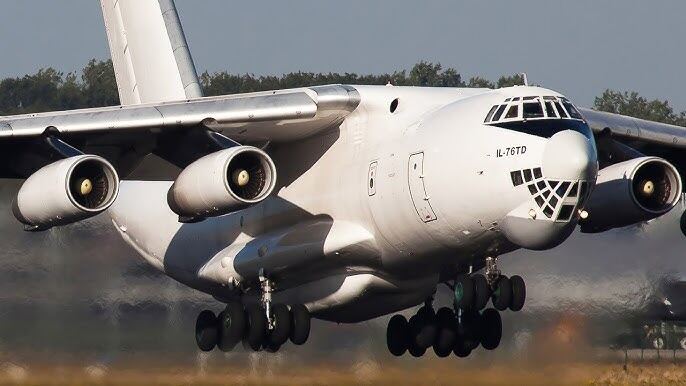
The cargo is too large for scheduled freighters. Anything over standard pallet dimensions, single pieces beyond what a 777F or 747F can take, or shipments requiring a 747 nose-loader or AN-124 outsize freighter is charter territory by default.
The deadline is too tight. If the scheduled freighter network cannot meet the required arrival time on any combination of available flights, charter becomes the only option. AOG, recall, production-stop and disaster-response cargo all sit here.
The route is not adequately served. Many remote mining, energy, defence and humanitarian destinations have no scheduled freighter service at all. Charter is the only realistic answer.
The cargo type requires single-shipper handling. Dangerous goods at scale, pharma cool-chain at full freighter volume, sensitive defence cargo, and certain high-value and high-IP shipments all fit here.
The customer needs operational control door-to-door. Charter gives a single point of accountability, a known aircraft, a known crew and a known timeline. Some shipments are worth that control even when scheduled freight could in theory have done the job.
The decision framework
When the cargo desk receives an enquiry that could go either way, it works through five questions in order:
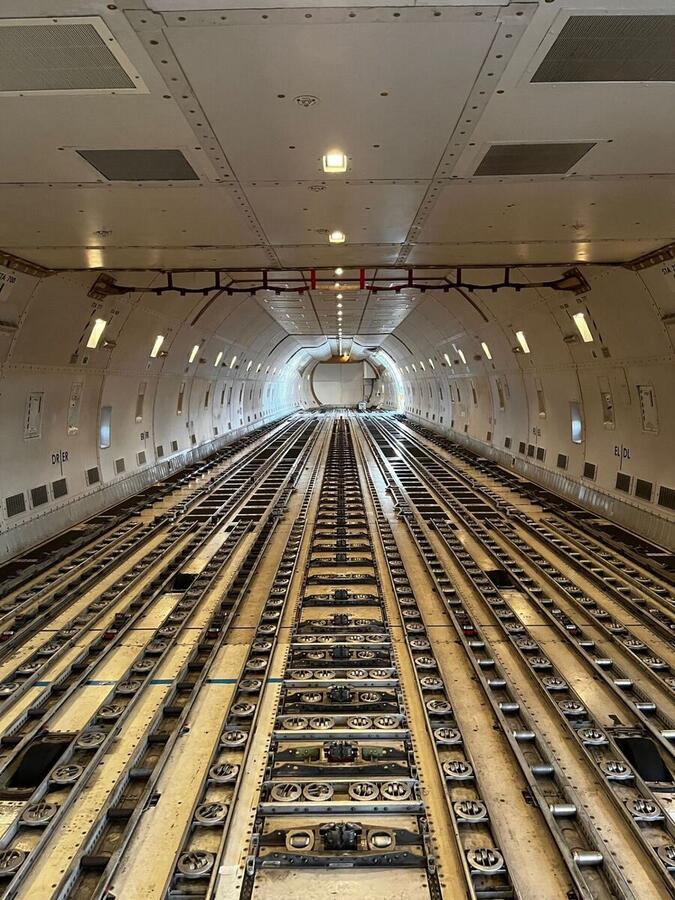
First: payload and dimensions. Does the shipment fit standard ULDs and standard pallet positions on a scheduled freighter? If no, charter is almost always the answer.
Second: deadline. Can the scheduled network meet the required arrival time? Build the actual itinerary including connection time, ground handling, customs and inland transport. If no, charter is the answer.
Third: route. Is there a credible scheduled freighter routing? If the only options involve three connections through marginal hubs, the operational risk often pushes the decision toward charter even when the headline price is higher.
Fourth: cargo type. Does the cargo require single-shipper handling for DG, pharma, high-value or sensitivity reasons? If yes, charter is normally the answer.
Fifth: cost. Only at this point is the actual price compared, and it is compared against the full cost of the scheduled alternative including expedite premiums, demurrage, lost production and any commercial penalties for missing the deadline. The like-for-like comparison rarely matches the headline.
Cost: what to expect
Scheduled airfreight on a major lane typically prices in the low single-digit USD per kilogram for general cargo, with surcharges for DG, temperature control and oversize. Cargo charter prices the whole aircraft. A 100-tonne 777F intercontinental charter at USD $400,000 works out at around USD $4 per kilogram if the aircraft is fully loaded, which is competitive with scheduled rates on premium lanes once expedite and operational risk are included.
The charter case is strongest when the cargo fills the aircraft or when the deadline removes scheduled freight from the comparison. The charter case is weakest when the cargo is small relative to the aircraft and the deadline allows the scheduled network to do the job.
Common scenarios where charter is right
AOG and aircraft sustainment cargo where every hour of downtime costs the operator more than the charter. Mining and resources project cargo into remote sites with no scheduled freighter service. Disaster response cargo into damaged or austere strips. Outsize project cargo for energy, defence and infrastructure. Time-critical pharma cool-chain at scale. Single-shipper DG movements above scheduled network thresholds. Live animals at scale, including racehorses and breeding stock. Humanitarian and government emergency cargo.
Common scenarios where scheduled freight is right
General cargo under five tonnes on a major trade lane with a deadline of three or more days. Small DG shipments within scheduled network DG limits. Routine pharma cool-chain at small to medium scale. Most e-commerce parcel volume below full-freighter scale. Anything where the customer's instinct is to charter purely because they want it to feel faster, even though the scheduled itinerary actually meets the deadline.
Frequently asked questions
Is cargo charter always faster than commercial freight?
Door-to-door, often yes, but not always. Scheduled freight on a high-frequency lane with same-day connections can sometimes beat a charter that has to position into the origin from another airport. The honest comparison is on door-to-door time, not on flight time.
How much more expensive is cargo charter?
Per kilogram, charter is typically two to ten times more expensive than scheduled freight for general cargo. The multiplier collapses as the aircraft fills and as the deadline removes scheduled options. For an outsize or AOG mission, there is no per-kilogram comparison because scheduled freight cannot do the job at any price.
Can I split a cargo charter with another shipper?
Sometimes, through what is known as a part-charter or shared charter. Aviall arranges these where the timing and routing line up. They are less common than dedicated charters because they require two shippers willing to align on departure time and routing.
Does cargo charter work for dangerous goods?
Yes, and for many DG categories charter is the more practical option because scheduled freighters limit the quantities they will accept. Aviall holds full IATA Dangerous Goods capability across the commonly carried classes including Class 9 lithium. See cargo charter services for the full DG capability.