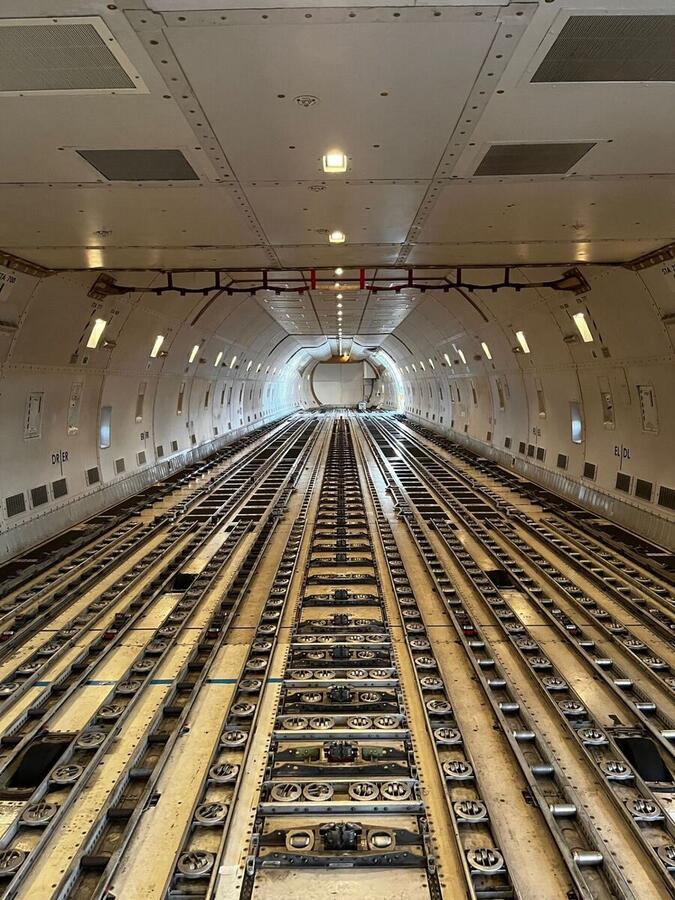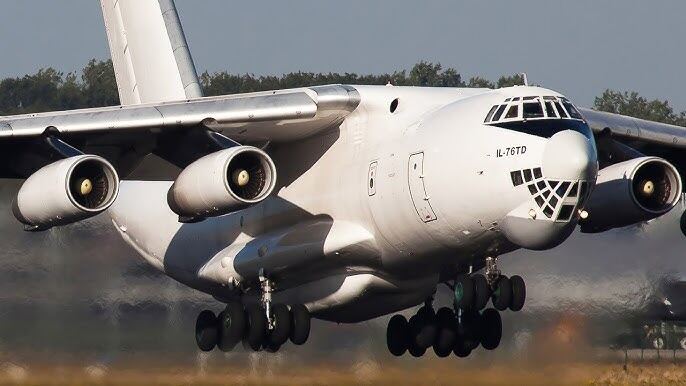
Urgent air freight in the mining and energy sectors is rarely about logistics in the abstract. It is about a specific piece of equipment that has failed and is stopping production, a piece of equipment that needs to be in place before the next shift cycle, or a regulatory requirement that must be met before operations can resume. The cargo desk's job is to compress the time between failure and recovery to the minimum the physics allows.
This article describes how urgent air freight is used in the resources sector, the cargo profiles involved, the aircraft choices, and the operational realities of flying into remote mining and energy sites. Aviall's urgent air freight charter service runs through the same 24/7 operations desk that handles AOG and other time-critical missions.
Why mining and energy charter so often
Three structural facts of the resources sector make urgent air freight a recurring requirement rather than an occasional event. Production downtime is expensive: a stopped truck, a stopped drill, a stopped processing line or a stopped platform translates immediately into lost output measured in tonnes, barrels or megawatt-hours. Sites are remote: many mining and energy operations are located hundreds or thousands of kilometres from the nearest major airport, and the road or sea alternatives take days to weeks. And equipment is heavy and specialised: many of the parts that fail are not stocked locally, are too large for scheduled belly freight, and require ground equipment to load and unload.
The combination means that a piece of cargo that costs USD $50,000 to charter can recover hundreds of thousands of dollars per day in lost production. The arithmetic favours charter even before the operational case is made.
Typical cargo profiles
Urgent air freight for mining and energy covers a recognisable set of cargo types:
Drill bits, drill string components and downhole tools for oil, gas and exploration drilling rigs.
Mining truck tyres (the largest commonly weighing four to five tonnes each), wheel motors and drivetrain components for haul trucks.
Transformers, generators and switchgear for site power systems.
Electric motors, pumps and seals for processing plant.
Hydraulic components, valves and control systems for excavators, draglines and shovels.
Specialist tooling, alignment equipment and calibration instruments for shutdown and turnaround work.
Spares for production aircraft and helicopters supporting the site (a sub-category that overlaps with classic AOG).
Crew change cargo when crew rotations need to move alongside time-critical equipment.
Mass varies enormously, from a 50 kg sealed tool kit to a 30-tonne transformer. Aircraft selection follows the cargo, not the other way round.
Aircraft used for mining and energy charter
Aircraft choice is driven by payload, cargo dimensions, distance to the site, and the runway and pavement available at the destination.
Light freighter and combi (Caravan, Twin Otter, Beech 1900) for short sectors into very remote strips with limited runway.
Regional turboprop freighter (ATR-72F, Dash 8) for 5 to 10 tonnes into regional ports.
Regional jet freighter (737F) for 20 to 25 tonnes into mid-sized airports.
Mid widebody (A300F, 767F) for 40 to 60 tonnes into capital-city gateways and onward by road.
Heavy widebody (777F, 747F) for 90 to 110 tonnes long-haul, often the answer when the spare is not available in country.
Outsize freighter (IL-76 50 t, AN-124 120 t) for transformers, large mining components, and oversize project cargo. The IL-76 is particularly useful for austere-strip operations into mining and oil-and-gas sites that cannot take widebody types.
See heavy-lift cargo charter for outsize project cargo and how to charter a cargo plane for the general process.
Remote-site realities
Flying into a remote mining or energy site is not the same as flying into a capital-city airport. Several operational realities recur:
Pavement and runway. The site or nearest airstrip may not be rated for the aircraft type the cargo would otherwise dictate. The honest answer is sometimes to fly the cargo into the nearest capable airport and road-move it the last few hundred kilometres, even when that adds time on the ground.
Fuel uplift. Many remote strips have no jet fuel available. Aircraft must carry enough fuel to fly in, sit, and fly out, which constrains the payload that can be uplifted in the inbound direction.
Ground handling and unloading. Remote sites often do not have the ground equipment to unload widebody aircraft. The operator either brings the equipment with the cargo, or stages the cargo through a regional airport that does have it.
Customs and permits. International cargo into remote sites still goes through customs at a port of entry. The full operational picture is rarely shorter than the great-circle distance suggests.
Weather and curfews. Tropical wet seasons, dust, low cloud and curfew hours all factor into the wheels-up window. The cargo desk plans against the realistic worst case rather than the great-circle case.
The operational sequence
Aviall runs urgent mining and energy charter against a parallel-thread workflow rather than a sequential checklist. From the first call, the desk simultaneously sources aircraft options, files preliminary permit requests, briefs ground handling at both ends, confirms customs at the port of entry, and arranges inland transport from the destination airport to the site. The customer sees a written quote inside the hour and a wheels-up window expressed as a worst-case range, not a best case.
What the customer can do to compress the timeline
The customer controls more of the timeline than they often realise. Sharing the cargo dimensions, weight, dangerous-goods classification, packaging photos and shipper details in the first call removes hours of back-and-forth. Confirming the destination airport and any inland transport requirements early lets the desk plan the full mission, not just the air sector. Authorising movement verbally while paperwork follows lets aircraft sourcing and permits start in parallel rather than after the PO is closed.
Frequently asked questions
How fast can urgent freight reach a remote mining site?
From a confirmed booking, wheels-up in three to six hours is achievable for regional aircraft on a route with no permit complications. Long-haul widebody activations from outside the country typically require eight to twenty-four hours. The actual time on the apron at the destination depends on ground equipment, customs and onward transport.
Can you fly dangerous goods to mining sites?
Yes. Aviall holds full IATA Dangerous Goods capability across the commonly carried classes including Class 9 lithium. Many mining and energy spares are DG-classified (chemicals, explosives, batteries, gas cylinders) and are routinely flown on charter with the appropriate paperwork and packaging.
Do you handle the inland transport from the airport to the site?
Yes, where required. Aviall coordinates inland transport including oversize road movements, escorts and craneage as part of the door-to-door mission. The customer can also take the cargo over at any handover point if preferred.
What is the cost relationship between charter cost and downtime saved?
It varies by site and commodity, but the broad pattern is that an urgent charter into a producing mine or platform pays for itself if it recovers between half a day and two days of production. For a high-output site, the threshold is much lower.