Australia is one of the most charter-dependent operating environments in the world. The combination of long internal distances, a small number of major hubs, a sparse regional and remote airfield network, a mining and energy sector that runs on rotational labour, and a position at the edge of the Asia-Pacific that pulls almost every long-range mission across multiple FIRs, means that the gap between what scheduled aviation can do and what actually needs to move is wider here than almost anywhere else. Air charter exists to close that gap.
This guide covers the operational reality of chartering an aircraft in Australia in 2026. Cargo, passenger, FIFO, AOG and medevac. The regulatory framework, the aircraft categories actually available in the region, typical lead times, what drives the price, and the operational variables that decide whether a charter actually flies on the day. It is written for the people who have to make the decision, freight forwarders, supply chain managers, MRO planners, event coordinators, FIFO operators, insurers and corporate travel teams, not for casual readers.
What air charter is in the Australian context
An air charter is a non-scheduled flight operated to the customer's routing and timing rather than a published timetable. The aircraft is contracted for the mission. The customer specifies origin, destination, payload (cargo or passengers), departure window, and any special handling requirements. The operator returns an aircraft type, a routing (including any tech stops or positioning legs), an operational window, and a price built up from block hours, fuel, permits, handling, crew, insurance and operator margin.
Charter in Australia covers a wide spread of operations. A turboprop moving four geologists into a station strip in the Pilbara is a charter. A 737 moving a hundred and fifty FIFO workers from Perth to Karratha on a Sunday-Sunday rotation is a charter. A 777F moving a spare engine from Brisbane to Singapore in an AOG window is a charter. An ICU-configured Learjet repatriating a stable patient from Bali to Adelaide is a charter. The aircraft, the crew certifications, the regulatory regime and the price points are all different, but the underlying transaction is the same: the customer pays for the aircraft on their terms rather than fitting their requirement around someone else's schedule.
The regulatory framework: who regulates what
Civil charter operations in Australia are regulated by the Civil Aviation Safety Authority (CASA) under Part 121 (large aeroplane air transport), Part 135 (small aeroplane air transport), and Part 91 (general operating rules), with cargo-specific rules layered on top. Operators hold an Air Operator's Certificate (AOC) for the categories they are approved to fly. A 737 charter operator and a turboprop charter operator hold different AOCs even if both technically operate 'charter'.
International charters into and out of Australia interact with the Department of Infrastructure for traffic rights, with Australian Border Force for customs and immigration, with the Department of Agriculture for biosecurity, and with Airservices Australia for air traffic management and slot coordination at constrained airports. Foreign-registered freighters operating into Australia require permission from CASA and traffic-rights approval from the Department, both of which take time and are not simply filed at the last minute. The serious operators carry standing approvals for the aircraft types they expect to bring in.
Medical transport is overlapped by both CASA (for the aviation operation) and state health authorities (for the clinical operation). An ICU air ambulance is simultaneously a Part 135 or Part 121 flight and a clinical retrieval governed by the receiving state's medical retrieval framework. The clinical and operational responsibilities sit with different parties on the same flight, and that division is one of the things that defines a serious medevac operator.
The categories of charter, and where each one fits
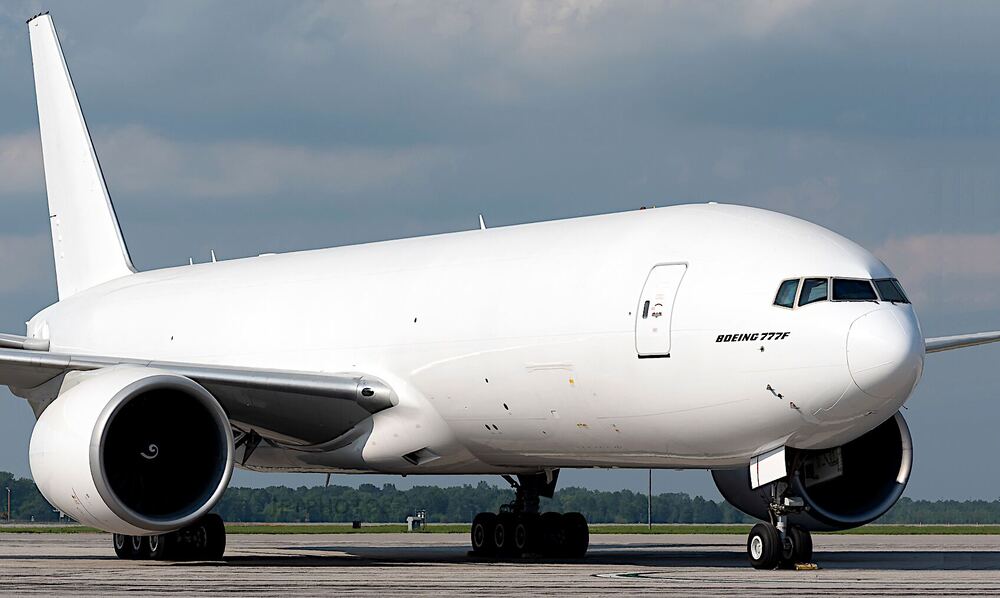
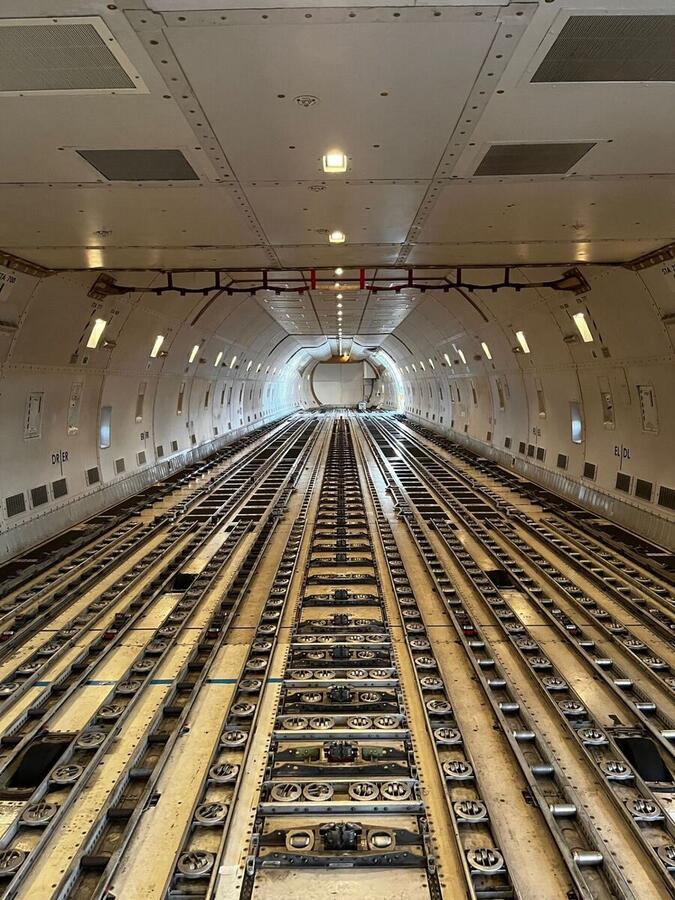
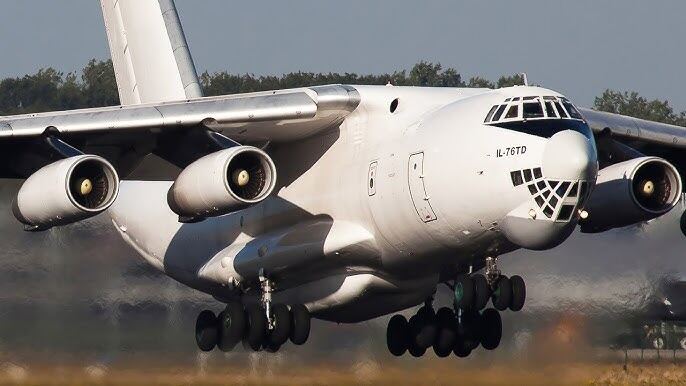
Cargo charter. Used when scheduled freighter capacity, scheduled belly capacity on passenger aircraft, or road and sea options will not deliver inside the required window. Typical activations include AOG aircraft components, peak-season e-commerce overflow, project cargo and oversize equipment, dangerous goods that scheduled carriers will not accept, time-critical pharmaceuticals, and supply runs into remote mining and energy operations. Aircraft range from light freighters such as a Beech 1900 or a SAAB 340 cargo conversion through to wide-body lift on 747F, 777F, IL-76 and AN-124 brought in from Asia or Europe for specific missions. The Australian-registered freighter fleet is small; most heavy lift into and out of Australia is operated by foreign carriers under traffic-rights approval.
Passenger charter. Covers ad-hoc group movements: corporate travel, sports teams, tour groups, government delegations, incentive groups, and crisis-driven repatriations. Aircraft selection runs from a Citation or Hawker for a small executive group, through regional jets and turboprops for ten to fifty passengers, into 737 and A320 family for one hundred and fifty, and 767, A330 or 787 for larger group movements requiring a single aircraft. Cabin configuration matters: a corporate group flying for ten hours expects a different product to a sports team moving between matches, even on the same airframe.
FIFO charter. A subcategory of passenger charter that operates on a different commercial logic. FIFO charters move workforces between hub cities (Perth, Brisbane, Adelaide, Cairns, Darwin) and resource sites in the Pilbara, the Bowen Basin, the Goldfields, the Northern Territory and offshore platforms. The contracts are typically multi-year, the rotations are fixed (commonly two-on-one-off, eight-on-six-off, or roster-specific patterns), and the aircraft is dedicated or near-dedicated to the program. Reliability and ground turnaround at remote strips matter more than headline speed.
AOG and time-critical cargo. A specialised activation of cargo charter, but the operational footprint is different. The customer is normally a maintenance organisation, an MRO, a leasing company or an OEM. The freight is normally an aircraft component, an engine, a landing gear assembly, an avionics box. The decision is being made under daily-cost pressure (a wide-body operator's daily cost of an AOG aircraft typically runs into six figures USD), and the desk is competing on wheels-up time, not on rate alone.
Medevac. Covers stretcher repatriation, ICU transfer between hospitals, neonatal and paediatric retrieval, and bariatric or infectious-disease cases that scheduled aviation cannot accept. Aircraft range from light jets configured with a single ICU stretcher (Citation, Learjet, Hawker, King Air) up to wide-body conversions for mass-casualty repatriation. The clinical layer (retrieval doctor, flight nurse, equipment loadout) is at least as important as the aircraft.
What aircraft are realistically available in Australia
The Australian-registered fleet that is genuinely available for charter, as opposed to listed on a website but tied up on long-term contract, is smaller than people expect. For passenger work the local market runs on Embraer E170/190 family, Fokker 100, BAe 146, A320 family, and 737-700/800. For FIFO the dominant types are F100, BAe 146, Avro RJ, A320 and 737. For corporate and small-group work, light and mid jets dominate (Citation, Hawker, Learjet, Falcon, Challenger, Gulfstream).
On the cargo side, the Australian-registered freighter fleet is dominated by light and mid types (Metro, SAAB, ATR, 737-300/400F operated by a small number of carriers). Heavy lift, 747F, 777F, MD-11F, IL-76 and AN-124, is positioned in from Asia (typically Hong Kong, Singapore, Seoul or Shanghai), Europe (Leipzig, Liege, Frankfurt) or the Middle East (Dubai, Sharjah). For a wide-body freighter activation out of an Australian east-coast hub, expect a positioning leg of eight to fourteen hours before the revenue mission begins, which is the dominant cost component for short revenue legs.
Air ambulance aircraft in Australia operate predominantly on King Air, PC-12, Citation, Learjet and Hawker airframes, with a small number of operators carrying ICU-grade configuration as standard. For long-range repatriation (Europe, the Middle East, the Americas) the typical platform is a Challenger or Gulfstream, often positioned from Asia.
Lead times: what is realistic by mission type
Charter lead times are the question that produces the most unrealistic answers in the market, both from customers expecting wheels-up in three hours, and from operators promising windows they cannot hold. The honest numbers, for a serious operator with standing relationships, look approximately like this:
AOG and time-critical cargo: aircraft committed inside one to four hours of enquiry, wheels-up inside six to twelve hours for an Australian-positioned aircraft, twelve to twenty-four hours for a wide-body positioned in from Asia. Medevac: clinical and aircraft commitment inside one to two hours, wheels-up inside two to six hours for an Australian-positioned air ambulance, eight to twenty-four hours for a long-range repatriation requiring a positioned aircraft. Ad-hoc passenger charter: aircraft commitment inside same business day, wheels-up inside twelve to forty-eight hours depending on aircraft availability and crew duty position. Cargo charter (non-AOG): aircraft commitment inside same business day, wheels-up inside twenty-four to seventy-two hours for an Australian-positioned freighter, three to seven days for a heavy-lift activation with a positioned wide-body and outbound permits. FIFO and contracted programs: planned weeks to months in advance, with operational adjustments managed against the contract.
Anyone offering markedly faster windows than these for ad-hoc work is either flying an aircraft that happens to be already positioned for an unrelated reason, or is overcommitting. Anyone offering markedly slower windows is not running an active operations desk.
What drives the price
Charter pricing is built up from a small number of variables that move independently of each other, not selected from a rate card. The major components are: block hours (flight time at an aircraft-type-specific hourly cost), positioning legs (the aircraft has to fly to the origin if it is not already there, and may have to fly home empty after), fuel (uplift cost varies by airport and by global fuel price), overflight and landing permits (a charter from Australia to the Middle East may transit five to seven FIRs, each with its own permit and fee), ground handling at every airport touched (origin, destination, tech stops, positioning), crew (duty time extensions, rest crews for long-range work), insurance loading for the mission profile, and operator margin.
What this means for customers: two superficially similar quotes for the same routing can differ by twenty percent or more because the operators have made different assumptions about positioning, fuel, permits and crew. The cheap quote is sometimes cheaper because the operator has not done the operational arithmetic; on the day, those costs reappear as variations or as a missed wheels-up window. The serious comparison is on the build-up, not on the headline number.
Route economics: where Australia sits
Australia's geographic position changes the economics of every long-range charter. To Asia, distances run from roughly six hours flying time (Darwin to Singapore) up to ten hours plus (east-coast hubs to Hong Kong and beyond). To the Middle East and Europe, expect a twelve to fifteen hour primary leg with at least one tech stop on most freighter operations. To the Americas, expect transpacific routings of fourteen hours plus with crew rotations.
These distances drive aircraft selection. A wide-body freighter operation from Brisbane to Frankfurt is straightforward on a 747F or 777F with a tech stop. The same payload from a regional Australian airport requires either a positioning leg to a major hub first, or a smaller aircraft with multiple tech stops, both of which usually cost more than the apparent saving of skipping the hub.
Trans-Tasman charter (Australia to New Zealand) is short enough that a 737 or A320 family aircraft can do the work without a tech stop, and most ad-hoc charter on this route runs on those types. Pacific Islands routes (Fiji, Vanuatu, New Caledonia, Solomons, PNG) are short to medium range but operate into airfields with limited handling, fuel and permit infrastructure, which is usually the bottleneck rather than the flying time.
Hub and regional airfield realities
Charter origin selection in Australia is driven by where the aircraft is, where the cargo or passengers are, and what the airfield can actually support. Sydney, Brisbane, Melbourne and Perth handle wide-body freighters and large passenger jets without difficulty, with full customs and immigration on twenty-four-hour notice for a charter movement. Adelaide, Darwin, Cairns, Townsville, Hobart and Canberra handle most types, with notice. Regional and remote strips, common in mining, energy and tourism work, may be limited by runway length, pavement classification, fuel availability, fire-fighting category, and after-hours opening.
For FIFO operations, the constraint at the resource-site end is rarely the airframe and almost always the ground infrastructure, the apron, the fuel, the terminal capacity, and the crew duty rules around the rotation. For AOG and freighter operations, the constraint at the regional end is more often customs and handling than runway. For medevac, the constraint at the retrieval end is often runway lighting at night, fuel availability for the return leg, and a clear ambulance access point.
The operational variables that decide whether a charter flies
From inside operations, charter cancellation or delay rarely comes from a problem with the aircraft itself. The recurring causes are: a permit that did not come through in time, a slot that was lost when the upstream movement slipped, a customs clearance that was filed against the wrong harmonised code, a crew duty extension that was refused, a fuel uplift that was not pre-arranged at a station that closes after dark, a ground handler that was booked but not confirmed.
The operators that fly the missions they sell are the ones that work permits, slots, customs, handling and crew as parallel threads from the moment the enquiry comes in, rather than waiting for each step to close before starting the next. The operators that miss windows are usually the ones that worked the steps in sequence, or worked them over email rather than over the phone with the people who actually file the paperwork.
When charter is the right answer, and when it is not
Charter is the right answer when scheduled aviation cannot meet the window, when the cargo or passenger profile is incompatible with scheduled operations (oversized, dangerous goods, ICU patient, large group on a fixed timeline), when the destination is not on a scheduled network, or when the cost of delay (AOG day rate, crisis response, contractual penalty) exceeds the cost of the charter.
Charter is the wrong answer when scheduled capacity exists, runs in the right window, and accepts the cargo or passenger profile. A scheduled freighter from Sydney to Hong Kong tomorrow at a tenth of the charter cost is the right answer for most general cargo, even if it feels less responsive. A serious charter desk will tell the customer this. Operators that always recommend their own product are not running an honest commercial conversation.
Choosing an operator: what matters
When evaluating a charter operator in the Australian market, the questions worth asking are operational rather than commercial. Does the operator hold the AOC for the aircraft category they are quoting, or are they brokering to someone who does? Who will actually file the permits, the operator or a third party? What is the operator's standing relationship with handlers and customs at the destination airports? What is their actual on-time performance on charter (not scheduled) work, and are they prepared to share it? Who will be on the ops desk overnight, and what is the escalation path if a variable moves at three in the morning?
The headline rate is a starting point. The operational answers to those questions are what determines whether the charter actually flies on the day at the price quoted.
How Aviall Group operates in this market
Aviall Group runs a 24/7 operations desk based in Australia, with relationships into the freighter operators across Asia, the Middle East and Europe, into the air ambulance operators across the Asia-Pacific, and into the passenger charter operators that work the Australian and trans-Tasman markets. Cargo, passenger, FIFO, AOG and medevac charter run through the same desk, with the same standards on permits, handling, customs and operational discipline.
For a cargo charter from any Australian airport, see the cargo charter pillar at /cargo-charter or the urgent air freight charter page at /urgent-air-freight-charter. For passenger and FIFO charter, see the group charter flights page at /group-charter-flights. For AOG, see the AOG section of /cargo-charter and the case studies in this insights library. For medevac, the dedicated home is /air-ambulance-medevac and the Aviall Air Rescue division at AviallAirrescue.com.
When a charter is required, the desk is reachable on 1800 796 769 (24 hours) or by request form. The honest answer to most enquiries comes back inside the hour, including the answer of when scheduled aviation is the better commercial choice.