Most time-critical freight emergencies do not begin as charter enquiries. They begin as scheduled shipments that have already failed once, sometimes twice, before anyone picks up the phone to a charter desk. By the time the phone call happens, the operational window has compressed and the customer is asking the charter operator to recover ground that was lost upstream by carriers, handlers, customs or planning.
This playbook is written for the people on the customer side: freight forwarders, supply chain managers, logistics buyers, MRO planners and corporate response teams. It covers when to stop trying to recover a scheduled shipment and escalate to charter, what decisions actually determine wheels-up time, what documentation has to be ready before the call is made, and the recurring failure modes that turn a six-hour mission into a three-day one. The framing is operational, not commercial. The headline rate is the easy part of an emergency activation; the operational decisions are where missions are won or lost.
Recognising when the scheduled option has failed
The single most common reason emergency charter activations end up taking longer than they need to is that the customer waited too long to escalate. The scheduled shipment was delayed, then re-routed, then re-booked, then missed connections, then sat on a tarmac waiting for a slot, and only after three or four hours of incremental delays did anyone start the charter conversation. By then, the same delay window that could have been recovered with a six-hour charter activation has compressed to three hours, and the charter desk is now being asked to do in three what realistically requires six.
The discipline that separates mature freight operations from reactive ones is the ability to recognise the moment a scheduled shipment has materially failed, and to start the charter conversation in parallel with the recovery effort, not after it. The decision to charter is reversible up until the aircraft is committed; the decision not to charter is much harder to reverse once the operational window has closed.
Practical escalation triggers that experienced operations managers use: the scheduled shipment has missed a connection that has no recoverable alternative within the window. The handler at origin has confirmed the shipment cannot make the next departure. Customs has flagged a documentation problem that will not clear inside the available time. The receiving end has confirmed a hard deadline (production line stoppage, AOG aircraft, clinical trial sample, project milestone) that the next scheduled option will not meet. Any of these triggers should result in a parallel charter enquiry, not a wait-and-see.
The first call: what the charter desk needs
The first call to a charter desk should compress the triage that the desk would otherwise spend the first ten minutes doing. Calls that arrive with the right information return executable answers inside the first hour. Calls that arrive incomplete return preliminary answers that have to be revised once the missing pieces come in.
The minimum information required: what the cargo is (weight, dimensions in all three axes, packaging, hazardous classification if any), where it is right now (origin airport, handler holding it, customs status), where it has to go (destination airport, receiving party, hard deadline), and the commercial framework (who is paying, what authority chain the activation runs through, whether a verbal commitment is sufficient or whether a written PO is required before aircraft commitment).
The information that compresses the call further: dangerous goods declaration if applicable, MSDS for any chemical content, packing list, commercial invoice with HS codes, export documentation if cross-border, any temperature or handling requirements, and the contact at both ends with the authority to release and accept the shipment. If this paperwork exists, it should be sent with the first call. If it does not exist, the charter desk needs to know that immediately because preparing it can take longer than positioning the aircraft.
Where wheels-up time comes from
Customers tend to assume that wheels-up time is a function of how fast the operator can find an aircraft. In practice, aircraft sourcing is rarely the binding constraint for a serious charter desk. The recurring constraints, in order of how often they actually delay missions, are: customs clearance for export at origin, customs clearance for import at destination, overflight and landing permits in transit jurisdictions, slot allocation at constrained airports, ground handling availability at origin and destination, fuel uplift at airfields with limited or after-hours fuel infrastructure, and finally aircraft and crew availability.
This ordering is not theoretical. On a typical urgent cargo charter from Australia to Asia, the freighter can be sourced and positioned inside six to twelve hours; permits and customs at both ends are usually the work that determines whether wheels-up happens at the eight-hour mark or the eighteen-hour mark. On a typical AOG charter from Europe to Asia-Pacific, the same pattern holds. The desks that consistently move freight inside the operational window are the desks that work permits and customs as parallel threads from minute one of the activation, not after the aircraft is confirmed.
Documentation: what has to be ready before the aircraft moves
An aircraft will not depart with cargo that is not properly documented. The documentation that has to be in place before wheels-up: commercial invoice with accurate HS codes and declared values, packing list with weights and dimensions matching the cargo manifest, export declaration cleared by origin customs, import permit or documentation for destination customs, dangerous goods declaration and any related approvals if hazardous, airwaybill issued by the operator or a forwarder against the operator, NOTOC (notification to captain) for any special cargo, and security screening or known-shipper status confirmed.
The documentation that has to be in place before customs clearance can begin: the same as above, plus any country-specific documentation (certificates of origin, free trade agreement documentation if claimed, sanitary or phytosanitary certificates, quarantine documentation for any biological content). Country-specific requirements vary materially and lists are updated frequently; the safe pattern is to verify with the destination customs broker before assuming a document is or is not required.
The recurring failure mode here: customers assume the documentation is in order because the scheduled freight forwarder said so. The freight forwarder's documentation is built for the scheduled product, not for an unscheduled charter. The harmonised codes, the declared values, the description of the goods, all may be acceptable for scheduled freight but flagged on a charter manifest because the customs broker at the destination is looking at it more closely. The mature pattern is to share the documentation with the charter desk before booking, not after, so that any issues can be resolved while the aircraft is being sourced.
Aircraft selection: the right freighter for the load
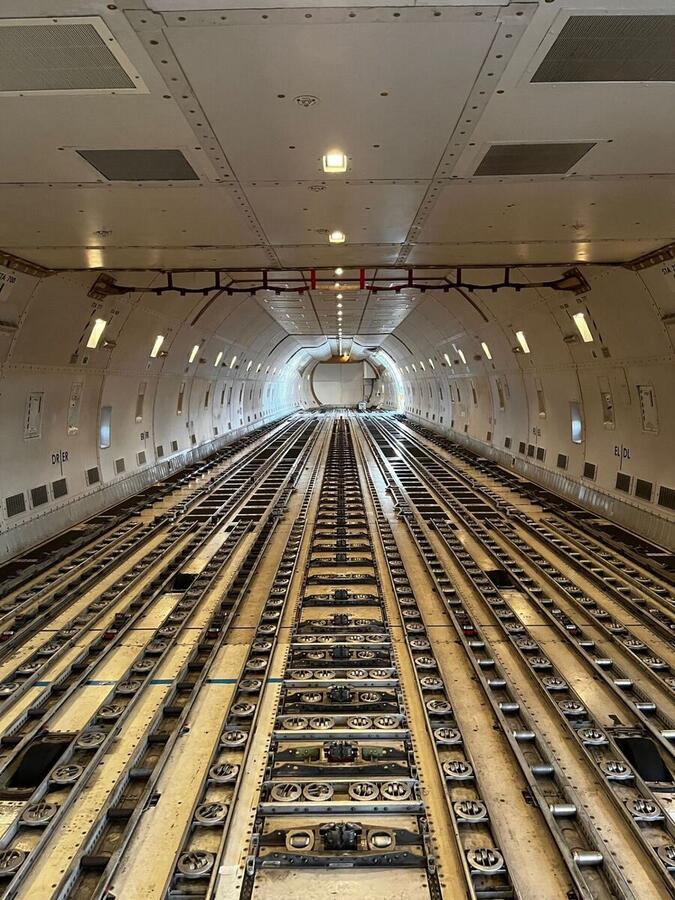
Aircraft selection for emergency air freight follows the same logic as any cargo charter, but under tighter time pressure. The decision is driven by the load (weight, dimensions, single-piece versus palletised, hazardous), the airfields (runway length and pavement class at origin and destination, handling, customs availability), and the routing (range, tech stops, permits).
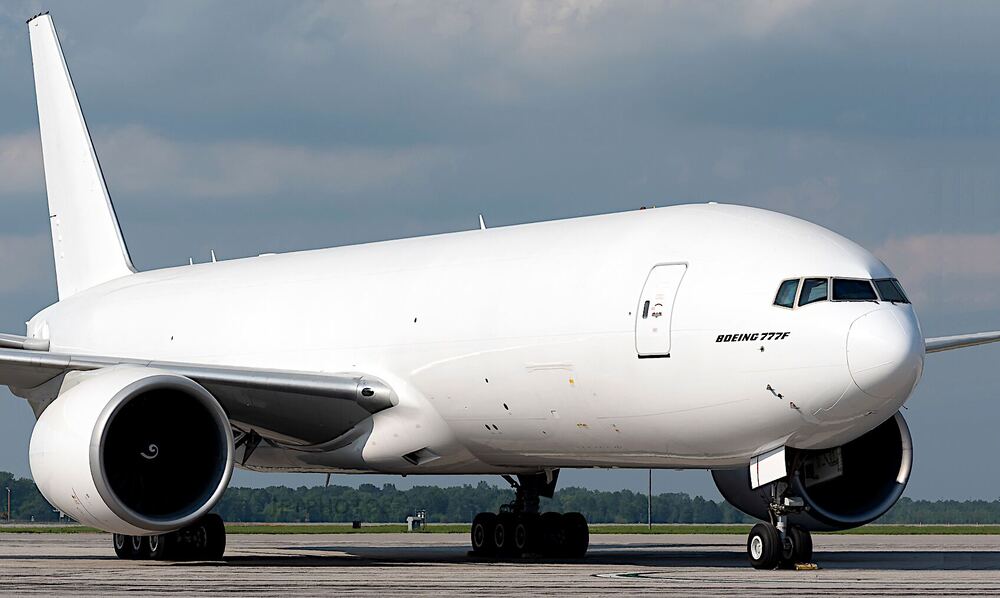
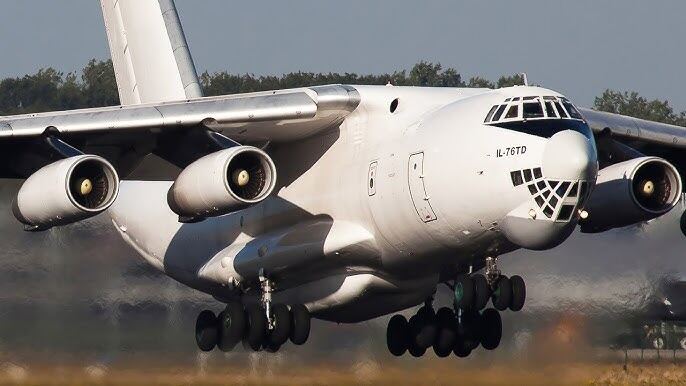
For most urgent cargo charters under fifty tonnes on a regional or medium-haul leg, a 737F, A321P2F, 757F or 767F is the right answer. They are widely available, well-suited to most palletised general cargo, and have lower trip costs than wide-body alternatives. For long-range urgent cargo above fifty tonnes, the 777F is the dominant choice when the load fits through the side door. For oversize loads, spare engines on stands, helicopters, or any single-piece cargo that requires through-loading, the 747F or AN-124 are the only viable options. For cargo into austere fields, the IL-76 or AN-12 are usually the answer.
The cross-reference: see the global cargo aircraft comparison guide in this insights library (also at /insights/global-cargo-aircraft-comparison-an124-747-777-il76) for a working specification sheet on each freighter type. The decision sequence is always: load first, airfield second, routing third, aircraft fourth.
AOG: a special category of emergency air freight
AOG (aircraft on ground) charter is the most commercially intense subcategory of emergency air freight. The customer is normally a wide-body operator carrying daily AOG costs in the high five-figures or six-figures USD per day, and the decision is being made under extreme time pressure. The patterns are well-established and the desks that handle AOG day in and day out behave differently from desks that occasionally take an AOG enquiry.
AOG charters compress every step of the playbook. The first call is normally from a maintenance controller, an MRO planner or a line engineer with the part already identified, at a known location, with a known destination. The triage is faster because the variables are tighter. Aircraft selection is normally a 747F (for engines and large rotables that fit through the nose door), a 777F (for components that fit through the side door on long-range routings), an AN-124 (for engines on stands too large for the 747F nose, or for outsize line replaceable units), or a Lear, Citation or Falcon (for small high-value LRUs that do not justify a wide-body).
The dedicated insights piece on AOG, /insights/first-60-minutes-of-an-aog-event, covers how a typical AOG activation runs in detail. The summary is that AOG missions live or die in the first hour after the call, and that the first hour is mostly about parallelism: aircraft sourcing, pricing, permits, customs and ground handling all worked at the same time, not in sequence.
The recurring failure modes
Emergency air freight missions fail in a small number of recurring ways, and the failure modes are the same regardless of the cargo type or the geography. Recognising them in advance is most of how customers avoid them.
Failure mode one: late escalation. The scheduled shipment was given too much time to recover before the charter conversation began. The charter is then asked to do in three hours what realistically requires six.
Failure mode two: incomplete documentation. The cargo is at the airport but customs cannot release it because the harmonised codes are wrong, the declared value is inconsistent, or the dangerous goods declaration is missing or out of date. The freighter is positioned and waiting, burning standing time on the customer's account, while paperwork is corrected.
Failure mode three: ground handling not confirmed. The handler at origin or destination was booked but not confirmed, and on arrival the freighter cannot be unloaded inside the operational window. Slot is then lost, crew duty time is consumed, and the next slot is hours away.
Failure mode four: permits filed late. Overflight or landing permits in transit jurisdictions were assumed to be standard but were not, and the freighter has to either re-route or wait. Re-routing adds fuel, time and cost. Waiting consumes the operational window.
Failure mode five: customs at destination not pre-arranged. Cargo arrives but customs is closed, or the customs broker was booked but not confirmed, or the import documentation has a problem that is only discovered on arrival. The cargo sits on the apron until the next business day.
Failure mode six: receiving party not ready. The cargo arrives but the receiving end (the production line, the airport ramp, the project site) is not ready to take it. This sounds trivial but is a real cost; the value of an emergency charter depends on the cargo being usable on arrival, and a four-hour delay on arrival sometimes erases the value of the charter that delivered it inside the window.
Each of these failure modes is operational, not commercial. The customer cannot pay them away. They are avoided by a charter desk that works permits, customs, handling, slots and aircraft as parallel threads from minute zero, and by a customer that escalates early and shares documentation in the first call.
Pricing: what to expect and what to question
Emergency air freight pricing is built up from the same components as any cargo charter (block hours, positioning, fuel, permits, handling, crew, insurance, margin), with a tighter operational profile. The headline number for a wide-body urgent activation is normally in the hundreds of thousands USD; for a narrow-body regional activation, in the tens of thousands. AOG charters are generally priced at a premium to general urgent cargo because the operational tolerance is tighter and the customer's ability to absorb cost variance is higher.
Two superficially similar quotes for the same urgent activation can differ by twenty to forty percent. The cheaper quote is sometimes cheaper because the operator has not done the operational arithmetic on positioning, fuel uplift at the relevant airfields, and permits. The more expensive quote is sometimes more expensive because the operator is honest about the costs that the cheap quote will reappear as variations on the day. The serious comparison is on the build-up, not on the headline.
Questions worth asking on any emergency quote: what are the assumed positioning legs and at what fuel rate? What permits are assumed and which are at risk of taking longer than the window? What is the assumed ground handling at origin and destination, and is it confirmed or pending? What is the operator's standing relationship with customs at destination? What is the wheels-up window expressed as a range, and what is the worst case?
Building a relationship before the emergency
The customers who get the best results from emergency air freight charter are not the ones who pay the most. They are the ones who have an existing relationship with a charter desk before the emergency happens. The desk knows the customer's typical cargo, knows the routings they tend to need, knows the documentation patterns they tend to bring, and has a credit relationship that allows verbal activation rather than waiting for a written PO at three in the morning.
For freight forwarders and supply chain managers, the practical recommendation is to nominate a primary charter desk for emergency activations and run a small number of test enquiries (planned, not real emergencies) through them in calm periods. The test enquiries reveal how the desk actually behaves: what their first response time is, what questions they ask, how they price, how they handle documentation. That information is far more useful than any sales conversation, and it is not available to anyone who waits until they have a real emergency to make the first call.
How Aviall Group runs emergency air freight
Aviall Group runs emergency air freight charter through a 24/7 operations desk based in Australia, with relationships into freighter operators across Asia, the Middle East and Europe, into customs and ground handling at the major Asia-Pacific hubs, and into the regulatory desks that file the permits. AOG, urgent project cargo, dangerous goods, and time-critical pharmaceuticals all run through the same desk, with the same parallel-thread approach to permits, customs and handling that this playbook describes.
For an urgent activation, the desk is reachable on 1800 796 769 (24 hours) or by request form. For background reading, see the urgent air freight charter pillar at /urgent-air-freight-charter, the cargo charter pillar at /cargo-charter, the global cargo aircraft comparison at /insights/global-cargo-aircraft-comparison-an124-747-777-il76, and the related case studies in this insights library.