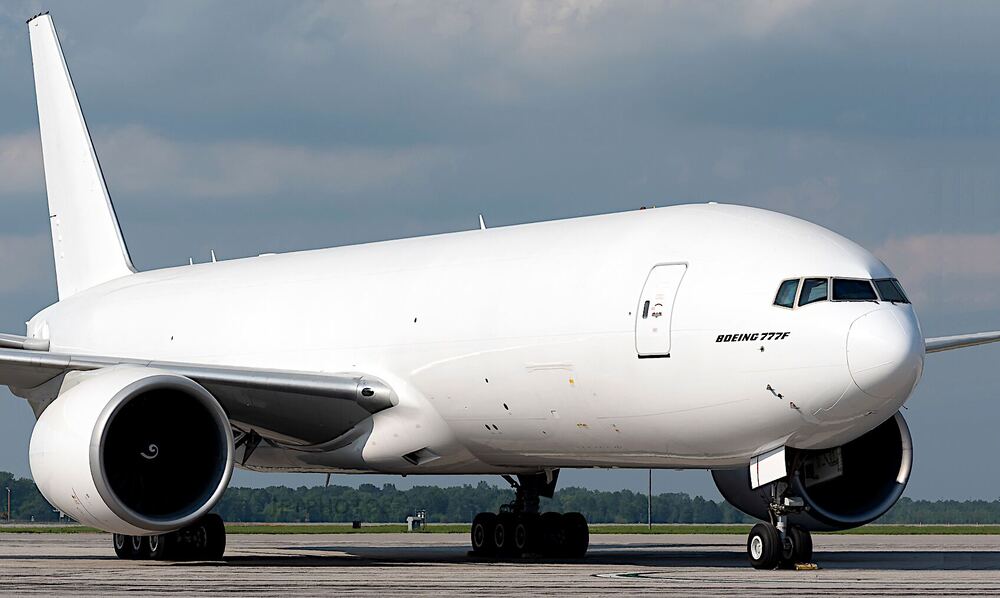
Widebody freighter aircraft on a cargo apron
    24/7 Operations Desk · Active Now

    Australia · China · Freighter Charter

    Cargo charter between Australia and mainland China

    Full-aircraft cargo charter linking Australian gateways with Shanghai, Guangzhou, Shenzhen and Beijing, sized to the shipment and the deadline.

    Already have an RFQ prepared? Email charters@aviall.com.au

    China-wide
    Gateway coverage
    24/7
    Ops desk
    <60 min
    Quote turnaround
    Dual customs
    Handling

    Why the Australia-China lane relies on charter

    The Australia-China air cargo corridor is one of the busiest in the world, but scheduled belly and freighter capacity is frequently absorbed by e-commerce parcel volumes, seasonal retail peaks and long-haul passenger network changes. Charter is typically engaged when a shipment cannot wait for the next available scheduled slot, when the cargo will not fit or is not accepted on a passenger lower-deck, or when a single accountable operator is needed for a sensitive or high-value movement.

    Common triggers include an aircraft-on-ground (AOG) component moving between Chinese manufacturing or MRO sites and Australian operators, a factory shipment that has slipped its production schedule, or a live-export or seafood consignment tied to a narrow market window at the Chinese end.

    Typical commodities and shipment profiles

    Freight moving China to Australia is often manufactured goods, electronics components, machinery parts, retail and e-commerce overflow, and, at certain times of year, personal protective equipment or medical supplies. Australia to China freight typically includes premium perishables such as seafood, dairy and horticultural products, wool and fibre, and industrial or mining-related components destined for Chinese manufacturing partners.

    Because the lane serves such different commodity types in each direction, aircraft and handling requirements are usually assessed leg by leg rather than assumed to be symmetrical.

    Aircraft suited to distance and payload

    The Australia-China sector length (broadly 7,000-9,000 km depending on city pair) sits at the edge of narrowbody freighter range, so most charter missions on this lane use mid to heavy widebody freighters.

    • 767F / A300F, shorter sectors such as Guangzhou or Shenzhen to northern Australian gateways, subject to range and payload trade-offs
    • 777F / A330F, the typical workhorse for Shanghai, Beijing or Hong Kong-adjacent routings into Sydney, Melbourne or Brisbane
    • 747-400F / 747-8F, where nose-loading is needed for long or awkward-dimension freight, or where volume exceeds a single 777F load
    • Combi and narrowbody options are occasionally viable for shorter legs via intermediate technical stops, subject to operator approval

    Airport, slot and permit considerations

    Major Chinese cargo gateways including Shanghai Pudong, Guangzhou Baiyun, Shenzhen Bao'an and Beijing Capital/Daxing operate structured slot regimes, and international charter movements typically require both a landing permit from Chinese aviation authorities and confirmed cargo apron or handling slot allocation, arranged with appropriate lead time.

    Diplomatic clearance and overflight permissions across the routing are generally required for non-scheduled operators and should be initiated as early as possible once a mission is confirmed, since processing times can vary and are outside the charter broker's direct control.

    Customs and documentation realities

    Both Australian and Chinese customs authorities apply detailed commercial documentation, valuation and, for certain commodities, quarantine or inspection requirements. Seafood, dairy, horticultural and other biosecurity-sensitive freight typically needs export health certification and may be subject to inspection windows at either end that should be built into the schedule rather than treated as a formality.

    Where the shipment includes dangerous goods, batteries, or dual-use items, additional Chinese import/export licensing may apply and is typically identified during the initial mission scoping call.

    Seasonality and peak pressure

    Demand on this lane tends to spike around Chinese e-commerce shopping events, the Lunar New Year period (when Chinese production and freighter availability both contract sharply for one to two weeks), and the Australian seafood and horticultural export seasons. Charter lead times typically extend during these windows as freighter aircraft and slots become scarcer across the region.

    Cost drivers and lead times

    Indicative cost drivers include aircraft type and positioning distance, landing and diplomatic permit fees, fuel, ground handling at both ends, and any temperature-control or biosecurity handling requirements. As a general guide, positioning an aircraft that is not already based in the region adds materially to cost and lead time, so mission economics typically improve when charter is booked with several days' notice rather than same-day, except for genuine AOG cases where premium pricing is expected and accepted.

    Typical planning lead times range from approximately 24-48 hours for an urgent narrowbody or mid-widebody charter with an aircraft already positioned in the region, up to 5-10 days where permits, slots or aircraft positioning are more complex. These figures are indicative only and are confirmed against the specific mission.

    Australia-China cargo charter capability

    AOG component recovery

    Time-critical parts movement between Chinese manufacturing/MRO hubs and Australian operators.

    Perishable exports

    Seafood, dairy and horticultural charter aligned to biosecurity and market windows.

    E-commerce peak capacity

    Supplementary freighter lift during Chinese shopping-event and pre-holiday surges.

    Manufacturing and components

    Charter for production-critical parts and finished goods in both directions.

    Permit and slot management

    Landing permits, diplomatic clearance and cargo slot coordination handled in parallel.

    Dangerous goods

    IATA DG capability including lithium battery shipments common to electronics freight.

    Urgent charter? Our ops desk is staffed 24/7.

    Aircraft options within the hour and a written quote with an indicative wheels-up window.

    Mission examples · Illustrative

    What this looks like in operation

    Representative mission profiles drawn from recurring work. Identifying details, operators, hospitals, routes, aircraft tail numbers, are intentionally omitted.

    Heavy lift · Project cargo

    Outsize mining component into a remote regional strip

    An ASX-listed resources operator faced a stalled processing line waiting on a single oversized component too large for any scheduled freighter. Aviall sourced an outsize main-deck nose-loader, completed pavement and load-spread checks at the regional destination, and coordinated road movement permits at both ends.

    Outcome

    Component on site inside 72 hours of first call; production line restart same week.

    AOG · Time critical

    Replacement engine to a wide-body grounded overseas

    A major carrier had a wide-body grounded at a foreign hub, awaiting a replacement engine sitting in a domestic MRO. Aviall positioned a freighter to the MRO, coordinated dangerous goods documentation for the engine and stand, and held a flight-following bridge with the airline's tech ops cell door-to-door.

    Outcome

    Engine wheels-up inside 14 hours of release; aircraft returned to service the next operational day.

    Pharma · Cool chain

    Temperature-controlled biologics on a single-shipper aircraft

    A global health programme required a high-value biologics consignment moved on a controlled cool-chain into the Asia-Pacific without consolidation risk. Aviall chartered a freighter dedicated to the shipment, with active containers, written ramp-time targets, and continuous data-logger oversight.

    Outcome

    Zero temperature excursions; chain-of-custody documentation closed within 24 hours of landing.

    Australia-China cargo charter, quick reference

    Key gateways
    Shanghai, Guangzhou, Shenzhen, Beijing to Sydney, Melbourne, Brisbane
    Typical aircraft
    767F/A300F short sectors; 777F/A330F/747F for primary widebody routings
    Permits
    Chinese landing permit and overflight clearance generally required, lead time varies
    Peak periods
    E-commerce events, Lunar New Year contraction, seafood export season
    Typical lead time
    Approximately 24-48 hours urgent; 5-10 days for permit-heavy or positioning-heavy missions
    Quote turnaround
    Typically under 60 minutes from enquiry

    FAQ

    Frequently Asked Questions

    Where an aircraft is already positioned in the region, urgent movements are sometimes achievable within 24-48 hours. Missions requiring positioning, permits or slot coordination typically need 5-10 days, subject to confirmation.

    Why operators, brokers and end clients keep calling back

    Credibility built on operational discipline, not marketing

    "Quote came back inside the hour with two aircraft options, written wheels-up windows and the cost-versus-time trade-off laid out. That is what we expect and rarely get."

    , Project logistics manager · Resources sector

    "Documentation, NOTOCs and DG paperwork were closed before we'd finished briefing our customer. No back-and-forth, no surprises at the ramp."

    , Senior freight forwarder · Global 3PL

    "They run the mission like an operator, not like a broker. That distinction matters when the cargo is heavy, the route is hard and the clock is real."

    , Charter broker · International network

    Planning a cargo charter to or from China?

    Send the shipment details, origin, destination, weight, dimensions and ready time. Aircraft options returned within the hour.

    Have a live requirement?

    Send us origin, destination, payload and ready date. We return aircraft options. Attach an existing RFQ, packing list or photos straight from your phone, partial detail is enough to start.

    Requirement

    Cargo

    AttachmentsPacking list, cargo dimensions, manifest, RFQ document, images or other supporting documentation. Files up to 20MB each, 10 max. PDF, Word, Excel, CSV, images or email files.

    Goes straight to our charter desk at Charters@Aviall.com.au. Submitting an RFQ does not confirm an aircraft.