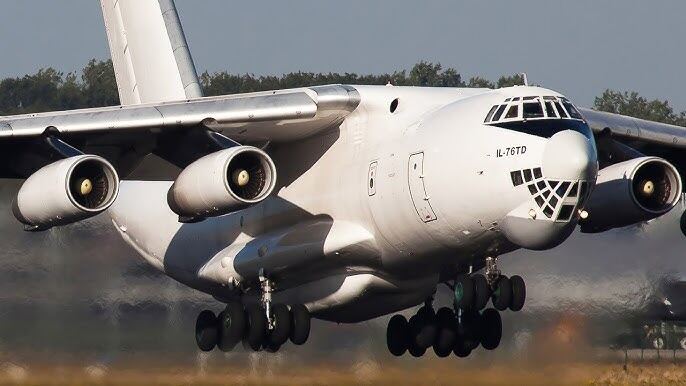
Cargo freighter aircraft departing on an international charter
    24/7 Operations Desk · Active Now

    International · Inbound & Outbound · Freighter Charter

    Cargo Charter Australia

    Cargo aircraft charter into Australia from anywhere in the world, and out of Australia to any destination. Courier-scale urgent consignments through to 120-tonne outsize project lift.

    Cargo charter Australia · international freighter charter · air cargo charter Sydney, Melbourne, Brisbane, Perth and Darwin · inbound and outbound long-haul lift.

    Already have an RFQ? Email charters@aviall.com.au

    120 t
    Max single-aircraft payload
    15 lanes
    Documented international markets
    <60 min
    Aircraft options returned
    24/7
    Australian charter desk

    Australia is a long-haul freight market with thin charter capacity

    Almost every international cargo charter involving Australia is a long sector flown from a market where the freighter fleet actually lives. Aircraft are rarely sitting idle in Sydney or Perth waiting for work, which means the first operational question on any Australian charter is not price but positioning: which suitable aircraft is closest, what is its current tasking, and what does it cost in flying hours to bring it to your origin.

    That single fact shapes the whole process. It is why lead time and flexibility on ready date change the commercial outcome more than negotiating a rate, why an inbound charter is often cheaper when it can be paired with an outbound load, and why a request submitted with a realistic payload and ready date gets a materially better answer than one built on guesses.

    We run this from Australia, on Australian hours, with a desk that is awake when European and American origins are awake. For an inbound movement you deal with one team across the origin operator, permits, ground handling, border clearance and the final domestic leg.

    When charter is the right decision

    Charter is not a substitute for scheduled airfreight on price. It earns its cost in specific situations where scheduled capacity cannot solve the problem at all, or cannot solve it in time.

    • The consignment exceeds scheduled door, pallet or weight limits and cannot be split or dismantled
    • A production line, plant or shutdown window is stopped and the cost of downtime is measured per hour
    • An aircraft or vessel is out of service pending a rotable, engine or major component
    • Delivery must land inside a fixed window, such as a commissioning date, event, court deadline or seasonal market
    • The cargo needs a controlled environment or custody chain that transhipment cannot guarantee
    • A destination has no useful scheduled service, including remote strips, resource sites and disrupted airports
    • Volume needs to move as one consolidated movement rather than as fragments across several weeks

    Payload, volume and what actually limits a charter

    Most Australian charters are constrained by something other than the aircraft's headline payload. On long sectors, fuel displaces payload, so a freighter advertised at 100 tonnes may lift appreciably less on a nonstop from Europe than it would on a regional Asian sector. Where that trade-off is unattractive, a technical stop restores payload at the cost of time.

    Second, dimensions bind more often than weight. A piece has to pass the door aperture at the correct angle, sit within floor loading limits per square metre, and clear the internal ceiling profile. A four-tonne item can be impossible on an aircraft rated for eighty tonnes purely because of its height or a fixed protrusion. That is why we ask for a packing list with per-piece dimensions rather than a total weight.

    Third, low-density cargo runs out of volume long before it runs out of weight. Where that is the case, the aircraft is chosen on cubic capacity and pallet positions, and the useful comparison between aircraft becomes cost per cubic metre rather than cost per kilogram.

    Live requirement

    Have a live cargo requirement?

    Send the six details below and our charter desk returns aircraft options, payload feasibility and an indicative wheels-up window. Partial information is enough to start. We will work with what you have while packing is finalised.

    Already have an RFQ? Email charters@aviall.com.au

    Send us

    • 01OriginAirport, city or plant
    • 02DestinationFinal airport or door address
    • 03PayloadGross weight and piece count
    • 04Ready dateWhen cargo is packed and released
    • 05CommodityIncluding any dangerous goods class
    • 06Packing listDimensions per piece, if available

    International lanes

    Cargo charter lanes into and out of Australia

    Each lane page covers the commodities that actually move, the aircraft that suit the sector, airport and permit considerations, and the payload trade-offs at that distance.

    South & Southeast Asia

    Australian gateways and what they mean for your charter

    Gateway choice affects curfews, arrival timing, handling capability and the length of the onward domestic leg. It is often the cheapest variable to change.

    Sydney (SYD)

    Largest international freight gateway. Widebody freighter capable with curfew restrictions between 23:00 and 06:00, which shapes long-haul arrival planning.

    Melbourne (MEL)

    No curfew, strong overnight freighter capability and the primary gateway for manufacturing, pharmaceutical and perishable freight in the south-east.

    Brisbane (BNE)

    24-hour operation with parallel runways. Common entry point for North Asian lanes and for onward tasking into Queensland resources regions and PNG.

    Perth (PER)

    Closest major gateway to Southeast Asia, the Middle East and Africa, and the natural entry point for Western Australian mining and energy project cargo.

    Darwin (DRW)

    Northern gateway with short sectors to Indonesia and Timor-Leste. Frequently used as a technical stop and for relief and remote-region tasking.

    Adelaide (ADL) & Cairns (CNS)

    Secondary gateways used for defence, wine, seafood and horticulture exports, and for Pacific and PNG operations out of Far North Queensland.

    Aircraft categories used on Australian cargo charters

    Cargo aircraft categories, payload bands and typical use on Australian international charters
    CategoryIndicative payloadTypical use
    AN-124 / IL-7640,000 - 120,000 kgOutsize and non-containerisable plant, transformers, mining assemblies, rail and marine components.
    747-400F / 747-8F (nose-loader)110,000 - 140,000 kgLong single pieces up to nose-door limits, aerospace structures, heavy project consignments on long-haul lanes.
    777F / A330-200F65,000 - 103,000 kgThe volume workhorses for Asia, Middle East and transpacific lanes. Best payload-to-cost ratio on most international charters.
    767-300F / A321F / 737-800F20,000 - 52,000 kgRegional lanes such as New Zealand, Indonesia, PNG and intra-Asia, or lighter loads where a widebody is not justified.
    ATR-72F / Metroliner / Learjet1,000 - 9,000 kgOnward domestic legs, remote strips, and courier-scale AOG or medical consignments where speed outweighs volume.

    Payload figures are indicative and reduce with sector length, runway performance and ambient conditions. Full specifications are in the aircraft charter guide.

    International cargo charter, common questions

    Aircraft options are usually returned within the hour. Departure timing depends on aircraft positioning, crew duty, overflight and landing permits, and cargo readiness. Regional lanes such as New Zealand, Indonesia and PNG can often move same day or overnight. Long-haul lanes from Europe, the Americas or North Asia typically need a longer window because of positioning and permit lead times.

    Australia ↔ worldwide · Live requirement

    Have a live cargo requirement?

    Send the six details below and our charter desk returns aircraft options, payload feasibility and an indicative wheels-up window. Partial information is enough to start. We will work with what you have while packing is finalised.

    Already have an RFQ? Email charters@aviall.com.au

    Send us

    • 01OriginAirport, city or plant
    • 02DestinationFinal airport or door address
    • 03PayloadGross weight and piece count
    • 04Ready dateWhen cargo is packed and released
    • 05CommodityIncluding any dangerous goods class
    • 06Packing listDimensions per piece, if available

    Send your cargo requirement or existing RFQ

    Send us origin, destination, payload and ready date. We return aircraft options. Attach an existing RFQ, packing list or photos straight from your phone, partial detail is enough to start.

    Requirement

    Cargo

    AttachmentsPacking list, cargo dimensions, manifest, RFQ document, images or other supporting documentation. Files up to 20MB each, 10 max. PDF, Word, Excel, CSV, images or email files.

    Goes straight to our charter desk at Charters@Aviall.com.au. Submitting an RFQ does not confirm an aircraft.