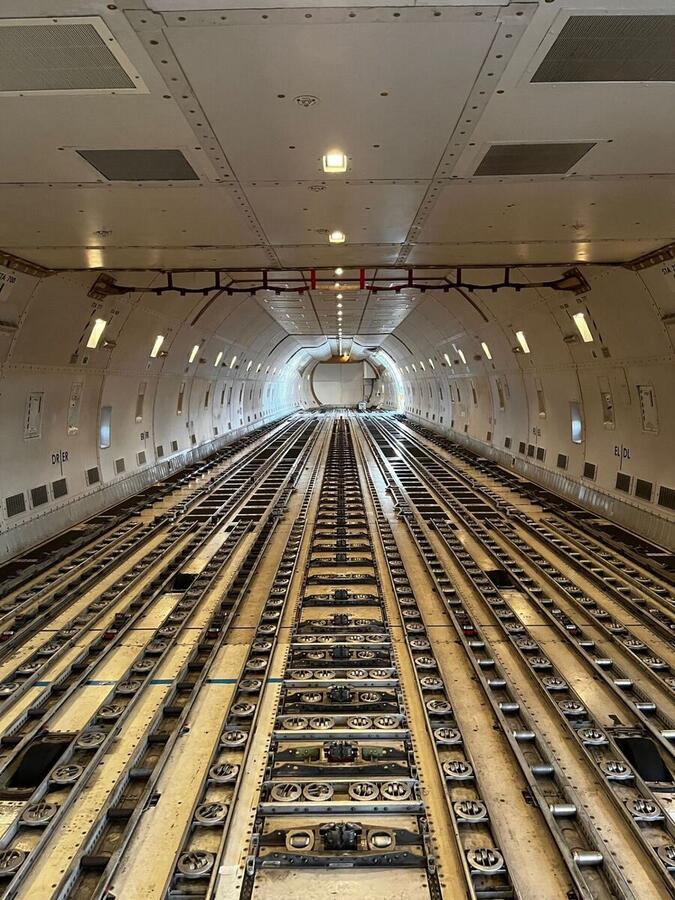
Cargo hold of a freighter aircraft loaded with pallets
    24/7 Operations Desk · Active Now

    Australia · Japan · Freighter Charter

    Cargo Charter Japan: Freighter Support for Precision and Time-Critical Freight

    Full-aircraft charter between Australian gateways and Tokyo Narita, Kansai and Chubu, built around Japan's precision manufacturing, automotive and seafood trade with Australia.

    Already have an RFQ prepared? Email charters@aviall.com.au

    Multi-gateway
    Narita, Kansai, Chubu
    24/7
    Ops desk
    <60 min
    Quote turnaround
    Precision cargo
    Handling

    Why charter is used on the Australia-Japan lane

    Japan is a long-standing trade and resources partner for Australia, and air charter demand on this lane tends to cluster around automotive and industrial component supply chains, precision electronics, and premium seafood and agricultural exports. Charter is typically engaged when a component shortage threatens a Japanese production line, when a Japanese-built aircraft, vessel or machinery part is needed urgently in Australia (or vice versa), or when a seafood or perishable shipment must reach a Japanese market within a narrow freshness window.

    Japan's own domestic logistics culture places a high premium on schedule reliability, which means charter is frequently requested specifically to guarantee an arrival window that a consolidated scheduled service cannot commit to.

    Typical commodities and shipment profiles

    From Australia to Japan, common charter cargo includes rock lobster, tuna and other premium seafood, wool, and mining or resources-related equipment and components. From Japan to Australia, typical freight includes automotive parts and specialty vehicles, precision machinery and robotics components, and electronics destined for Australian industry or retail.

    Aircraft suited to distance and payload

    The Australia-Japan sector is a long widebody-range routing, generally in the order of 7,500-8,500 km depending on the specific city pair.

    • 777F / A330F, the primary tier for Narita, Kansai or Chubu to Sydney, Melbourne or Brisbane
    • 747-400F / 747-8F nose-loader, used for oversized machinery, automotive tooling or long components
    • 767F, viable on shorter combinations or where payload is lighter than a full 777F load justifies
    • IL-76 / AN-124, occasionally used for genuinely outsize industrial or resources equipment where nose-loading is insufficient

    Airport, slot and permit considerations

    Narita and Kansai both handle significant scheduled and charter freighter traffic and operate structured slot coordination; Chubu (Centrair) is a useful alternative gateway for automotive-region freight given its proximity to Japan's Chubu manufacturing belt. Charter slot requests are best lodged as early as practicable, particularly around Japanese public holiday clusters when both passenger and cargo slots tighten.

    Japan's aviation authorities require landing permits for non-scheduled international charter operations, and lead times should be confirmed at the time of booking rather than assumed from previous missions, as requirements can change.

    Customs and documentation realities

    Seafood and agricultural exports into Japan are subject to Japanese quarantine and food safety import inspection, and exporters should expect documentation and, in some cases, inspection lead times to be built into the schedule rather than treated as same-day formalities. Automotive and precision components moving into Australia are generally subject to standard commercial customs clearance, though certain machinery may require biosecurity cleaning certification depending on prior use and origin.

    Seasonality and peak pressure

    Demand typically increases around Japanese public holiday clusters such as Golden Week and the New Year period, when both production schedules and freighter capacity are compressed. Seafood export charter also follows seasonal fishing and harvest windows, which vary by species and should be discussed at the planning stage rather than assumed to be constant year-round.

    Cost drivers and lead times

    Cost drivers include aircraft type, positioning, Japanese landing permit and slot fees, ground handling, and any quarantine or cool-chain handling required for perishable freight. Typical lead times range from approximately 24-48 hours for urgent movements using an aircraft already positioned in the region, up to 5-7 days where permits, slots or positioning from outside the region are required. These are indicative planning figures, confirmed against the specific mission.

    Australia-Japan cargo charter capability

    Automotive & industrial parts

    Time-critical component movement supporting Japanese and Australian production lines.

    Precision electronics

    Careful handling and documentation for high-value, sensitive freight.

    Seafood & perishable exports

    Charter aligned to Japanese quarantine windows and freshness requirements.

    AOG support

    Aerospace and industrial AOG recovery between Japan and Australia.

    Multi-gateway access

    Narita, Kansai and Chubu options selected for cargo type and destination.

    Dangerous goods

    IATA DG capability for battery and industrial chemical shipments.

    Urgent charter? Our ops desk is staffed 24/7.

    Aircraft options within the hour and a written quote with an indicative wheels-up window.

    Mission examples · Illustrative

    What this looks like in operation

    Representative mission profiles drawn from recurring work. Identifying details, operators, hospitals, routes, aircraft tail numbers, are intentionally omitted.

    Pharma · Cool chain

    Temperature-controlled biologics on a single-shipper aircraft

    A global health programme required a high-value biologics consignment moved on a controlled cool-chain into the Asia-Pacific without consolidation risk. Aviall chartered a freighter dedicated to the shipment, with active containers, written ramp-time targets, and continuous data-logger oversight.

    Outcome

    Zero temperature excursions; chain-of-custody documentation closed within 24 hours of landing.

    Dangerous goods

    Class 1 movement refused by scheduled carriers

    A government end user needed a Class 1 consignment moved on a tight window after scheduled carriers declined the booking. Aviall identified an operator approved for the class, completed the DG paperwork, NOTOC and security plan, and ran a single-shipper rotation under a controlled handling regime.

    Outcome

    Movement completed inside the customer's window with full regulatory close-out.

    Humanitarian · Surge

    Multi-rotation airlift after a regional disaster

    Following a sudden-onset disaster in the wider region, an aid consortium needed shelter, water and medical kit moved on consecutive days into a damaged airfield with reduced services. Aviall built a rotation plan around aircraft suited to the strip and pre-positioned ground handling support.

    Outcome

    Sustained airlift maintained across consecutive days without diversion.

    Australia-Japan cargo charter, quick reference

    Key gateways
    Narita, Kansai, Chubu to Sydney, Melbourne, Brisbane
    Typical aircraft
    777F/A330F primary; 747F for oversize; IL-76/AN-124 for outsize industrial cargo
    Peak periods
    Golden Week, Japanese New Year, seasonal seafood export windows
    Quarantine
    Seafood/agri exports subject to Japanese import inspection lead times
    Typical lead time
    Approximately 24-48 hours urgent; 5-7 days for permit/positioning-heavy missions
    Quote turnaround
    Typically under 60 minutes from enquiry

    FAQ

    Frequently Asked Questions

    Narita, Kansai and Chubu (Centrair) all handle scheduled and charter freighter traffic, with the choice generally driven by cargo type, destination region within Japan and slot availability.

    Why operators, brokers and end clients keep calling back

    Credibility built on operational discipline, not marketing

    "Quote came back inside the hour with two aircraft options, written wheels-up windows and the cost-versus-time trade-off laid out. That is what we expect and rarely get."

    , Project logistics manager · Resources sector

    "Documentation, NOTOCs and DG paperwork were closed before we'd finished briefing our customer. No back-and-forth, no surprises at the ramp."

    , Senior freight forwarder · Global 3PL

    "They run the mission like an operator, not like a broker. That distinction matters when the cargo is heavy, the route is hard and the clock is real."

    , Charter broker · International network

    Planning a cargo charter to or from Japan?

    Send the shipment details, origin, destination, weight, dimensions and ready time. Aircraft options returned within the hour.

    Have a live requirement?

    Send us origin, destination, payload and ready date. We return aircraft options. Attach an existing RFQ, packing list or photos straight from your phone, partial detail is enough to start.

    Requirement

    Cargo

    AttachmentsPacking list, cargo dimensions, manifest, RFQ document, images or other supporting documentation. Files up to 20MB each, 10 max. PDF, Word, Excel, CSV, images or email files.

    Goes straight to our charter desk at Charters@Aviall.com.au. Submitting an RFQ does not confirm an aircraft.