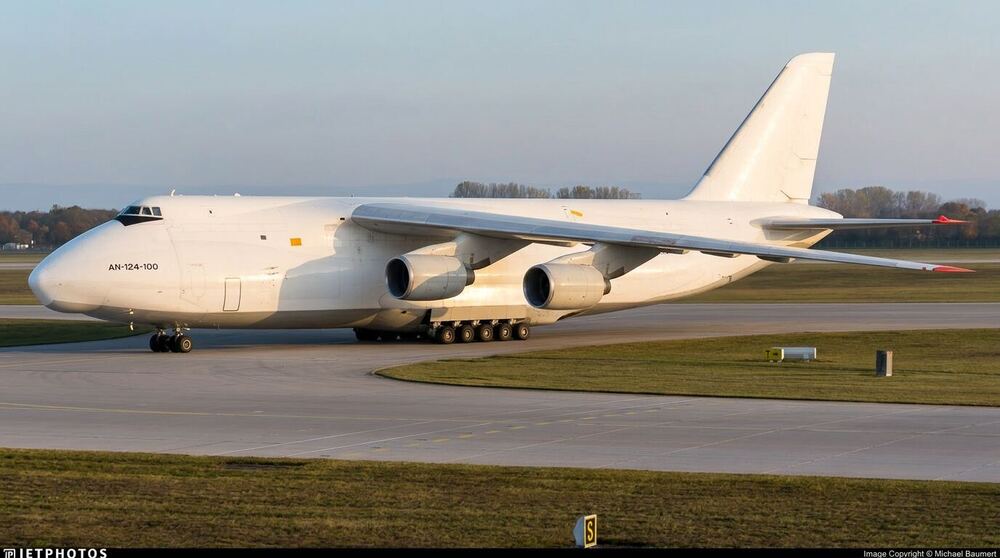
Large freighter aircraft parked on a tarmac
    24/7 Operations Desk · Active Now

    Australia · United States · Freighter Charter

    Cargo Charter United States: Trans-Pacific Freighter Support

    Full-aircraft charter linking Australian gateways with Los Angeles, San Francisco, Chicago and other US cargo hubs, built for long-range payload and time-critical freight.

    Already have an RFQ prepared? Email charters@aviall.com.au

    Trans-Pacific
    Long-range capability
    24/7
    Ops desk
    <60 min
    Quote turnaround
    TSA/DG
    Compliant handling

    Why charter is used on the Australia-United States lane

    The Australia-US corridor is one of the longest regularly chartered cargo lanes Aviall supports, and scheduled freighter capacity is frequently absorbed by e-commerce, mail and contracted logistics volumes. Charter is typically engaged for aerospace AOG components moving between US manufacturing or MRO hubs and Australian operators, for defence and government logistics requiring a single accountable operator, and for resources or scientific equipment that does not fit standard scheduled dimensions.

    Given the sector length, charter is also used where a shipment must avoid multiple transhipment points that would otherwise add days and handling risk to a genuinely time-critical movement.

    Typical commodities and shipment profiles

    US to Australia freight commonly includes aerospace and defence components, medical devices and technology, and e-commerce or retail overflow during peak periods. Australia to US freight typically includes resources and mining equipment components, premium agricultural exports, and specialised scientific or research equipment moving to US institutions and industry partners.

    Aircraft suited to distance and payload

    The Australia-US sector is genuinely long-haul, generally 12,000-15,000 km depending on city pair, and typically requires a technical stop or long-range widebody freighter capability.

    • 777F, the primary long-range workhorse capable of covering most Australia-US city pairs with adequate payload
    • 747-400F / 747-8F nose-loader, used for oversized aerospace components, defence equipment or long items requiring nose access
    • MD-11F, occasionally available on this lane and suited to mid-heavy payloads
    • AN-124 / IL-76, reserved for genuinely outsize cargo where standard nose-loading main-deck freighters are insufficient

    Airport, slot and permit considerations

    Los Angeles, San Francisco, Chicago O'Hare and Anchorage (as a technical stop) are among the more commonly used US gateways for Australia-linked freighter charter, each with structured slot and ground-handling coordination. Non-scheduled international charter into the United States generally requires FAA/TSA-compliant operator approval, US Customs and Border Protection pre-notification, and, depending on cargo type, additional security screening arrangements that should be scoped early in mission planning.

    Overflight and technical-stop clearances across the Pacific routing (commonly via Pacific island states or through US territories) should be confirmed as part of the initial flight-planning process rather than assumed to mirror a previous mission.

    Customs and documentation realities

    US Customs and Border Protection requires advance electronic cargo manifest data ahead of arrival, and Australian Border Force applies equivalent requirements on the return leg; both should be factored into planning timelines rather than treated as day-of formalities. Defence, dual-use or export-controlled items may require US export licensing (such as ITAR-related controls) or Australian defence export permits, and these should be identified during the initial mission scoping call given the potential for extended processing timeframes.

    Seasonality and peak pressure

    Demand on this lane tends to increase around the US pre-holiday e-commerce and retail peak (broadly October through December), when scheduled freighter capacity across the Pacific tightens materially, and around major US trade show and exhibition calendars. Charter lead times and pricing should be expected to extend during these periods.

    Cost drivers and lead times

    Cost drivers include aircraft type, positioning distance (often the most material factor given the sector length), technical-stop and overflight fees, US ground handling and security screening, and any export-control documentation requirements. Typical lead times range from approximately 48-72 hours for an urgent movement using an aircraft already positioned to cover the route, up to 7-14 days where positioning, export licensing or defence-related approvals are required. These figures are indicative and confirmed against the specific mission.

    Australia-United States cargo charter capability

    Aerospace AOG recovery

    Time-critical component movement between US MRO/manufacturing hubs and Australian operators.

    Defence & government logistics

    Single-accountable-operator charter for sensitive government and defence freight.

    Resources & scientific equipment

    Charter for outsize or specialised research and mining equipment.

    E-commerce peak capacity

    Supplementary freighter lift during the US pre-holiday retail surge.

    Export-control documentation

    Coordination support for ITAR-related and Australian defence export requirements.

    Dangerous goods

    IATA DG capability including lithium battery and technology shipments.

    Urgent charter? Our ops desk is staffed 24/7.

    Aircraft options within the hour and a written quote with an indicative wheels-up window.

    Mission examples · Illustrative

    What this looks like in operation

    Representative mission profiles drawn from recurring work. Identifying details, operators, hospitals, routes, aircraft tail numbers, are intentionally omitted.

    AOG · Time critical

    Replacement engine to a wide-body grounded overseas

    A major carrier had a wide-body grounded at a foreign hub, awaiting a replacement engine sitting in a domestic MRO. Aviall positioned a freighter to the MRO, coordinated dangerous goods documentation for the engine and stand, and held a flight-following bridge with the airline's tech ops cell door-to-door.

    Outcome

    Engine wheels-up inside 14 hours of release; aircraft returned to service the next operational day.

    Pharma · Cool chain

    Temperature-controlled biologics on a single-shipper aircraft

    A global health programme required a high-value biologics consignment moved on a controlled cool-chain into the Asia-Pacific without consolidation risk. Aviall chartered a freighter dedicated to the shipment, with active containers, written ramp-time targets, and continuous data-logger oversight.

    Outcome

    Zero temperature excursions; chain-of-custody documentation closed within 24 hours of landing.

    Dangerous goods

    Class 1 movement refused by scheduled carriers

    A government end user needed a Class 1 consignment moved on a tight window after scheduled carriers declined the booking. Aviall identified an operator approved for the class, completed the DG paperwork, NOTOC and security plan, and ran a single-shipper rotation under a controlled handling regime.

    Outcome

    Movement completed inside the customer's window with full regulatory close-out.

    Australia-United States cargo charter, quick reference

    Key gateways
    Los Angeles, San Francisco, Chicago O'Hare to Sydney, Melbourne, Brisbane, Perth
    Typical aircraft
    777F primary; 747F for oversize; AN-124/IL-76 for outsize cargo
    Permits
    TSA/CBP compliance, technical-stop and overflight clearance generally required
    Peak periods
    US pre-holiday retail peak (Oct-Dec), major trade show calendar
    Typical lead time
    Approximately 48-72 hours urgent; 7-14 days for export-control or positioning-heavy missions
    Quote turnaround
    Typically under 60 minutes from enquiry

    FAQ

    Frequently Asked Questions

    Where an aircraft is already positioned to cover the route, urgent movements are sometimes achievable within 48-72 hours; export-control or positioning-heavy missions typically need 7-14 days.

    Why operators, brokers and end clients keep calling back

    Credibility built on operational discipline, not marketing

    "Quote came back inside the hour with two aircraft options, written wheels-up windows and the cost-versus-time trade-off laid out. That is what we expect and rarely get."

    , Project logistics manager · Resources sector

    "Documentation, NOTOCs and DG paperwork were closed before we'd finished briefing our customer. No back-and-forth, no surprises at the ramp."

    , Senior freight forwarder · Global 3PL

    "They run the mission like an operator, not like a broker. That distinction matters when the cargo is heavy, the route is hard and the clock is real."

    , Charter broker · International network

    Planning a cargo charter to or from the United States?

    Send the shipment details, origin, destination, weight, dimensions and ready time. Aircraft options returned within the hour.

    Have a live requirement?

    Send us origin, destination, payload and ready date. We return aircraft options. Attach an existing RFQ, packing list or photos straight from your phone, partial detail is enough to start.

    Requirement

    Cargo

    AttachmentsPacking list, cargo dimensions, manifest, RFQ document, images or other supporting documentation. Files up to 20MB each, 10 max. PDF, Word, Excel, CSV, images or email files.

    Goes straight to our charter desk at Charters@Aviall.com.au. Submitting an RFQ does not confirm an aircraft.