Choosing the right freighter for a charter is one of the decisions that most often gets made on the wrong basis. The customer focuses on tonnage, the broker focuses on availability, and the actual binding constraint, almost always volume, door geometry, or pavement classification at one of the airfields, gets discovered after the quote has been issued. This guide is a working reference for the global cargo aircraft fleet, written from the operations side. It covers payload, volume, door dimensions, range, runway requirements and the missions each type is genuinely the best answer for.
The numbers below are nominal manufacturer or operator figures. Real-world payload is reduced by fuel for the leg, weather, pavement classification at origin and destination, and operator-specific operating limits. Treat the figures as the upper bound of what the airframe can do under favourable conditions.
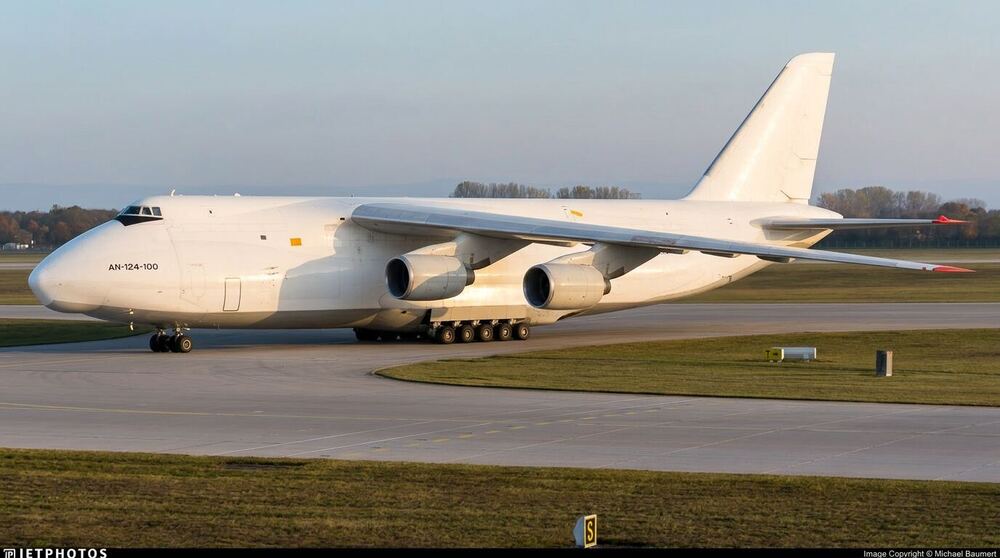
Antonov AN-124-100 Ruslan
Maximum payload: approximately 120 tonnes under favourable conditions; effective payload depends on the leg, fuel and pavement. Cargo hold dimensions: approximately 36 metres long, 6.4 metres wide, 4.4 metres high. Loading: full nose-door visor and tail ramp, allowing roll-on/roll-off and through-loading of items larger than the door of any other in-service freighter. Range with maximum payload: approximately 4,500 km. Range with reduced payload: up to 11,000 km. Runway requirement: 3,000 metres typical for MTOW operations.
What it is genuinely best for: oversize and outsize cargo that physically does not fit through any other freighter door. Spare engines on transport stands. Industrial transformers. Helicopters. Mining and energy modules. Defence and aerospace assemblies. Single-piece project cargo. The AN-124 is the only Western-accessible freighter in regular commercial service that takes outsize loads on a roll-on basis.
What it is not the right answer for: standard palletised general cargo at scale. The hourly cost is high, positioning legs are long because the global fleet is small, and the rate per kilo is materially worse than 747F or 777F for cargo that fits through a side door. Use the AN-124 because the load requires it, not because the load is heavy.
Operational notes: the global commercial AN-124 fleet is small (fewer than thirty active commercial airframes globally as of 2026) and is concentrated with a handful of operators based in Eastern Europe and the CIS. Lead times for activation, particularly for outbound permits and crew positioning, are longer than equivalent Western wide-body freighters. The aircraft is also restricted at some airfields by pavement classification and by political and sanctions considerations on certain operators, both of which need to be checked at the time of quotation.
Boeing 747-400F (and 747-400ERF)
Maximum payload: approximately 113 tonnes. Cargo hold volume: approximately 670 cubic metres. Loading: nose door (on most production 747F airframes) plus large side door, allowing through-loading of long items up to roughly 12 metres. Range with maximum payload: approximately 8,200 km. Runway requirement: 3,000 metres typical for MTOW.
What it is genuinely best for: long-range heavy palletised cargo. AOG components including spare engines that fit through the nose door (most current-generation high-bypass engines fit, with caveats on accessories and stands). Project cargo where length matters more than diameter. Long-range humanitarian airlift. The combination of nose-loading and main-deck height makes the 747F the most flexible Western wide-body for non-outsize project work.
What it is not the right answer for: outsize loads that exceed the nose-door cross-section. Short legs where the heavy fuel burn cannot be amortised against payload. The 747-400F is also approaching the end of its service life with several major operators, and availability of any specific airframe varies week to week.
Operational notes: the 747F fleet is well-distributed globally and is the workhorse of long-range heavy charter. Permits and handling are universally well understood. The 747-400ERF (extended-range freighter) variant carries an additional fuel load for ultra-long missions.
Boeing 747-8F
Maximum payload: approximately 137 tonnes. Cargo hold volume: approximately 854 cubic metres. Loading: nose door plus side door, with a fuselage stretch over the 747-400F that adds main-deck pallet positions. Range with maximum payload: approximately 8,100 km. Runway requirement: 3,100 metres typical for MTOW.
What it is genuinely best for: the highest-capacity Western nose-loading freighter currently in production. Used by operators that need 747-class flexibility with twenty percent more payload and volume. Strongest in the heavy long-range scheduled freighter networks (HKG, ANC, FRA, LUX, MEM); availability for ad-hoc charter is more constrained because most airframes are tied to scheduled programs.
What it is not the right answer for: short-range or thin-network missions where 747-400F or 777F is more economical and more available. The 747-8F is a premium platform; pay for the capacity only when the capacity is needed.
Boeing 777F
Maximum payload: approximately 102 tonnes. Cargo hold volume: approximately 653 cubic metres. Loading: large main-deck side door (approximately 3.7 metres wide by 3.0 metres high). No nose door. Range with maximum payload: approximately 9,200 km, the longest of any current production freighter. Runway requirement: 3,100 metres typical for MTOW.
What it is genuinely best for: long-range cargo where range and fuel efficiency matter more than nose-door access. The 777F is the most fuel-efficient large freighter in current production, which makes it the dominant choice for long-haul intercontinental cargo charter when the load fits through the side door. Strong choice for AOG components, palletised general freight, time-critical perishables, and pharmaceuticals on long-range routings.
What it is not the right answer for: spare engines on standard transport stands that exceed the side-door geometry, helicopters in built-up condition, or any single-piece load that requires through-loading from the nose. For those missions, 747F or AN-124 are the answers.
Operational notes: the 777F fleet is large, well-distributed and growing. Most major freighter operators in Asia, Europe, the Americas and the Middle East run 777F. Availability for ad-hoc charter is generally good, though peak periods (Q4 e-commerce, post-disruption recovery windows) compress availability across the entire wide-body fleet.
Boeing 767F (767-300F)
Maximum payload: approximately 52 tonnes. Cargo hold volume: approximately 438 cubic metres. Loading: large main-deck side door. Range with maximum payload: approximately 6,000 km. Runway requirement: 2,700 metres typical for MTOW.
What it is genuinely best for: medium-range general cargo at the largest payload that does not require a wide-body 747 or 777. Heavily used by integrators (UPS, FedEx) and by ACMI operators on regional and intercontinental short-haul. Good fit for AOG and time-critical work where the payload is in the thirty- to fifty-tonne range and the routing is medium-range.
What it is not the right answer for: long-range intercontinental work (use 777F) or very large single-piece loads (use 747F or AN-124).
McDonnell Douglas MD-11F
Maximum payload: approximately 91 tonnes. Cargo hold volume: approximately 583 cubic metres. Loading: large main-deck side door. No nose door. Range with maximum payload: approximately 7,500 km. Runway requirement: 3,000 metres typical for MTOW.
What it is genuinely best for: long-range heavy palletised cargo. Still operated in significant numbers by integrators (FedEx, UPS) on dedicated freighter networks, and by a handful of ACMI operators. Available for ad-hoc charter through its operators where the routing matches their scheduled patterns.
What it is not the right answer for: missions requiring outsize or nose-loaded cargo. The MD-11F is also approaching retirement with the major operators, so availability beyond the current operating network is limited.
Airbus A330-200F (and P2F conversions)
Maximum payload: approximately 70 tonnes (production A330-200F) or up to 60 tonnes for P2F conversions. Cargo hold volume: approximately 475 cubic metres. Loading: main-deck side door. Range with maximum payload: approximately 7,400 km. Runway requirement: 2,800 metres typical for MTOW.
What it is genuinely best for: medium-range to long-range general cargo. The A330F is the most efficient Airbus freighter in service and is becoming the dominant medium-payload wide-body as P2F (passenger-to-freighter) conversion programs scale. Good fit for general cargo charter where 777F is overkill on payload and 767F is short on range.
What it is not the right answer for: outsize project cargo or nose-loaded missions.
Ilyushin IL-76TD-90
Maximum payload: approximately 50 tonnes (older airframes) up to 60 tonnes (TD-90 variant with PS-90A engines). Cargo hold dimensions: approximately 24.5 metres long, 3.5 metres wide, 3.4 metres high. Loading: rear cargo ramp with overhead winches and integrated cargo handling system. Range with maximum payload: approximately 4,400 km. Runway requirement: 1,500 to 1,800 metres, including unpaved, gravel and short paved strips.
What it is genuinely best for: cargo into airfields that other wide-body freighters cannot use. Humanitarian airlift into damaged or austere fields. Mining and energy work into remote strips. Helicopters and military equipment that load on the rear ramp. Dropped loads where the rear ramp is required. Range of operations into airfields with short runways or unpaved surfaces, where the IL-76's combination of tough landing gear and rear-ramp loading is unmatched in the commercial fleet.
What it is not the right answer for: long-range general palletised cargo, where 777F or A330F are more efficient. The IL-76 burns more fuel per tonne-kilometre than newer wide-body freighters and trip costs reflect that, but the trade is rarely on rate; it is on access.
Operational notes: the IL-76 fleet is operated by carriers based in the CIS and Africa primarily. Permits and handling are well-understood for humanitarian and government work and less standardised for commercial cargo into Western airfields. Sanctions and political considerations apply to certain operators and need to be checked at the time of quotation.
Antonov AN-12 and AN-26
AN-12: maximum payload approximately 20 tonnes, range with payload approximately 3,600 km, rear cargo ramp, unpaved-strip capable. AN-26: maximum payload approximately 5 tonnes, range with payload approximately 1,100 km, rear ramp, unpaved-strip capable.
What they are genuinely best for: medium and small payloads into austere or remote fields. Humanitarian and government work in regions where Western alternatives do not operate. Bridge missions where the cargo is too large for a turboprop and too small for an IL-76.
What they are not the right answer for: any mission with strict commercial reliability or environmental requirements. Operating economics and operator availability vary significantly, and lead times for paperwork can be long for first-time movements.
Light and intermediate freighters
Beech 1900C/D (cargo): payload up to approximately 1.8 tonnes, short-strip capable, fast positioning. Cessna Caravan (cargo): payload up to approximately 1.4 tonnes, gravel-strip capable. Metro and SAAB 340 (cargo): payload up to approximately 4 tonnes, regional routings. ATR 72-500/600F: payload up to approximately 9 tonnes, regional and feeder cargo. 737-300F/400F: payload up to approximately 20 tonnes, narrow-body cargo charter. A321P2F: payload up to approximately 27 tonnes.
What they are genuinely best for: regional and short-haul cargo where wide-body is uneconomic. Express small-parts and AOG components into smaller airfields. Feeder operations supporting wide-body wet-leases. Time-critical pharmaceuticals on short legs. The narrow-body freighter market has expanded materially with the wave of A321P2F conversions over the past few years.
How to choose, in order
The decision sequence that experienced cargo planners follow runs in this order. First, what is the load (weight, dimensions in all three axes, single piece versus palletised, special handling, dangerous goods)? Second, what airfields does it have to use (runway length, pavement classification, customs and handling capacity, after-hours operations)? Third, what is the routing and the range required? Fourth, what is the operating window and how does that interact with positioning?
Only after those four are settled does it make sense to look at aircraft type and operator. Choosing the aircraft first, and then trying to make the load and the airfield fit, is the most common error in cargo charter planning. The aircraft should be selected from the constraint, not vice versa.
Cost: how the comparison works
Headline hourly rates for wide-body freighters in 2026 sit broadly in the following ranges (USD, indicative, ad-hoc charter, before fuel, permits and handling): AN-124 USD 30,000 to 50,000 per block hour; 747-8F USD 22,000 to 35,000; 747-400F USD 18,000 to 30,000; 777F USD 18,000 to 28,000; MD-11F USD 16,000 to 26,000; IL-76 USD 12,000 to 25,000; A330F USD 13,000 to 22,000; 767F USD 10,000 to 18,000. These are not quotes; they are order-of-magnitude figures that move significantly with fuel, route, operator and operational conditions.
What matters more than the hourly rate is the all-in cost per tonne or per unit moved. A 777F at USD 22,000 per hour with a 100-tonne payload over a ten-hour leg is materially cheaper per tonne than an AN-124 at USD 40,000 per hour with the same payload, if the load fits through the side door. Where the load only fits through the AN-124 nose, the comparison does not exist.
How Aviall Group sources and quotes
Aviall Group sources from operators of all the freighter types described above through standing relationships across Asia, Europe, the Middle East and the CIS, into Australia and the Asia-Pacific. Quotes are built from real positioning, fuel and permit assumptions for the specific routing, with the dominant variables called out so that customers can compare offers on the same basis.
For a freighter charter quotation, the desk runs 24/7 on 1800 796 769 or by request form. For background reading on specific aircraft and missions, see the heavy lift cargo charter pillar at /heavy-lift-cargo-charter, the urgent air freight charter page at /urgent-air-freight-charter, and the related case studies in this insights library.