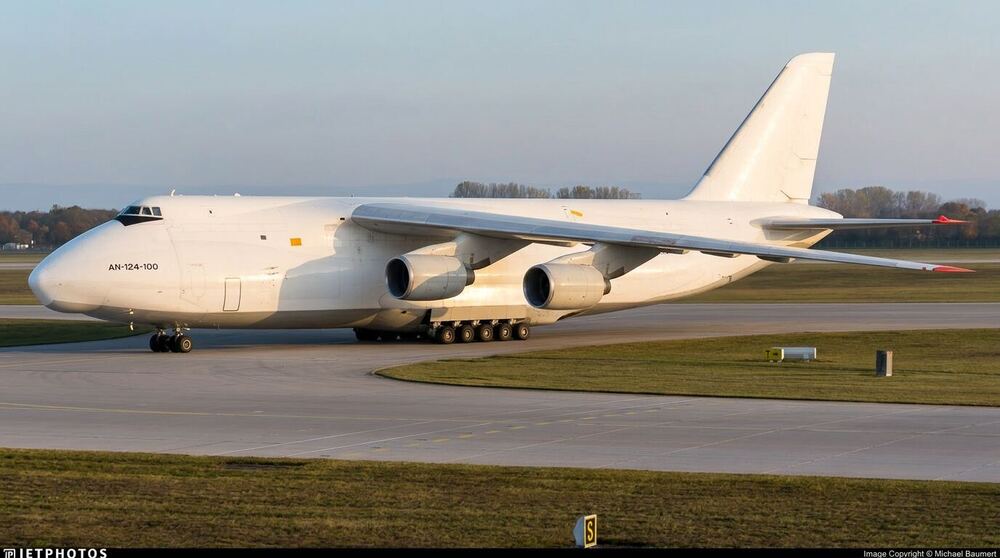
Heavy lift cargo charter is the segment of air freight that handles cargo too large or too heavy for standard widebody freighters. It exists because some shipments cannot move any other way inside a workable timeline: oversize industrial components, project cargo for energy and infrastructure, mining equipment, defence vehicles, and humanitarian relief at scale. The aircraft used are a small set of specialist freighters with capabilities that no standard commercial type can match.
This guide describes what heavy lift charter actually means, the aircraft used, the cargo profiles that justify it, and how to tell whether your shipment needs an outsize freighter. Aviall's heavy lift cargo charter service runs through the same operations desk that handles general cargo and AOG.
What 'heavy lift' means
Heavy lift in air freight is not a single threshold but a combination of three things: piece weight, piece dimensions, and the absence of any practical alternative on standard widebody freighters. A 30-tonne single piece is often considered heavy lift even though widebody freighters can lift 100-tonne payloads, because the single piece weight, not the aircraft's total payload, is what determines whether the cargo can be loaded.
The practical heavy lift threshold in 2026 is roughly: any single piece above 30 tonnes, any piece above 6 metres long that does not fit through a standard side-cargo door, and any piece that requires nose-door loading or specialist ground equipment.
The heavy lift aircraft
A small number of aircraft types do most of the world's heavy lift work:
Boeing 747-400F and 747-8F. Maximum payload around 110 to 140 tonnes, with the unique advantage of a nose-loading door that allows pieces up to 36 metres in length to be loaded directly. The 747F is the workhorse for long-piece cargo: helicopter blades, satellites, large industrial components.
Boeing 777F. Maximum payload around 100 tonnes through a side door, no nose loader. Used for high-density heavy cargo where the pieces fit through a side door.
Antonov AN-124. Maximum payload around 120 tonnes, with a unique combination of nose-loading capability, ramp loading, internal cranes, and the ability to land on austere strips. The AN-124 is the default answer for the largest project cargo: transformers, drills, mining haul truck components, military vehicles.
Ilyushin IL-76. Maximum payload around 50 tonnes, with rear ramp loading and the ability to operate from short and unpaved runways. The IL-76 is the answer for outsize cargo into remote sites that cannot take widebody types.
Antonov AN-225 (no longer operational). Was the world's largest cargo aircraft until 2022.
Specialist airships and Boeing Dreamlifter (Boeing-internal aerospace cargo only) sit outside the commercial heavy lift market.
See the global cargo aircraft comparison for full technical detail on each type.
Cargo profiles that justify heavy lift
Heavy lift charter is justified when the cargo cannot move any other way inside the timeline. Common cargo profiles:
Power and energy: transformers, generators, turbine components, switchgear, gas turbines for power stations and industrial plants.
Mining and resources: haul truck components, drill rigs, draglines, large pumps, processing plant modules.
Oil and gas: drilling equipment, blowout preventers, valves and trees, modules for offshore platforms.
Aerospace: spare engines, large airframe components, satellite payloads, helicopter assemblies.
Defence: armoured vehicles, helicopters, large weapon systems, command and control modules.
Infrastructure: bridge sections, rail components, large tunnel boring components.
Humanitarian and disaster response: water purification plant, mobile hospitals, generators, vehicles.
Renewables: wind turbine blades, hubs, nacelles (although wind cargo is often staged by sea where the deadline allows).
How to tell if you need heavy lift
Three questions normally settle it:
Does any single piece weigh more than 30 tonnes? If yes, heavy lift is likely.
Is any piece longer than 6 metres or larger than the cross-section of a standard side cargo door? If yes, heavy lift is likely, and a 747F or AN-124 nose-loader may be needed.
Does the cargo require specialist ground equipment to load (transformer rolling beams, oversize lift-and-shift gear, internal aircraft cranes)? If yes, heavy lift is the only practical answer.
If all three answers are no, the cargo can probably move on a standard widebody freighter. See cargo charter services for the standard freighter options.
Lead time and cost
Heavy lift charter has longer lead times than standard cargo charter for two reasons. First, the aircraft fleet is smaller and aircraft availability has to be matched to the mission, which often involves positioning the aircraft from another continent. Second, the ground equipment and engineering work (lift planning, load distribution, customs and oversize permits at both ends) takes longer.
Realistic lead times: 24 to 96 hours for an IL-76 mission with the aircraft within positioning radius; 3 to 14 days for an AN-124 mission with full positioning, oversize ground equipment and route engineering. Urgent missions can compress these but the floor is set by aircraft availability rather than desk responsiveness.
Cost ranges: IL-76 missions typically USD $300,000 to $700,000; AN-124 missions typically USD $500,000 to $1.5 million-plus. The largest single cost driver is positioning, particularly for AN-124 where the aircraft is often moving from another continent.
The operational sequence
Heavy lift missions involve more upfront engineering than standard cargo charter:
Cargo specification: weight, dimensions, centre of gravity, lifting points, packaging, any DG classification.
Aircraft selection: matched to piece weight and dimensions, runway suitability at both ends, positioning distance.
Load planning: aircraft-specific load distribution against floor strength and cargo door dimensions.
Ground equipment: rolling beams, scissor lifts, cranes, internal aircraft cranes (for AN-124).
Permits: overflight, landing, oversize cargo permits at origin and destination, sometimes also for road transport at either end.
Inland transport: oversize road transport from origin to airport and from airport to destination, often with police escort and route survey.
Customs: oversize cargo customs handling at port of entry, often requiring pre-arrival arrangements.
The customer normally has a written quote within 24 hours of a complete cargo specification. Genuinely complex missions take longer to quote because the engineering work is real.
Frequently asked questions
What is the largest cargo aircraft available in 2026?
The Antonov AN-124, with a maximum payload around 120 tonnes and the ability to load pieces up to about 36 metres long. The AN-225, which was larger, has not been operational since 2022.
Can a 747 carry the same cargo as an AN-124?
For most cargo, yes, but the AN-124 has advantages on austere strips, on internal crane capability, and on ramp loading for vehicles. The 747-8F has advantages on cruise economics and operational availability. Aircraft selection is mission-specific.
Can heavy lift aircraft land at remote sites?
The AN-124 and IL-76 can operate from austere and unpaved strips, which is one of the main reasons they are used for project cargo into mining and oil-and-gas sites. The 747F and 777F require full commercial runways.
How do you load a transformer onto an aircraft?
Transformers are typically loaded with rolling beams that run from the ground equipment into the aircraft, with the aircraft's internal cranes (on AN-124) or external cranes guiding the cargo into position. The lift plan is engineered against the specific transformer weight, dimensions and lifting points before the aircraft positions.