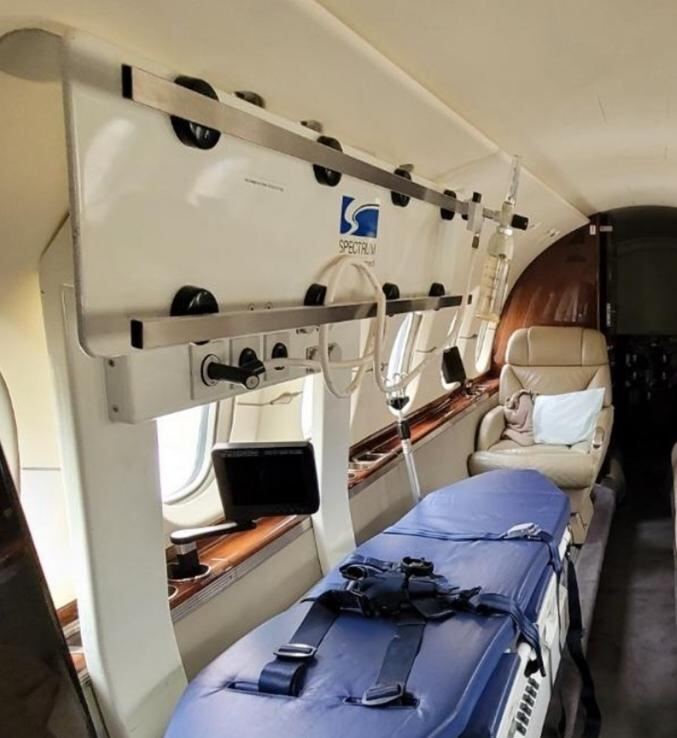
The following is an illustrative walk-through rather than a case file. It describes how an overnight ICU retrieval out of a remote Pacific site is typically structured by the operations desk, without identifying any specific mission, patient, operator or location.
After-hours retrievals usually begin with a satellite call from a site medic to the duty phone. The clinical picture varies, a serious medical event at a remote work site, an industrial injury, a deterioration that has run beyond what local facilities can manage, but the underlying problem is the same. The patient requires a level of care that is not available locally, and the closest appropriate facility is some hours of flying time away.
The medical assistance company or insurer responsible for the patient is normally brought onto a bridge call early. In genuine emergencies, verbal authorisation to begin operational planning is often given so that aircraft and crew sourcing can start while the formal financial paperwork is being completed in parallel. Waiting for closed paperwork before any movement begins is rarely compatible with the clinical window.
Picking the aircraft
Aircraft selection is driven by aircraft availability inside a workable positioning radius, the configuration required for the clinical case, and crew duty position. An aircraft already configured for ICU work is generally preferred over one that would need to be reconfigured, because reconfiguration adds time the patient often does not have. Maintenance status, runway suitability at both ends and range to the destination are all assessed at the same time.
The clinical team, typically a retrieval doctor and a flight nurse, with composition matched to the case, is normally activated alongside the flight crew. Clinical handover from the site medic, agreement on transfer thresholds (the clinical parameters under which the patient can be safely flown), and preparation of the drugs and equipment expected to be needed in flight are completed before departure. The majority of in-flight clinical decisions are framed before the aircraft moves, not during the flight.
What the ops desk was doing in parallel
While the aircraft is being prepared, the operations desk works several threads at once rather than in sequence. Overflight and landing permits at both ends, customs and immigration arrangements for an unscheduled medical arrival, ground ambulance at origin and destination, and a confirmed receiving facility with the appropriate clinical capability all need to come together before the patient lands. Established relationships with the relevant authorities and after-hours desks are usually what allow short-notice clearances to come through inside the operational window.
The flight
Once the aircraft has positioned into the origin field, the patient is met planeside by the clinical crew and transferred onto the aircraft stretcher with the site medical team. Ground time is kept as short as the clinical handover allows. In cruise, the retrieval doctor manages the patient against the transfer thresholds agreed before launch.
On arrival at the destination, customs clearance for the patient and clinical crew has typically been pre-arranged so that handover to the receiving ambulance and onward transfer to the receiving facility can happen with minimal delay on the ground.
What this case shows
Outside observers tend to focus on wheels-up time because it is the most visible number. In a retrieval of this kind, wheels-up is mostly a function of decisions and arrangements made in the period leading up to it: the right aircraft already configured, the right clinical crew available, the receiving facility ready to accept the patient, and permits in motion at both ends.
The aircraft type and routing change with the geography and the clinical case. The structure of how the mission is run does not change as much as the variation between missions might suggest.