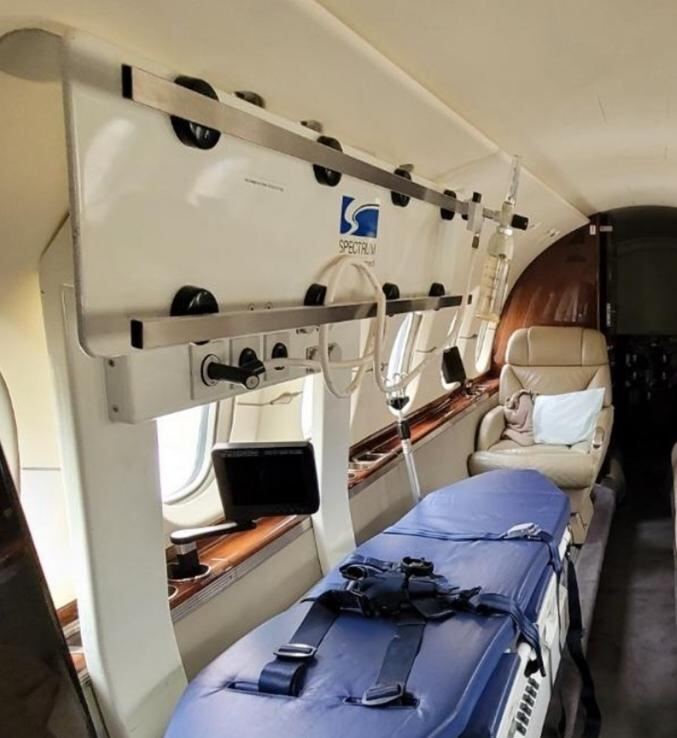
Booking a medical air charter or air ambulance flight is not the same as booking a normal charter. The clinical picture drives the aircraft, the crew and the routing, and every hour matters. This guide walks through what actually happens from the first call to handover at the receiving facility, and what information speeds it up.
1. Call the operations desk first
The starting point is a single phone call to the Aviall 24/7 operations desk on 1800 796 769. In genuine emergencies verbal authorisation is enough to begin operational planning, aircraft and crew sourcing runs in parallel with the financial paperwork, not after it.
2. Information to have ready
Have the following ready when you call, but do not delay the call to gather it, planning can start with what is known and update as more comes in:
• Patient location (city, hospital or site) and destination facility if already agreed.
• A brief clinical summary, diagnosis, current care level (ward / high-dependency / ICU), ventilation, infusions, isolation.
• Patient mobility, stretcher, wheelchair, ambulatory.
• Passengers travelling with the patient, family, escorts, treating clinicians.
• Payer, insurer, assistance company, self-pay, and any policy or reference number.
3. Aircraft selection
Aviall selects the aircraft against the clinical case. An aircraft already configured for ICU work is preferred over one that would need to be reconfigured. Runway suitability at both ends, range to destination and crew duty position all sit alongside the clinical requirement. For long international sectors a jet such as the Challenger air ambulance is typical; for regional Australian and Pacific work a Learjet air ambulance is a common fit.
4. Clinical team activation
A retrieval doctor and flight nurse are activated alongside the flight crew, with composition matched to the case. Clinical handover from the sending facility, agreement on transfer thresholds and preparation of the drugs and equipment expected in flight are completed before departure, not during it.
5. Ground coordination in parallel
Overflight and landing permits, customs and immigration for an unscheduled medical arrival, ground ambulance at both ends and a confirmed receiving facility with the right clinical capability all need to come together before the patient lands. This is what the operations desk works while the aircraft is preparing.
6. Cost and payment
There is no single price for a medical charter. It depends on the aircraft, sector length, positioning legs, clinical crew and ground arrangements. What we quote is the actual cost of the mission we would run, against a specific aircraft. If an insurer or assistance company is paying, we work with them directly on approvals and paperwork.
What to do next
If you are looking at this page because someone needs to move now, call the operations desk on 1800 796 769. If you are planning ahead or comparing providers, send us the details and we will walk you through exactly how we would run the mission.