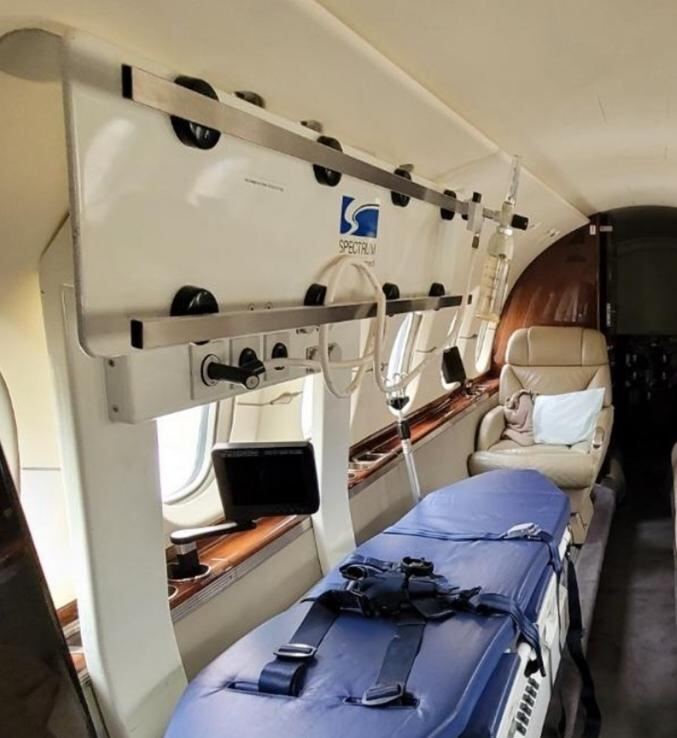
Interior of a medically configured aircraft cabin
    24/7 Operations Desk · Active Now

    India · Australia · Medical Repatriation

    Medevac India: Medical Evacuation and Repatriation to Australia

    Coordinated medical repatriation from India to Australia, matching the patient's clinical needs to the right level of care, from commercial medical escort through to dedicated air ambulance.

    Already have an RFQ prepared? Email charters@aviall.com.au

    24/7
    Ops and clinical liaison
    Clinical review
    Every case
    Escort or air ambulance
    Matched to need
    Confidential
    Case handling

    Speaking to someone is usually the fastest way to start.

    Our medical transfer desk is staffed 24 hours. You do not need complete information to make the first call, the current location of the patient and where they need to go is enough to begin.

    Patient information is treated as sensitive. Medical detail and uploaded reports go only to the clinical and operations coordinators handling the case, are never placed in web addresses, and are never shared with advertising or analytics platforms.

    India operating conditions that shape the plan

    India is a permit-led environment on the end of a long sector. We run approvals, aircraft sourcing and clinical or handling arrangements in parallel, and we build the plan around a realistic permit timeline rather than an optimistic one.

    For patient transfers, movements into and out of India commonly involve a technical stop in South-East Asia, so crew duty, refuelling and clinical consumables are planned across the whole route rather than leg by leg.

    • Delhi (DEL), Mumbai (BOM), Chennai (MAA) and Bengaluru (BLR) are the primary international ports; slot and parking pressure at the largest is significant
    • Indian overflight and landing permits are required for non-scheduled flights and are a defining part of the lead time
    • Sectors from Australia are long, so long-range airframes or a planned technical stop are required
    • The south-west monsoon from roughly June to September materially affects reliability

    How medical repatriation from India is assessed

    Every repatriation enquiry from India begins with a clinical review of the patient's condition, current treatment and stability, undertaken in consultation with the treating clinical team wherever possible. This determines whether the case is suitable for a commercial-flight medical escort, a stretcher movement on a scheduled service, or a dedicated air ambulance, and acceptance of any case remains subject to that clinical assessment rather than being assumed at the point of enquiry.

    India's healthcare system spans a wide range of metropolitan tertiary centres and regional facilities, so the originating city and the receiving Australian facility's capacity both factor into route and aircraft planning. No patient-identifying details are required to begin a preliminary enquiry, and case information is handled confidentially throughout.

    Medical escort versus dedicated air ambulance

    A commercial medical escort, where a nurse or doctor accompanies a stable patient on a scheduled airline seat or approved stretcher fitting, is typically appropriate for patients who are medically stable, do not require continuous critical-care monitoring, and can tolerate a standard cabin environment across a long sector. This option is generally more cost-effective and, subject to airline stretcher approval processes, can sometimes be arranged faster.

    A dedicated air ambulance, using a purpose-configured aircraft with a critical-care medical team, is generally required where the patient needs continuous ventilation, infusion therapy, intensive monitoring, or is otherwise assessed as unable to tolerate a scheduled commercial environment for the duration of the sector. The choice is a clinical decision made in consultation with the treating team, not a default based on cost or convenience.

    Typical route and aircraft considerations

    India to Australia is a long sector whose length varies materially by city pair, from around 8,000 km on western Australian gateways up to longer distances for less direct combinations, which is a material factor in aircraft selection for dedicated air ambulance missions given the need for adequate range and onboard medical equipment endurance for the full sector. Long-range jet aircraft configured for critical-care transport are typically used for dedicated missions, with a technical stop considered where the specific aircraft and case require it. Medical escort cases generally travel on suitable scheduled airline services with appropriate stretcher or seating arrangements confirmed in advance.

    Documentation, insurance and clinical handover

    Repatriation from India generally requires medical reports and fitness-to-fly clearance from the treating Indian facility, translated where necessary, along with insurance or funding confirmation before a mission is finalised. A structured clinical handover between the Indian treating team and the receiving Australian medical team (or the accompanying medical escort) is coordinated as part of every mission, with the aim of ensuring continuity of care from bedside to bedside.

    Passport, visa and any required Indian exit documentation for the patient and accompanying family should be confirmed early, as processing timeframes can affect the overall mission schedule.

    Compassionate and family considerations

    Repatriation cases are inherently sensitive, and coordination is handled with a compassionate, calm approach that keeps the family informed at each stage while respecting the clinical realities of the case. Where appropriate and space allows, accompanying family members can generally travel on the same aircraft, subject to the medical team's assessment of cabin space and clinical priorities.

    Cost drivers and typical timeframes

    Cost drivers include the level of care required (medical escort versus dedicated air ambulance), aircraft positioning and sector length, the medical equipment and staffing needed for the specific case, and any ground ambulance transfers at each end. Medical escort cases can sometimes be arranged within 24-48 hours of clinical clearance and seat availability; dedicated air ambulance missions typically require several days for aircraft positioning, crew rostering and permit coordination, though genuinely urgent cases are prioritised. All figures are indicative and confirmed against the specific case.

    India medevac and repatriation capability

    Clinical case review

    Every enquiry assessed with the treating team before an option is proposed.

    Medical escort coordination

    Nurse or doctor escort on suitable scheduled services.

    Dedicated air ambulance

    Long-range critical-care aircraft for cases requiring continuous monitoring.

    Bedside-to-bedside handover

    Structured clinical handover between Indian and Australian teams.

    Documentation support

    Coordination of medical reports, fitness-to-fly and exit documentation.

    Family travel coordination

    Accompanying family arrangements where clinically appropriate.

    Medical transfer & repatriation desk

    Request a medical transfer

    You do not need a complete clinical picture to contact us. Tell us where the patient is and where they need to go, and a coordinator will start assessing options, aircraft, clinical configuration, crewing, clearances and ground ambulance, while the rest of the information is still being gathered.

    Enough to start

    • Where the patient is now

      City or country, and the facility type if you know it

    • Where they need to go

      City, country, or receiving hospital if already arranged

    • Rough timing

      Today, within 24 hours, or later this week

    • How they are travelling

      Seated, wheelchair, stretcher, or intensive care, an estimate is fine

    Helpful, but can follow

    • A medical report, discharge summary or fit-to-fly assessment, uploaded securely
    • Treating team or transfer-desk contact, so our clinical coordinator can speak with them directly
    • Insurer, assistance company or funding arrangement, if one applies
    • Receiving hospital acceptance, where that is still being organised

    Clinical acceptance and aircraft availability are confirmed after review by the clinical team and the receiving facility. Contacting us does not by itself confirm a flight, a crew or acceptance of the patient.

    Or email medical reports and case detail to charters@aviall.com.au

    Privacy: patient details and uploaded reports are handled as sensitive information, stored in restricted storage, and passed only to the coordinators and clinicians working the case. They are never written into web addresses, advertising platforms or analytics events.

    Urgent charter? Our ops desk is staffed 24/7.

    Aircraft options within the hour and a written quote with an indicative wheels-up window.

    Mission examples · Illustrative

    What this looks like in operation

    Representative mission profiles drawn from recurring work. Identifying details, operators, hospitals, routes, aircraft tail numbers, are intentionally omitted.

    Neonatal · Critical

    Neonatal transfer to a tertiary paediatric centre

    A neonate requiring escalated care had to be moved from a regional hospital to a metropolitan paediatric tertiary centre. Aviall coordinated an aeromedical aircraft and a specialist retrieval team, with isolette-compatible loading and parent transit on the same airframe.

    Outcome

    Patient delivered to receiving NICU within the clinical window agreed by both teams.

    Remote · Mining medevac

    Trauma extraction from a remote mine site

    An incident at a remote mine site required immediate movement of a trauma patient to a metropolitan trauma centre. Aviall launched on the standing medevac protocol, with a clinical team mobilised in parallel and the receiving trauma team pre-briefed before take-off.

    Outcome

    Patient on the operating table at the receiving centre well inside the planned window.

    India medevac, quick reference

    Coverage
    Major Indian metropolitan and regional centres to Australian receiving facilities
    Options
    Commercial medical escort or dedicated air ambulance, matched by clinical review
    Typical aircraft (air ambulance)
    Long-range critical-care configured jet, technical stop where required
    Documentation
    Treating-facility medical report, fitness-to-fly clearance, insurance/funding confirmation
    Typical lead time
    24-48 hours for escort cases subject to clearance; several days for dedicated air ambulance
    Enquiry response
    Clinical and operational assessment typically begins within the hour

    FAQ

    Frequently Asked Questions

    Every case is clinically reviewed with the treating team; stable patients able to tolerate a scheduled cabin are generally suited to medical escort, while patients requiring continuous critical care generally require a dedicated air ambulance.

    Why operators, brokers and end clients keep calling back

    Credibility built on operational discipline, not marketing

    "Single point of clinical accountability from the call to bed-to-bed handover. Our retrieval team had everything they needed before wheels-up."

    , Aeromedical retrieval lead · Tertiary hospital network

    "The case management discipline matched our internal standards. That is unusual in the assistance market."

    , Operations director · International medical assistance company

    "Aircraft selection was driven by the patient's clinical picture, not by what was on the apron. That is the right way around."

    , Critical-care physician · Repatriation case

    Coordinating a medical repatriation from India?

    Call the 24/7 ops line on 1800 796 769 or submit the case details for confidential clinical and operational review.

    Have a live requirement?

    Tell us where the patient is and where they need to go, that is enough to start. Our medical desk is staffed 24 hours. Attach an existing RFQ, packing list or photos straight from your phone, partial detail is enough to start.

    Requirement

    Medevac / Air Ambulance

    Only the first four fields are needed to start. Anything clinical can follow by phone, email or upload. Patient information is handled as sensitive and is never shared with advertising or analytics platforms.

    AttachmentsMedical reports, fit-to-fly assessments or insurer authorisations, uploaded to restricted storage. Files up to 20MB each, 10 max. PDF, Word, Excel, CSV, images or email files.

    Final medical and operational acceptance is subject to clinical review and aircraft/operator availability. Submitting this form does not confirm an aircraft or a medical crew.

    Goes straight to our charter desk at Charters@Aviall.com.au. Submitting an RFQ does not confirm an aircraft.