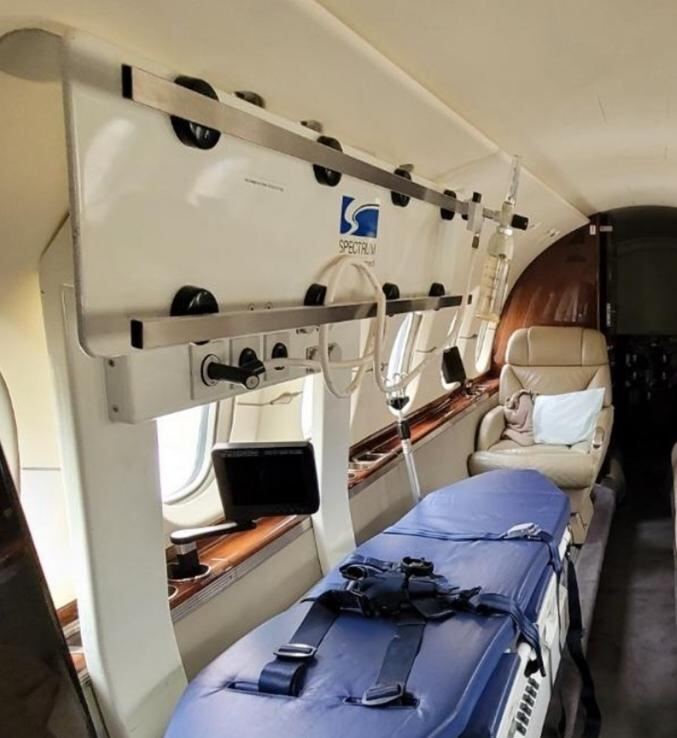
Cabin space and stretcher loading
A medical transfer needs more than a seat removed. The cabin has to accept a secured stretcher, allow a clinician to reach the patient's head and torso in flight, and carry the monitoring, ventilation and infusion equipment with power for all of it.
Loading is its own constraint. Smaller aircraft with narrow doors and low cabin height can make a stretcher load awkward or, in some configurations, unsuitable for a patient who cannot be repositioned. This is one reason a slightly larger aircraft is sometimes the right answer even on a short sector.
- Stretcher and loading system compatibility with the aircraft door and cabin
- Clinical access to the patient throughout the flight, not just on the ground
- Securing points for monitors, ventilator, pumps and suction
- Electrical provision and redundancy for every device that matters
- Space for the medical crew to work rather than merely sit