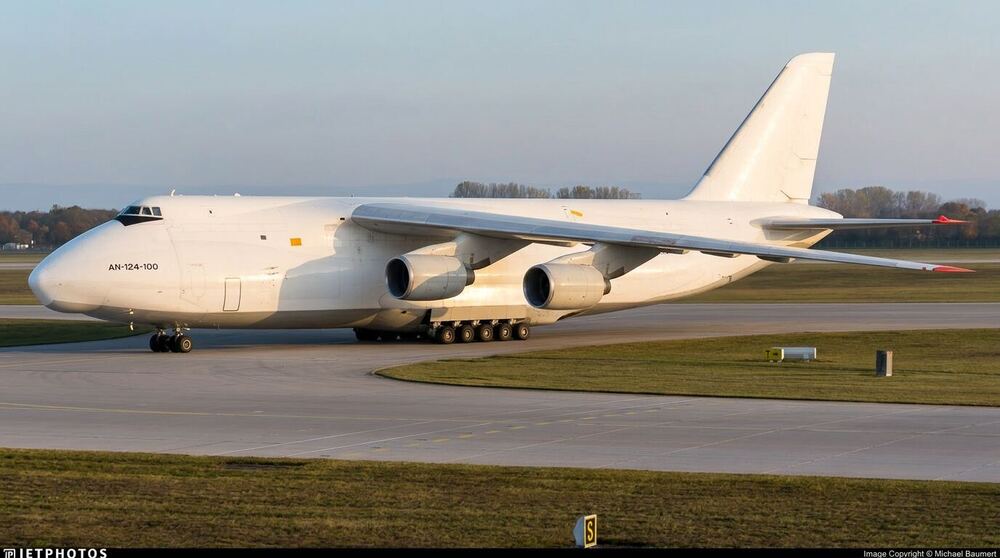
Heavy lift freighter aircraft on the tarmac being loaded with outsize cargo
    24/7 Operations Desk · Active Now

    Indonesia ↔ Australia · Freighter Charter

    Indonesia ↔ Australia Cargo Charter

    Full-aircraft charter between Jakarta, Surabaya, Bali, Balikpapan and Australian gateways, the shortest international cargo lane into Australia and the most operationally varied.

    Already have an RFQ prepared? Email charters@aviall.com.au

    2,700 km
    CGK-DRW sector
    Same day
    Achievable on short lanes
    <60 min
    Aircraft options returned
    Outsize
    Up to 120 t capability

    The shortest international cargo lane into Australia

    Indonesia is Australia's closest large neighbour, and the geography changes what charter can do. Jakarta to Darwin is around 2,700 km, Bali to Darwin closer to 1,800 km, and Balikpapan to Darwin about 2,600 km. At those distances narrowbody freighters and turboprops become practical, aircraft can often complete a there-and-back rotation in a day, and same-day movement is a realistic ambition rather than an exception.

    That proximity also means charter competes on a different basis here. On long-haul lanes charter is bought because scheduled capacity is unsuitable; on the Indonesian lane it is frequently bought because scheduled capacity does not serve the actual origin or destination at all. Resource sites, secondary islands and regional airports rarely have useful freighter services, and a charter is the only way to connect them directly to an Australian gateway.

    Commodities and mission types that typically move

    Northbound from Australia: mining and processing spares for Indonesian operations in Kalimantan, Sulawesi and Papua, drilling and offshore components, heavy plant parts, chilled and live produce including cattle-industry support freight, and equipment supporting Australian-linked projects and remote camps.

    Southbound to Australia: manufactured components and textiles, packaged food and beverage products, timber and furniture, and repaired or refurbished equipment returning from Indonesian workshops.

    The lane also carries a recurring humanitarian and disaster response profile. Indonesia's exposure to earthquake, volcanic and flood events makes short-notice relief airlift a genuine and repeated requirement, usually into a damaged or congested airport where slot, apron and fuel availability all need checking before an aircraft is committed.

    Aircraft suited to short sectors and difficult fields

    The short sector length means aircraft choice is driven by the cargo and by the runway, not by range. Many Indonesian regional airports have limited runway length, pavement strength or loading equipment, and the right answer is often a smaller aircraft that can actually operate into the field rather than a larger one that has to stop short.

    • 737-800F or A321F, the workhorse pair for 20-25 tonne loads between Indonesian and northern Australian gateways
    • ATR-72F or similar turboprop freighters, for short island sectors and airports with limited runway or pavement strength
    • 767-300F, used when the load reaches 40-50 tonnes and the field can accept a widebody
    • 777F or 747-400F, reserved for consolidated volume or long single pieces where a major gateway is available at both ends
    • IL-76 or AN-124, for outsize mining and energy plant, including loads that need rear-ramp or nose-door access

    Airport, permit and border considerations

    Soekarno-Hatta (CGK) is the primary freighter gateway, with Surabaya (SUB), Denpasar (DPS), Balikpapan (BPN) and Makassar (UPG) all relevant depending on where the cargo actually is. Regional fields serving mine sites and remote projects vary widely in capability, and runway length, pavement classification, fuel availability, loading equipment and operating hours all have to be verified individually rather than assumed.

    Indonesian permits for non-scheduled international flights, including landing and overflight approvals, require lead time that should be confirmed at booking. During disaster response operations, permit and slot processes are often coordinated centrally and can change quickly, so early notification of the routing matters more than usual.

    On the Australian side, Darwin is the natural gateway for the shortest sectors and for onward tasking into northern Australia. Perth is used for Western Australian destinations, and Brisbane, Sydney or Melbourne where the final delivery point is on the east coast. Australian biosecurity scrutiny on this lane is significant for timber, food, soil-contaminated equipment and used machinery, so cleaning and treatment standards should be confirmed before departure rather than resolved on arrival.

    Time-critical use cases we see repeatedly

    Remote site support dominates. A mine, plant or drilling operation with a failed component and no useful scheduled service, where the charter is priced against the daily cost of a stopped operation and where the delivery point is a regional strip rather than a capital city.

    Disaster and relief airlift is the second recurring pattern, typically a first-wave movement of shelter, water treatment, medical or power equipment into a constrained airport, followed by sustainment rotations once the field's real capacity is known.

    The third is perishable and livestock-industry support, where freshness windows and animal welfare requirements make a direct short-sector charter the only workable option.

    Indonesia lane capability

    Field capability verification

    Runway length, pavement strength, fuel and loading equipment checked at the specific airport before an aircraft is committed.

    Same-day short-sector rotations

    Darwin, Bali, Jakarta and Balikpapan combinations planned as day rotations where cargo readiness allows.

    Remote site delivery

    Direct movement to regional strips serving mines, plants and camps instead of a capital-city drop and long road leg.

    Relief and disaster airlift

    First-wave and sustainment rotations into constrained airports, with slot and apron limitations planned in.

    Outsize and rear-ramp options

    IL-76 and AN-124 access for plant that cannot be dismantled or containerised.

    Biosecurity preparation

    Cleaning, treatment and packaging requirements for used machinery, timber and food confirmed before departure.

    Indonesia ↔ Australia · Live requirement

    Have a live cargo requirement?

    Send the six details below and our charter desk returns aircraft options, payload feasibility and an indicative wheels-up window. Partial information is enough to start. We will work with what you have while packing is finalised.

    Already have an RFQ? Email charters@aviall.com.au

    Send us

    • 01OriginAirport, city or plant
    • 02DestinationFinal airport or door address
    • 03PayloadGross weight and piece count
    • 04Ready dateWhen cargo is packed and released
    • 05CommodityIncluding any dangerous goods class
    • 06Packing listDimensions per piece, if available

    Urgent charter? Our ops desk is staffed 24/7.

    Aircraft options within the hour and a written quote with an indicative wheels-up window.

    Mission examples · Illustrative

    What this looks like in operation

    Representative mission profiles drawn from recurring work. Identifying details, operators, hospitals, routes, aircraft tail numbers, are intentionally omitted.

    Humanitarian · Surge

    Multi-rotation airlift after a regional disaster

    Following a sudden-onset disaster in the wider region, an aid consortium needed shelter, water and medical kit moved on consecutive days into a damaged airfield with reduced services. Aviall built a rotation plan around aircraft suited to the strip and pre-positioned ground handling support.

    Outcome

    Sustained airlift maintained across consecutive days without diversion.

    Pharma · Cool chain

    Temperature-controlled biologics on a single-shipper aircraft

    A global health programme required a high-value biologics consignment moved on a controlled cool-chain into the Asia-Pacific without consolidation risk. Aviall chartered a freighter dedicated to the shipment, with active containers, written ramp-time targets, and continuous data-logger oversight.

    Outcome

    Zero temperature excursions; chain-of-custody documentation closed within 24 hours of landing.

    Indonesia ↔ Australia, quick reference

    Sector length
    1,800 km (DPS-DRW) - 5,500 km (CGK-SYD)
    Block time
    Approx. 2.5 - 7 hours
    Typical payload band
    1 - 120 tonnes
    Main origin airports
    CGK, SUB, DPS, BPN, UPG plus regional fields
    Common Australian gateways
    DRW, PER, BNE, SYD, MEL, CNS
    Usual constraint
    Airport capability rather than range

    FAQ

    Frequently Asked Questions

    Often yes, but the airport decides the aircraft. We verify runway length, pavement strength, fuel availability, operating hours and loading equipment at the specific field before committing. Where a jet freighter cannot operate, a turboprop freighter or a two-stage movement through a regional gateway is usually the workable answer.

    Why operators, brokers and end clients keep calling back

    Credibility built on operational discipline, not marketing

    "They run the mission like an operator, not like a broker. That distinction matters when the cargo is heavy, the route is hard and the clock is real."

    , Charter broker · International network

    Moving cargo between Indonesia and Australia?

    Send origin, destination, payload, ready date, commodity and packing list. Our desk returns aircraft options, airport feasibility and an indicative wheels-up window.

    Have a live requirement?

    Send us origin, destination, payload and ready date. We return aircraft options. Attach an existing RFQ, packing list or photos straight from your phone, partial detail is enough to start.

    Requirement

    Cargo

    AttachmentsPacking list, cargo dimensions, manifest, RFQ document, images or other supporting documentation. Files up to 20MB each, 10 max. PDF, Word, Excel, CSV, images or email files.

    Goes straight to our charter desk at Charters@Aviall.com.au. Submitting an RFQ does not confirm an aircraft.