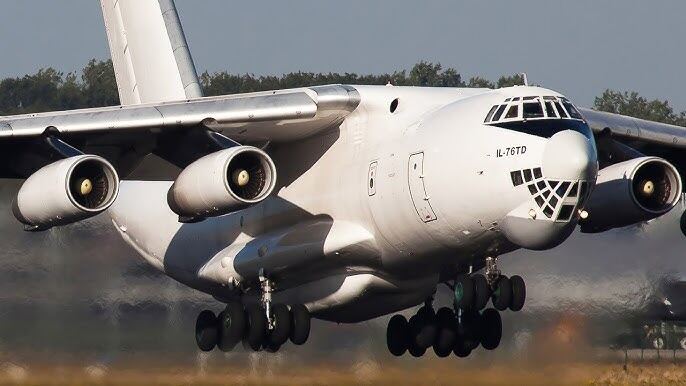
Cargo aircraft departing on an emergency response air freight mission
    24/7 Operations Desk · Active Now

    Crisis Response · Escalation Process · 24/7 Activation

    Emergency Air Freight: The First-Hours Response Process

    What actually happens in the hours after a disruption, disaster or supply chain break, and how emergency air freight gets moving inside that window.

    Already have an RFQ prepared? Email charters@aviall.com.au

    24/7
    Activation desk
    <60 min
    First response
    AU + APAC
    Coverage
    1
    Point of accountability

    What separates emergency air freight from urgent freight

    Urgent air freight covers a known shipment on a compressed timeline. Emergency air freight covers a situation where the shipment itself, the routing, or even the receiving location may still be undefined at the moment the call comes in, a weather event has closed an airport, a supply chain link has broken without warning, or a disaster has disrupted normal freight movement into an affected region. The response process has to work with incomplete information and get faster as details firm up, rather than waiting for a complete brief before acting.

    The first-hour escalation process

    When an emergency call comes in, the priority is to start aircraft sourcing in parallel with information gathering, not sequentially.

    • Immediate triage, confirm what is known: approximate cargo type, likely weight, affected region and any access constraints
    • Parallel aircraft search, nearest suitable aircraft identified across multiple classes while cargo details are still being confirmed
    • Contingency routing, alternate airports and ground routes identified in case the primary destination is inaccessible
    • Provisional hold, an aircraft option held while final cargo and destination details are confirmed, to avoid losing the fastest slot
    • Written option set, issued as soon as enough detail exists to quote, even if it's before every detail is final

    Common emergency triggers

    Emergency air freight activations generally fall into a small number of recurring patterns.

    • Weather or natural event disruption to scheduled freight capacity or airport access
    • Sudden supply chain breaks, a single point of failure in a supplier or transport chain with no scheduled alternative
    • Production-critical component failures where a facility will stop without immediate replacement freight
    • Regulatory or safety recalls requiring rapid replacement stock movement
    • Government or agency-directed surge cargo movement following a regional incident

    Working with incomplete information

    Emergency situations rarely arrive with a complete manifest. Aviall's process is built to move on partial information: an approximate weight range and rough dimensions are enough to begin aircraft sourcing, with the final aircraft confirmed once exact figures are available. This front-loads the slowest part of a normal charter, locating and holding the right aircraft, so that once full details land, the remaining steps (documentation, permits, ground handling) can be compressed into the shortest possible window.

    After the immediate response

    Where an emergency turns into a sustained response, for example, ongoing disruption requiring several days of replacement freight, the activation converts into a standing rotation with a fixed aircraft pattern, rather than re-running the emergency process for every subsequent movement. This is the same transition used in humanitarian and disaster response work, where an initial single flight becomes a sustained multi-day airlift once the situation's scale is clear.

    Emergency air freight capability

    24/7 activation

    Ops desk staffed 24 hours to begin sourcing on the first call.

    Parallel processing

    Aircraft search runs alongside information gathering, not after it.

    Contingency routing

    Alternate airports and ground legs identified where primary access is disrupted.

    Partial-brief quoting

    Sourcing begins on approximate figures ahead of a final manifest.

    Sustained rotation conversion

    Single response converted to a standing schedule for ongoing events.

    Single point of accountability

    One coordinator throughout, even as details evolve.

    Urgent charter? Our ops desk is staffed 24/7.

    Aircraft options within the hour and a written quote with an indicative wheels-up window.

    Mission examples · Illustrative

    What this looks like in operation

    Representative mission profiles drawn from recurring work. Identifying details, operators, hospitals, routes, aircraft tail numbers, are intentionally omitted.

    AOG · Engine change

    Spare engine to a wide-body stranded overseas

    A carrier needed a spare engine moved to a wide-body grounded at a foreign hub. Aviall sourced a freighter capable of the engine and stand, completed DG documentation and ran continuous flight-following with the airline's tech ops centre.

    Outcome

    Engine delivered inside the carrier's recovery window; aircraft restored to service the next operational day.

    Production line stop

    Plant component on a single-shipper aircraft

    A manufacturer faced an unplanned production line stop awaiting a single component held overseas. Aviall positioned a regional freighter sized to the part, completed export and import clearance pre-flight and ran door-to-door from the supplier dock.

    Outcome

    Component on the production floor inside 24 hours of first call; line restarted next shift.

    Recall · Brand-critical

    Replacement stock into national distribution

    A consumer brand managing a public recall required replacement stock moved into national distribution centres on a hard window set by retailer commitments. Aviall sequenced multiple rotations into separate gateways inside a single 24-hour cycle.

    Outcome

    Replacement stock on shelf within retailer-set deadlines; recall window closed on time.

    Emergency air freight, quick reference

    Activation
    24/7, first response typically inside 60 minutes
    Information required to start
    Approximate weight, dimensions and affected region
    Aircraft sourcing
    Runs in parallel with detail confirmation
    Contingency planning
    Alternate airports and ground routes assessed from the outset
    Sustained response
    Converts to a standing rotation for multi-day events
    Coverage
    Australia-wide and Asia-Pacific

    FAQ

    Frequently Asked Questions

    No. An approximate weight range, rough dimensions and the affected region are enough to begin aircraft sourcing. Final details are confirmed as the situation firms up.

    Why operators, brokers and end clients keep calling back

    Credibility built on operational discipline, not marketing

    "Aircraft on the ramp before our internal recovery brief was finalised. That kind of forward leaning is what an AOG actually needs."

    , Tech ops controller · International carrier

    "Single point of accountability from the first call to door delivery. We weren't chasing updates, they were ahead of us the whole way."

    , Supply chain lead · Manufacturing major

    "First payload on the ground inside our 24-hour benchmark, then sustained rotations every day after. Exactly what surge response demands."

    , Logistics coordinator · Humanitarian agency

    Facing a disruption right now?

    Call the 24/7 desk with whatever detail you have. We start sourcing aircraft immediately.

    Have a live requirement?

    Time-critical? Call the ops desk or send the requirement, both reach a duty charter manager. Attach an existing RFQ, packing list or photos straight from your phone, partial detail is enough to start.

    Requirement

    Emergency / Other

    AttachmentsAny supporting documentation. Files up to 20MB each, 10 max. PDF, Word, Excel, CSV, images or email files.

    Goes straight to our charter desk at Charters@Aviall.com.au. Submitting an RFQ does not confirm an aircraft.