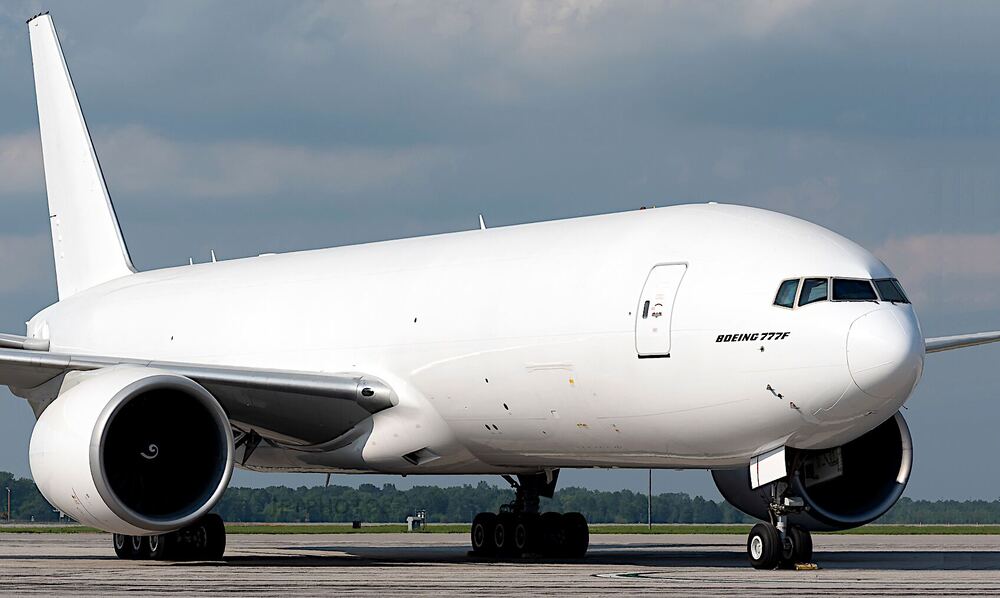
Widebody freighter aircraft prepared for a high-value technology charter
    24/7 Operations Desk · Active Now

    Educational Resource · GPU & AI Compute

    GPU & AI Server Air Freight

    AI compute is the highest value-per-cubic-metre cargo most supply chains will ever move, and the risk sits on the ground rather than in the air.

    Already have an RFQ prepared? Email charters@aviall.com.au

    Custody
    Planned end to end
    DG aware
    Lithium content assessed
    Tranche
    Deployment scheduling
    24/7
    Charter desk

    Why AI hardware is treated differently from general electronics

    GPU servers and AI compute nodes concentrate extreme value into a small volume. A handful of pallets can represent more insured value than an entire aircraft of general freight, and the equipment is frequently allocated rather than simply purchased, meaning a missed delivery window can push a deployment into the next allocation cycle rather than merely delaying it by days.

    That combination changes the objective. The task is not only to move the hardware quickly but to move it once, intact, with demonstrable custody, and to land it in a condition and sequence that lets commissioning start immediately. Speed without custody or without a workable arrival plan is not useful on this cargo.

    Where the actual risk sits

    In practice, loss and damage on high-value technology cargo occur during the ground segments: staging at the integrator or warehouse, the road leg to the airport, ramp handling, transit stops, and the arrival dwell before customs clearance and release. Time in the air is the safest part of the journey.

    A dedicated aircraft reduces exposure by eliminating transhipment and consolidation with unknown cargo, and by letting the shipper control loading, sealing and timing. The remaining exposure is then managed deliberately: minimising stops, restricting ramp time, sealing units, and agreeing the arrival handling and clearance sequence before departure so a consignment is never left standing airside because nobody planned for it.

    • Supervised or sealed loading, with tamper-evident sealing where the insurer or end customer requires it
    • Minimised transit and technical stops, because each stop adds a handling and exposure event
    • Controlled ramp exposure at both ends, planned rather than left to handler convenience
    • Shock and tilt monitoring where acceptance testing or warranty depends on demonstrable handling
    • Arrival clearance and release sequence agreed with the broker before wheels-up

    Lithium and dangerous goods content in compute hardware

    AI compute hardware routinely contains lithium cells. In onboard batteries, cache protection modules and associated UPS or battery backup units shipped alongside. These fall under IATA dangerous goods provisions with classification, watt-hour rating, state-of-charge and packing requirements that differ depending on whether cells are installed in equipment, packed with equipment, or shipped standalone.

    Operator acceptance varies, and a restriction discovered after capacity has been provisionally held is a costly way to learn it. Declaring UN numbers, watt-hour ratings, packing groups and net quantities per package at enquiry stage lets us shortlist only operators who can genuinely accept the load, and lets us reflect any segregation-driven capacity loss in the original quote.

    Deployment tranches and why they favour dedicated capacity

    AI deployments arrive in tranches tied to manufacturing releases and allocation, and a tranche is usually only useful complete. Half a cluster does not produce half the capability. It produces an idle hall and a partially installed fabric that cannot be commissioned or accepted.

    That is what pushes these movements toward dedicated aircraft. A single charter delivers the tranche together, on a known date, with a single custody chain, and allows the installation team to plan labour and commissioning around a firm arrival rather than a rolling series of scheduled uplifts subject to space availability and offloads.

    Networking, optics and the items that gate a whole hall

    The consignment that delays an AI deployment is often not the compute itself. Switching, optics, cabling and specific transceivers are low weight and low volume but sit on the critical path, and a shortfall in a small item can idle an entire hall of installed hardware.

    These items are frequently good candidates for a fast, small movement rather than waiting to travel with the main tranche, a narrowbody freighter, a light jet or a courier-scale charter can resolve a gating shortage at a fraction of the cost of delaying an entire deployment.

    Working with integrators, OEMs and forwarders

    AI hardware often ships from an integration facility rather than from the original manufacturer, with pre-configured racks or pods and a specific handling and testing regime attached. We coordinate with the integrator, the nominated forwarder and the site team so crating, sealing, monitoring and the arrival plan are agreed once and reflected consistently in the paperwork.

    Where a freight forwarder or project logistics company holds the client relationship, we quote to them, provide the operational detail they need to present the option credibly, and can be engaged for the air movement only or for the full door-to-site coordination.

    How we handle AI compute movements

    Custody-first planning

    Sealed or supervised loading, minimal stops and controlled ramp exposure at both ends.

    Value concentration review

    Consignment splitting or single-aircraft consolidation assessed against insurer and customer requirements.

    Lithium classification support

    IATA classification, packing and operator acceptance confirmed before capacity is held.

    Tranche scheduling

    Aircraft aligned to allocation and manufacturing releases so a tranche lands complete.

    Gating-item response

    Small urgent movements for optics, switching and transceivers that hold up a whole hall.

    Condition monitoring

    Shock, tilt and environmental recording specified where acceptance testing depends on it.

    Data centre & AI infrastructure

    Have a live technology shipment?

    Send us the requirement.

    Our charter desk works to the same inputs a forwarder or project logistics team already holds. Send the details below and we return suitable aircraft options, payload and volume feasibility, and an indicative wheels-up window. Estimates are enough to start while crating and release paperwork are finalised.

    Already have an RFQ?

    Email charters@aviall.com.au

    Send us

    • 01OriginAirport, factory, integrator or staging warehouse
    • 02DestinationArrival airport and final site address
    • 03PayloadGross weight, piece count, crated or uncrated
    • 04Dimensions / CBMPer crate: L x W x H, plus total volume
    • 05Ready dateWhen the equipment is crated and released
    • 06CommodityRacks, GPU nodes, UPS, switchgear, cooling plant
    • 07Packing listUpload with the RFQ, the fastest route to an answer

    Packing lists, drawings and crate schedules can be uploaded directly with the RFQ form, up to 10 files.

    Urgent charter? Our ops desk is staffed 24/7.

    Aircraft options within the hour and a written quote with an indicative wheels-up window.

    Mission examples · Illustrative

    What this looks like in operation

    Representative mission profiles drawn from recurring work. Identifying details, operators, hospitals, routes, aircraft tail numbers, are intentionally omitted.

    AOG · Time critical

    Replacement engine to a wide-body grounded overseas

    A major carrier had a wide-body grounded at a foreign hub, awaiting a replacement engine sitting in a domestic MRO. Aviall positioned a freighter to the MRO, coordinated dangerous goods documentation for the engine and stand, and held a flight-following bridge with the airline's tech ops cell door-to-door.

    Outcome

    Engine wheels-up inside 14 hours of release; aircraft returned to service the next operational day.

    GPU and AI hardware, quick reference

    Value profile
    Very high value per cubic metre
    Primary risk
    Ground handling, staging and arrival dwell
    Common DG content
    Installed and standalone lithium cells
    Delivery requirement
    Tranche complete, on a firm date
    Typical aircraft
    777F, A330F, 747F for tranches; narrowbody for gating items
    Coverage
    Into and out of Australia, plus intra-APAC lanes

    FAQ

    Frequently Asked Questions

    Three reasons recur: a tranche is only useful complete, so a partial delivery has little value; scheduled cargo can be offloaded or split, which breaks custody and the schedule; and a dedicated aircraft removes transhipment, giving a single controlled custody chain. Where none of those apply, scheduled freight is usually the better commercial choice and we will say so.

    Moving GPU or AI compute hardware?

    Send origin, destination, payload, dimensions or CBM, ready date, commodity and packing list. We return aircraft options, DG feasibility and an indicative wheels-up window.

    Have a live requirement?

    Send us origin, destination, payload and ready date. We return aircraft options. Attach an existing RFQ, packing list or photos straight from your phone, partial detail is enough to start.

    Requirement

    Cargo

    AttachmentsPacking list, cargo dimensions, manifest, RFQ document, images or other supporting documentation. Files up to 20MB each, 10 max. PDF, Word, Excel, CSV, images or email files.

    Goes straight to our charter desk at Charters@Aviall.com.au. Submitting an RFQ does not confirm an aircraft.