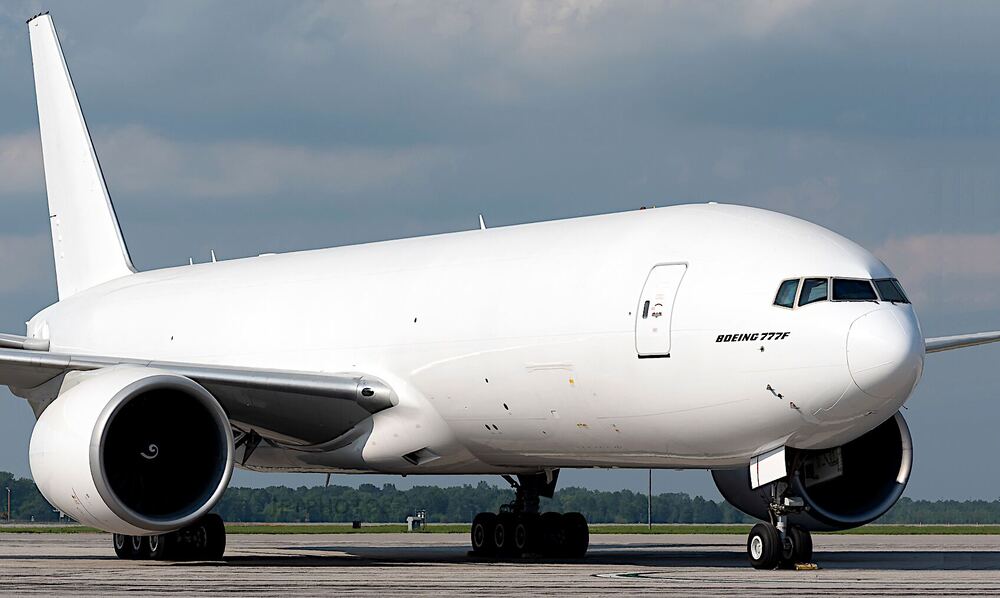
Widebody freighter aircraft loading crated technology infrastructure cargo
    24/7 Operations Desk · Active Now

    Data Centre · AI Infrastructure · Dedicated Cargo Aircraft

    Data Centre & AI Infrastructure Air Charter

    Dedicated cargo aircraft for time-critical technology and infrastructure movements into and out of Australia.

    Already have an RFQ prepared? Email charters@aviall.com.au

    <60 min
    Aircraft options returned
    24/7
    Charter desk, Australian based
    Full charter
    Or part-charter capacity
    AU + APAC
    Inbound and outbound

    Why data centre and AI infrastructure programmes end up chartering aircraft

    Data centre construction in Australia has moved from a steady pipeline to a constrained race. Power availability, grid connection dates, land and cooling capacity now set the schedule, and once a grid connection or customer handover date is fixed, everything upstream compresses against it. AI workloads have intensified this further: GPU compute is allocated in tranches, delivery slots are tied to manufacturing windows, and the hardware carries a cost of capital high enough that idle equipment, or an idle hall waiting for equipment, is measured in real money per day.

    Ocean freight and consolidated airfreight cover the majority of that supply chain and should. Charter enters when the freight task no longer fits scheduled capacity: a full deployment tranche of racks that would otherwise be split across weeks of scheduled uplift, a UPS or switchgear unit that exceeds standard belly and container limits, a compute delivery that must not be broken across multiple carriers and transhipment points, or a critical replacement unit standing between a facility and its commissioning milestone.

    The other reason is control. On a dedicated aircraft the shipper decides the loading sequence, the handling protocol, custody, timing and the arrival plan. For high-value technology cargo where consignment integrity and chain of custody matter as much as transit time, that control is often the actual product being bought, not raw speed.

    Cargo categories we plan for

    Data centre and AI infrastructure charters rarely consist of a single commodity. A typical deployment tranche mixes very dense electrical plant with very bulky, light mechanical and structural items, and the loading plan has to reconcile both against the aircraft's weight and volume limits at once.

    • Server racks and populated cabinets, shipped upright where required, with shock-isolating mounts and orientation limits carried through to every handling agent
    • GPU infrastructure and AI computing hardware, high value density, static and shock sensitive, usually crated individually with strict custody requirements
    • Networking, switching and optical equipment, low weight and high value, frequently the item that dictates the schedule for an entire hall
    • High-value electronics, integrated racks and pre-configured pods delivered from integration facilities rather than from the original manufacturer
    • Power infrastructure including transformers, switchgear and busbar systems, dense and floor-loading critical
    • UPS equipment and battery systems, where lithium content introduces dangerous goods classification, packing and operator acceptance requirements
    • Cooling infrastructure such as chillers, CDUs, liquid cooling loops and CRAC or CRAH units, typically volume-limited rather than weight-limited
    • Electrical equipment, cabling, containment and structural components, useful for filling residual capacity efficiently on a chartered aircraft
    • Critical replacement hardware for live facilities, where the movement is measured against downtime rather than freight cost

    Aircraft categories used on technology charters

    Aircraft selection is a function of gross weight, total volume, the largest single piece and the capability of the airports at both ends. Data centre cargo is usually volumetric before it is heavy, crated racks and cooling plant consume cubic capacity and pallet positions long before they reach a freighter's structural payload, so pallet position count and door aperture are often more decisive than the maximum payload figure.

    Aviall is not an aircraft operator and does not hold or guarantee access to any particular aircraft. We source from a wide operator base and shortlist what is genuinely available for your dates, which is why we quote options rather than a single type.

    • Boeing 747-8F and 747-400F, the highest-volume commercial freighters and the nose-loading option where a single long piece will not fit a side door
    • Boeing 777F, the widebody workhorse for full-deck rack and compute tranches on Asia-Australia and long-haul sectors
    • Airbus A330-200F, well matched to full-deck loads where a 777F is more aircraft than the tranche requires
    • Boeing 767F, efficient in the 30 to 45 tonne band and for programmes running frequent smaller rotations
    • Narrowbody freighters such as 737-800F and A321F, suited to single-unit critical replacements and urgent partial loads
    • Other specialist cargo aircraft including outsize and ramp-loading types, where a transformer, chiller or containerised module exceeds commercial freighter door and floor limits

    Volume, weight and floor loading in practice

    The single most common planning error on technology charters is treating gross weight as the constraint. A crated rack at typical dimensions occupies a large volume for a modest weight, so a full tranche of racks will fill a widebody deck at well under its payload limit. Meanwhile a transformer or UPS bank in the same shipment concentrates weight over a very small footprint and can exceed the aircraft floor's permissible loading per unit area unless it is spread across shoring or a dedicated pallet arrangement.

    This is why we ask for dimensions and CBM alongside payload at enquiry stage. With per-crate dimensions and weights we can tell you whether your tranche is volume-limited or weight-limited, how many pallet positions it actually consumes, whether it fits through the intended aircraft's door aperture, and whether one aircraft or two rotations is the more economical answer. Approximations are fine to start; a final packing list refines the plan rather than initiating it.

    Height is the constraint that most often forces a change of aircraft. Standard cabinet and rack crates can exceed the usable height profile of narrowbody and some widebody positions, and a nose-loading 747F may be the only practical option for a tall or long single piece even when the total weight is trivial.

    Lithium batteries, UPS systems and dangerous goods

    Battery content is the compliance issue that most frequently delays technology charters. UPS systems, battery energy storage modules, and increasingly the equipment inside populated racks contain lithium cells that fall under IATA dangerous goods provisions, with classification, state of charge, packing instruction and documentation requirements that vary by cell type, watt-hour rating and whether the cells are installed in equipment or shipped standalone.

    Operator acceptance is not universal. Some operators will not carry certain lithium classes at all, and others require specific packaging or a state-of-charge declaration. Declaring UN numbers, packing groups, watt-hour ratings and net quantities per package at enquiry stage lets us shortlist only operators that can actually accept the load, the alternative is discovering the restriction after an aircraft has been provisionally held.

    Where a shipment mixes dangerous goods with general technology cargo, segregation and loading requirements can also reduce the usable capacity of the aircraft, which is a factor better reflected in the original quote than discovered on the ramp.

    Security, custody and high-value cargo handling

    A single chartered aircraft of AI compute hardware can represent an extraordinary concentration of value, and the exposure sits on the ground rather than in the air. Warehouse staging, road movement to the airport, ramp handling, transit stops and the arrival dwell before clearance are where loss and damage occur.

    We plan custody as a continuous chain: supervised or sealed loading, minimal transit stops, controlled ramp exposure, tamper-evident sealing where required, and an arrival handling and clearance sequence agreed before departure so a high-value consignment is not left standing airside. Where the client's insurer, OEM or end customer imposes specific security, escort or monitoring requirements, those become part of the operational plan and the operator selection rather than an afterthought.

    Shock, tilt and temperature or humidity monitoring can be specified on sensitive units, and for cargo where a warranty or acceptance test depends on demonstrable handling within limits, that recording is worth building in from origin.

    Working alongside forwarders and project logistics teams

    Most data centre charter requirements reach us through freight forwarders, project logistics companies, procurement teams and contractors rather than from the end user, and we are structured to work that way. We quote to the forwarder, respect the commercial relationship with their client, and provide the operational detail the forwarder needs to present the option credibly: aircraft type and availability, payload and volume feasibility, pallet configuration, permit and slot considerations, and an indicative wheels-up window.

    Where a forwarder is already handling origin pickup, export clearance, customs and the final delivery leg, we can be engaged purely for the air movement. Where a door-to-door movement is preferred, we can coordinate origin collection, airside handling, the flight, and the onward domestic leg to site as one task. Both models are common and neither requires the client to restructure their existing supply chain.

    Australian gateways and delivery to site

    Data centre development in Australia is concentrated in Sydney, Melbourne, Perth and increasingly Canberra, Brisbane and regional locations chosen for power and land availability. Sydney handles the majority of technology inbound volume but carries a night curfew that shapes arrival planning. Melbourne, Brisbane and Perth operate without a curfew, which can matter when a tranche must clear and move to site overnight ahead of an installation window.

    Delivery to site is usually the part of the movement that is underestimated. Data centre sites are often in industrial or peri-urban areas with restricted access hours, limited hardstand, specific crane or tail-lift requirements and an installation sequence that only accepts equipment in a particular order. We plan the domestic leg, freighter, road or a combination, against the site's actual receiving capability and the sequence the installation team needs, not simply against the fastest route from the airport.

    Programme capacity rather than one-off flights

    For multi-hall builds and phased AI deployments, a single ad-hoc charter is rarely the whole answer. Where a programme has a known equipment pipeline, capacity can be planned as a series of rotations aligned to manufacturing releases and site milestones, which usually produces better pricing and better aircraft availability than repeatedly buying spot capacity under pressure.

    That planning does not require certainty. A programme with approximate tranche weights, volumes and a milestone calendar is enough to model aircraft requirements, identify where the schedule is fragile, and pre-agree an escalation path for the movements that will inevitably become urgent later.

    What our desk handles on a technology charter

    Aircraft options, not one quote

    Sourced across a wide operator base and shortlisted on real availability for your dates, payload and volume.

    Volume and pallet modelling

    Per-crate dimensions modelled into pallet positions and door aperture before an aircraft is committed.

    Floor loading planning

    Dense power and UPS units planned against permissible floor loading with shoring and load spreading.

    Lithium and DG compliance

    IATA classification, packing instruction and operator acceptance confirmed before capacity is held.

    Chain of custody

    Sealed or supervised loading, controlled ramp exposure and an agreed arrival handling sequence.

    Forwarder-friendly engagement

    Air movement only, or door-to-door coordination including collection, clearance support and the leg to site.

    Site delivery sequencing

    Onward leg planned around site access hours, lifting capability and installation order.

    Programme capacity planning

    Rotations aligned to manufacturing releases and commissioning milestones across a build phase.

    Critical replacement response

    Escalation path for live-facility failures where downtime, not freight cost, sets the budget.

    Data centre & AI infrastructure

    Have a live technology shipment?

    Send us the requirement.

    Our charter desk works to the same inputs a forwarder or project logistics team already holds. Send the details below and we return suitable aircraft options, payload and volume feasibility, and an indicative wheels-up window. Estimates are enough to start while crating and release paperwork are finalised.

    Already have an RFQ?

    Email charters@aviall.com.au

    Send us

    • 01OriginAirport, factory, integrator or staging warehouse
    • 02DestinationArrival airport and final site address
    • 03PayloadGross weight, piece count, crated or uncrated
    • 04Dimensions / CBMPer crate: L x W x H, plus total volume
    • 05Ready dateWhen the equipment is crated and released
    • 06CommodityRacks, GPU nodes, UPS, switchgear, cooling plant
    • 07Packing listUpload with the RFQ, the fastest route to an answer

    Packing lists, drawings and crate schedules can be uploaded directly with the RFQ form, up to 10 files.

    Urgent charter? Our ops desk is staffed 24/7.

    Aircraft options within the hour and a written quote with an indicative wheels-up window.

    Mission examples · Illustrative

    What this looks like in operation

    Representative mission profiles drawn from recurring work. Identifying details, operators, hospitals, routes, aircraft tail numbers, are intentionally omitted.

    Heavy lift · Project cargo

    Outsize mining component into a remote regional strip

    An ASX-listed resources operator faced a stalled processing line waiting on a single oversized component too large for any scheduled freighter. Aviall sourced an outsize main-deck nose-loader, completed pavement and load-spread checks at the regional destination, and coordinated road movement permits at both ends.

    Outcome

    Component on site inside 72 hours of first call; production line restart same week.

    AOG · Time critical

    Replacement engine to a wide-body grounded overseas

    A major carrier had a wide-body grounded at a foreign hub, awaiting a replacement engine sitting in a domestic MRO. Aviall positioned a freighter to the MRO, coordinated dangerous goods documentation for the engine and stand, and held a flight-following bridge with the airline's tech ops cell door-to-door.

    Outcome

    Engine wheels-up inside 14 hours of release; aircraft returned to service the next operational day.

    Specialised capability

    Data centre and AI infrastructure resources

    Technology charter, quick reference

    Typical cargo
    Racks, GPU compute, networking, UPS, cooling, switchgear
    Aircraft categories
    747-8F, 747-400F, 777F, A330F, 767F, narrowbody and specialist types
    Usual binding constraint
    Volume, pallet positions and door height before weight
    Coverage
    Into and out of Australia, plus intra-APAC and long-haul lanes
    Australian gateways
    SYD, MEL, BNE, PER, CBR, ADL, DRW
    Engagement models
    Full charter, part charter, programme rotations
    Response time
    Aircraft options usually within the hour

    FAQ

    Frequently Asked Questions

    Origin, destination, payload, dimensions or CBM, ready date, commodity and a packing list if you have one. Dimensions matter as much as weight on this cargo, because technology tranches almost always fill an aircraft by volume first. Approximate figures are enough to shortlist aircraft and confirm feasibility. We would rather start with estimates than wait for a final crate schedule.

    Why operators, brokers and end clients keep calling back

    Credibility built on operational discipline, not marketing

    "Quote came back inside the hour with two aircraft options, written wheels-up windows and the cost-versus-time trade-off laid out. That is what we expect and rarely get."

    , Project logistics manager · Resources sector

    Have a live data-centre or AI infrastructure shipment?

    Send origin, destination, payload, dimensions or CBM, ready date, commodity and packing list. Our charter desk returns aircraft options, feasibility and an indicative wheels-up window.

    Have a live requirement?

    Send us origin, destination, payload and ready date. We return aircraft options. Attach an existing RFQ, packing list or photos straight from your phone, partial detail is enough to start.

    Requirement

    Cargo

    AttachmentsPacking list, cargo dimensions, manifest, RFQ document, images or other supporting documentation. Files up to 20MB each, 10 max. PDF, Word, Excel, CSV, images or email files.

    Goes straight to our charter desk at Charters@Aviall.com.au. Submitting an RFQ does not confirm an aircraft.