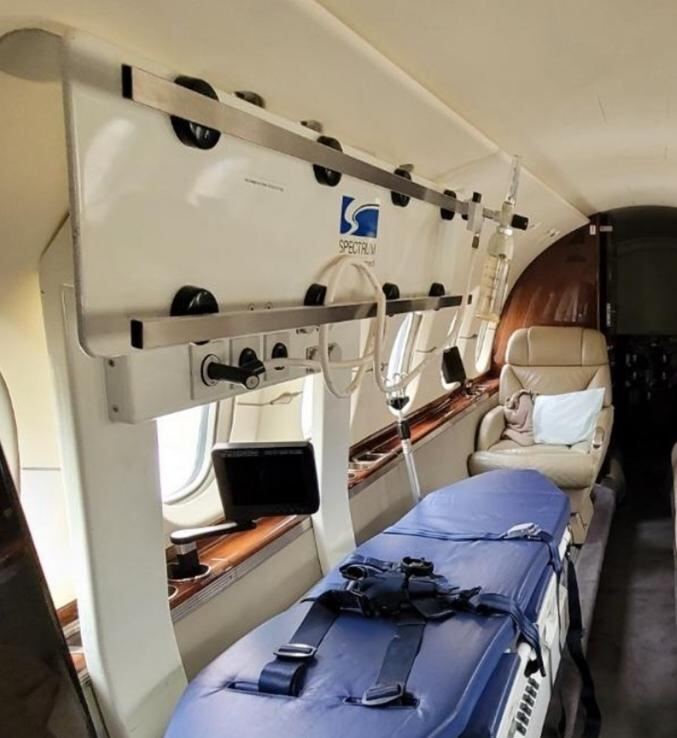
Repatriating a patient into Australia is a common requirement for Australians who fall ill or are injured while travelling or working overseas, and for families bringing a relative home for treatment. The clinical process is the same as any repatriation; what is specific to Australia is the geography and the arrival requirements.
Start here
Three things get the process moving: where the patient is and which hospital they are in, the current medical report, and who is funding the movement. Call the operations desk on 1800 796 769 for anything urgent, planning can begin on the phone while documentation follows.
The clinical assessment
A flight physician reviews the treating hospital's report and determines the mode: a medical escort in a commercial seat, a commercial stretcher, or a dedicated air ambulance with a full clinical team. That decision drives aircraft choice, crew composition, routing and cost, so it comes before everything else.
The range problem
Australia is a long way from most origins. Retrievals from Southeast Asia, the Pacific and South Asia commonly exceed the non-stop range of the smaller jets typically used for medical work, particularly with a full clinical load. That means planned technical stops for fuel, which add hours, landing and handling costs and crew duty considerations. Long-range aircraft can reduce or remove the stops at a higher hourly cost. The right trade-off depends on the clinical picture: for a stable patient, a fuel stop is a minor inconvenience; for an unstable one, minimising ground time and total mission duration matters more.
Distance also drives crew planning. Long missions may require augmented flight crew or a positioning crew, and clinical crew duty limits apply just as flight crew limits do.
Receiving hospital
An Australian hospital must formally accept the patient before departure. The receiving facility is chosen for clinical capability and proximity to family. Where the family does not already have a hospital arranged, we work with the receiving clinicians to secure acceptance as part of the mission planning, a repatriation cannot depart without it.
Arrival requirements into Australia
Inbound medical flights clear immigration, customs and biosecurity like any other international arrival, with arrangements made in advance for an unscheduled medical aircraft. Passports and visas are required for the patient and all accompanying crew and family, and any prevailing health-entry requirements apply. Medications, medical gases and clinical equipment carried aboard are declared. Ground ambulance meets the aircraft and transfers the patient to the receiving hospital. Where the patient is not an Australian citizen or resident, the visa position and hospital funding arrangements need to be confirmed early. These are common sources of delay.
Cost and funding
Cost is driven by aircraft type, distance and technical stops, clinical crew, positioning and ground arrangements. Travel insurance, corporate and expatriate policies, and government schemes are the usual funding routes; families also self-fund. Where an insurer is involved, open the case with them immediately, their authorisation is frequently the pacing item. See how much a medevac flight costs.
Have ready when you call
Patient location and hospital, treating doctor's contact details, current medical report, passport details, insurance policy and case number, preferred Australian city or hospital, and next-of-kin contact. Related: international medical evacuation, medevac across the Asia-Pacific and medical evacuation Australia.