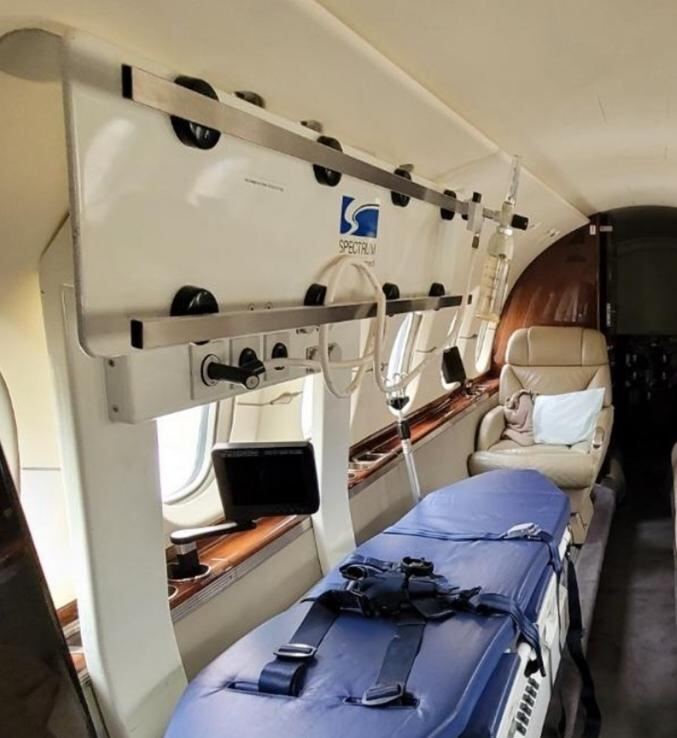
A medevac quote is priced against a specific aircraft, a specific clinical configuration and a specific routing. The clinical detail is not administrative box-ticking: it determines the aircraft, the crew and therefore most of the cost. If the patient is critical, call 1800 796 769 first. We start planning on the phone and collect the rest as we go.
Locations
Where the patient is now: hospital or site name, city and country, and whether they are in ICU, a ward or at a remote location. Where they need to go: receiving hospital and city, or a request that we identify a suitable facility. Whether a receiving bed has been confirmed, and by whom.
Clinical picture
The treating hospital's current medical report is ideal. Where one is not yet available, we need: diagnosis and reason for transfer; current stability; whether the patient is ventilated or requires oxygen, and at what rate; infusions, invasive lines, drains or pacing; mobility (walking, sitting, stretcher-bound); weight, which affects loading and equipment; infection or isolation status; and any recent surgery. Cabin altitude affects several conditions materially, so these details drive the fit-to-fly assessment as much as the pricing.
Timing
Whether the movement is immediate, within 24 hours, or planned for a date. Also any clinical window advised by the treating team, for instance, a period of stabilisation before transfer is safe.
Escorts and family
Whether family members will accompany the patient and how many. Seat availability alongside a stretcher is limited and varies by aircraft, so this affects aircraft selection rather than being a detail settled later.
Funding
Whether an insurer, assistance company, employer, government scheme or the family is paying, plus the policy number and case reference where applicable, and who has authority to approve. Where an insurer is involved, their authorisation is often the pacing item, so their contact details are as useful to us as the clinical report.
Documentation
Passport details for the patient and any accompanying family, visa status where relevant for the origin, destination and any technical stop, and next-of-kin contact details.
What you get back
The recommended mode, medical escort, commercial stretcher or dedicated air ambulance, with the aircraft type, clinical crew composition, routing including technical stops, an estimated bed-to-bed timeline and a price for the mission as scoped. Where a lower-cost mode is clinically appropriate, we will say so.
If you don't have everything
Send what you have. Patient location, a rough clinical picture and a destination are enough to begin. Our medical desk will contact the treating hospital directly with your authorisation to obtain the rest. Related: how international medical repatriation works and medevac costs explained.