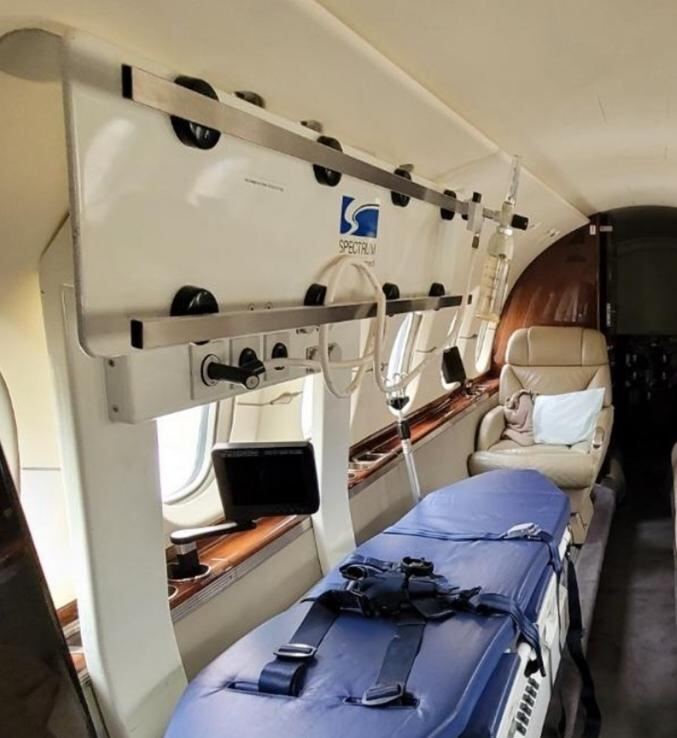
Air ambulance interior prepared for a Pacific island patient transfer
    24/7 Operations Desk · Active Now

    Pacific corridor

    Medevac Samoa: Air Ambulance & Patient Transfer

    Pacific island transfers depend on getting three things right at once, the aircraft's range and runway performance, the clinical configuration, and the receiving facility. Samoa is a corridor we work regularly.

    Already have an RFQ prepared? Email charters@aviall.com.au

    24 h
    Medical desk
    Pacific
    Corridor strength
    ICU
    Available configuration
    Bed to bed
    Coordination model

    Speaking to someone is usually the fastest way to start.

    Our medical transfer desk is staffed 24 hours. You do not need complete information to make the first call, the current location of the patient and where they need to go is enough to begin.

    Patient information is treated as sensitive. Medical detail and uploaded reports go only to the clinical and operations coordinators handling the case, are never placed in web addresses, and are never shared with advertising or analytics platforms.

    Samoa operating conditions that shape the plan

    Everything about Samoan work is shaped by positioning. There is no deep local aircraft pool, so the honest timeline includes the ferry sector to get an aircraft there before the mission can start.

    For patient transfers, Samoa cases are normally routed to a tertiary receiving facility in New Zealand or Australia, with the positioning leg, clinical escort and receiving-facility liaison arranged simultaneously to avoid sequential delay.

    • Faleolo International (APW/NSFA) is the main port, roughly 40 kilometres from Apia, so a road leg is always part of the plan
    • Long over-water Pacific sectors require appropriate aircraft equipment and crew qualification
    • Locally based charter and medical aviation capacity is limited, so aircraft are usually positioned from Australia, New Zealand or elsewhere in the Pacific
    • Cyclone season from roughly November to April is the dominant seasonal risk

    Why Samoa transfers happen

    Like most Pacific nations, Samoa provides good primary and secondary care but has limited access to some forms of definitive treatment, complex surgery, specialist cardiac and neurological intervention, oncology, and intensive care beyond a certain acuity. When a patient needs that level of care, the answer is a transfer offshore.

    Cases reach us from local health services, from regional and organisational medical services, from insurers covering visitors, and from families of Samoan residents and of Australians and New Zealanders taken unwell while in the islands.

    Where patients usually go

    Destination is a clinical decision first and a logistics one second. From Samoa, the practical options concentrate on New Zealand and Australia, with regional Pacific centres used for some presentations.

    • New Zealand, the shortest sector for most acute transfers
    • Australian east coast centres for specialist and definitive care
    • Regional Pacific centres where the required care is available closer
    • Onward long-range repatriation for visitors returning to a home country

    Aircraft and operational realities

    Pacific sectors are long over water with limited alternates, so aircraft selection is driven by range with a full clinical load, runway performance at the departure airport, and fuel planning that respects the weather. Turboprops and light to mid-size jets do most of this work, with larger aircraft used on the longer legs.

    Timing is influenced by daylight and airport operating hours in the islands, by crew duty limits, and by clearances. We tell you what is genuinely achievable rather than promising a departure that the operational picture will not support.

    • Range with a full clinical load and crew, not the brochure figure
    • Runway length, surface and operating hours at the departure airport
    • Oxygen and consumables calculated for the sector plus contingency
    • Landing and overflight permits across multiple jurisdictions
    • Monitored ground ambulance at both ends

    Clinical configuration

    The configuration follows the patient. A stable patient may travel seated with a medical escort. A patient who cannot sit travels on a stretcher. Ventilated or infusion-dependent patients need an intensive care configuration with a retrieval clinical team. Neonatal and paediatric transfers require specialist equipment and crews and are planned accordingly.

    Clinical acceptance sits with the treating clinicians and the receiving facility. We coordinate the conversation and will be straightforward when a transfer should wait or be staged differently.

    Samoa corridor capability

    Island airport operations

    Aircraft matched to runway performance and operating hours at the departure airport.

    Long over-water sectors

    Fuel, alternates and oxygen planned for the sector plus contingency.

    All care levels

    Escort, stretcher, high dependency and intensive care configurations.

    Neonatal & paediatric

    Specialist equipment and crewing mobilised where the case requires it.

    Multi-jurisdiction clearances

    Permits and border formalities managed across the routing.

    Bed-to-bed

    Ground ambulance and documented handovers at both ends.

    Medical transfer & repatriation desk

    Request a medical transfer

    You do not need a complete clinical picture to contact us. Tell us where the patient is and where they need to go, and a coordinator will start assessing options, aircraft, clinical configuration, crewing, clearances and ground ambulance, while the rest of the information is still being gathered.

    Enough to start

    • Where the patient is now

      City or country, and the facility type if you know it

    • Where they need to go

      City, country, or receiving hospital if already arranged

    • Rough timing

      Today, within 24 hours, or later this week

    • How they are travelling

      Seated, wheelchair, stretcher, or intensive care, an estimate is fine

    Helpful, but can follow

    • A medical report, discharge summary or fit-to-fly assessment, uploaded securely
    • Treating team or transfer-desk contact, so our clinical coordinator can speak with them directly
    • Insurer, assistance company or funding arrangement, if one applies
    • Receiving hospital acceptance, where that is still being organised

    Clinical acceptance and aircraft availability are confirmed after review by the clinical team and the receiving facility. Contacting us does not by itself confirm a flight, a crew or acceptance of the patient.

    Or email medical reports and case detail to charters@aviall.com.au

    Privacy: patient details and uploaded reports are handled as sensitive information, stored in restricted storage, and passed only to the coordinators and clinicians working the case. They are never written into web addresses, advertising platforms or analytics events.

    Urgent charter? Our ops desk is staffed 24/7.

    Aircraft options within the hour and a written quote with an indicative wheels-up window.

    Mission examples · Illustrative

    What this looks like in operation

    Representative mission profiles drawn from recurring work. Identifying details, operators, hospitals, routes, aircraft tail numbers, are intentionally omitted.

    International · Repatriation

    Long-range stretcher repatriation across the Pacific

    A complex case with ventilator and infusion support required movement from a regional Pacific facility back to a domestic tertiary centre. Aviall configured a long-range jet with a critical-care medical fit-out, coordinated bed-to-bed handover with both treating teams, and managed customs and immigration at each stop.

    Outcome

    Bed-to-bed transfer completed without clinical deterioration en route.

    Neonatal · Critical

    Neonatal transfer to a tertiary paediatric centre

    A neonate requiring escalated care had to be moved from a regional hospital to a metropolitan paediatric tertiary centre. Aviall coordinated an aeromedical aircraft and a specialist retrieval team, with isolette-compatible loading and parent transit on the same airframe.

    Outcome

    Patient delivered to receiving NICU within the clinical window agreed by both teams.

    Remote · Mining medevac

    Trauma extraction from a remote mine site

    An incident at a remote mine site required immediate movement of a trauma patient to a metropolitan trauma centre. Aviall launched on the standing medevac protocol, with a clinical team mobilised in parallel and the receiving trauma team pre-briefed before take-off.

    Outcome

    Patient on the operating table at the receiving centre well inside the planned window.

    Samoa medevac, quick reference

    Departure point
    Apia, with connecting legs from other islands where required
    Common destinations
    New Zealand, Australian east coast, regional Pacific centres
    Care levels
    Escort, stretcher, high dependency, intensive care
    Aircraft
    Turboprop to mid-size jet, selected on range and runway
    Timing factors
    Airport operating hours, weather, crew duty, clearances
    Desk
    Staffed 24 hours

    FAQ

    Frequently Asked Questions

    It depends on aircraft positioning, airport operating hours, clinical readiness and receiving acceptance. We give a realistic window on the first call rather than an optimistic one.

    Why operators, brokers and end clients keep calling back

    Credibility built on operational discipline, not marketing

    "Single point of clinical accountability from the call to bed-to-bed handover. Our retrieval team had everything they needed before wheels-up."

    , Aeromedical retrieval lead · Tertiary hospital network

    "The case management discipline matched our internal standards. That is unusual in the assistance market."

    , Operations director · International medical assistance company

    "Aircraft selection was driven by the patient's clinical picture, not by what was on the apron. That is the right way around."

    , Critical-care physician · Repatriation case

    Arranging a transfer from Samoa?

    Tell us the patient's location and the intended destination. Our coordinator can begin assessing aircraft and clinical options straight away.

    Have a live requirement?

    Tell us where the patient is and where they need to go, that is enough to start. Our medical desk is staffed 24 hours. Attach an existing RFQ, packing list or photos straight from your phone, partial detail is enough to start.

    Requirement

    Medevac / Air Ambulance

    Only the first four fields are needed to start. Anything clinical can follow by phone, email or upload. Patient information is handled as sensitive and is never shared with advertising or analytics platforms.

    AttachmentsMedical reports, fit-to-fly assessments or insurer authorisations, uploaded to restricted storage. Files up to 20MB each, 10 max. PDF, Word, Excel, CSV, images or email files.

    Final medical and operational acceptance is subject to clinical review and aircraft/operator availability. Submitting this form does not confirm an aircraft or a medical crew.

    Goes straight to our charter desk at Charters@Aviall.com.au. Submitting an RFQ does not confirm an aircraft.