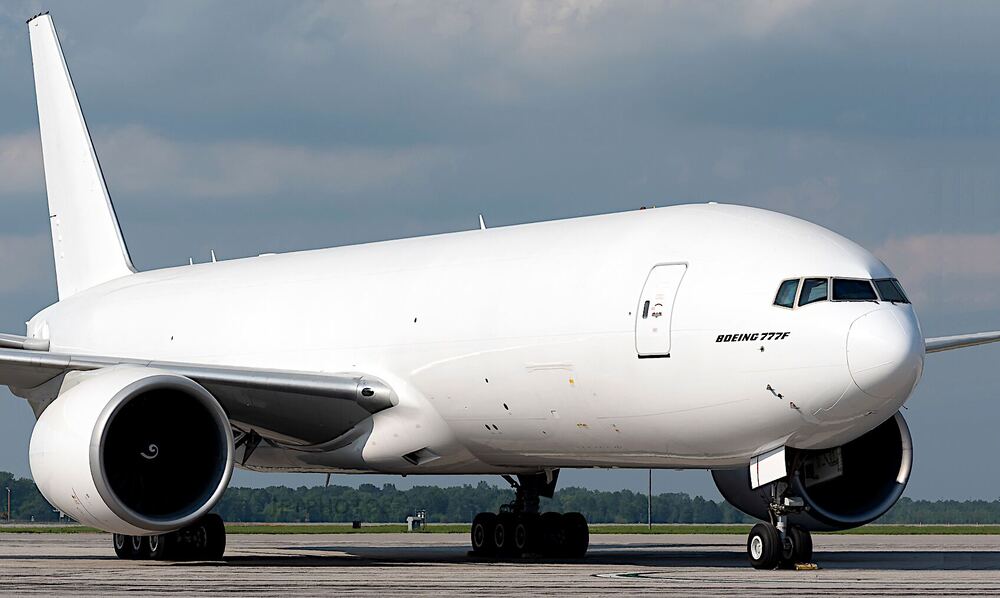
Widebody freighter aircraft on the ramp during a technology charter loading
    24/7 Operations Desk · Active Now

    Educational Resource · Aircraft Comparison

    Cargo Aircraft Comparison for Technology Freight

    For data centre cargo the deciding figures are usually volume, pallet positions and door aperture, not maximum payload.

    Already have an RFQ prepared? Email charters@aviall.com.au

    Volume
    The usual limit
    Nose door
    747F advantage
    Right-size
    Cheaper than oversize
    24/7
    Charter desk

    Read the figures that bind

    Freighter specifications lead with maximum payload, which is the least relevant number for most technology cargo. Crated racks, cooling plant and packaged electronics fill an aircraft's cubic capacity and pallet positions well before the payload limit becomes a factor, so comparisons should start with main deck volume, pallet position count and the usable height at those positions.

    The second binding figure is the door. A load that fits inside an aircraft is only useful if it fits through the opening, and door height is the most common reason a shipment changes aircraft. The third is floor loading, a dense transformer or UPS bank can exceed permissible loading per unit area even on an aircraft with plenty of payload margin, which is resolved with shoring and load spreading rather than by choosing a bigger aircraft.

    Boeing 747-8F and 747-400F

    The 747 freighters offer the largest commercial main deck volume in widespread service and, critically, a nose door. Nose loading allows very long single pieces to be loaded along the deck centreline, which no side-door aircraft can accommodate regardless of spare payload. For data centre programmes the 747F is generally considered when total volume is large, a full rack or cooling tranche, or when a single item is too long or too tall for other types.

    The trade-off is cost and airport requirement. A 747F is a large, expensive aircraft to operate and needs a gateway that can handle it, so it should be selected because the cargo requires it rather than as a default for anything big.

    Boeing 777F

    The 777F is the widebody workhorse of long-haul charter. It combines substantial main deck capacity with strong range at high payload, which makes it well suited to Asia-Australia and long-haul technology tranches where the load is large but not outsize.

    For most full-deck rack and compute movements into Australia, the 777F and A330F are the aircraft that come back first, the 777F where the sector is longer or the load heavier, and where operator availability is often better on major lanes.

    Airbus A330-200F

    The A330-200F sits below the 777F in capacity and is frequently the better commercial fit for a load that fills a widebody deck without reaching 777F scale. On regional and intra-Asian sectors it can be the more economical choice, and it handles standard palletised technology freight well.

    It is not the aircraft for outsize single pieces, and available numbers in the charter market are smaller than for the 777F, which affects how quickly one can be positioned for an urgent movement.

    Boeing 767-300F

    The 767F is efficient in the 30 to 45 tonne band and is often the right answer for programmes running frequent smaller rotations rather than one large movement. For data centre builds delivering equipment in phases, a series of 767F rotations can align better with installation capacity than a single large aircraft arriving all at once.

    Its main deck is narrower than the larger widebodies, so tall or wide crates need checking against position height and width before assuming a fit.

    Narrowbody freighters and specialist types

    Narrowbody freighters such as the 737-800F and A321F carry roughly 20 to 25 tonnes and are the practical choice for critical replacement hardware, gating items like optics and switching, and urgent partial loads. On short regional sectors they are dramatically cheaper than a widebody and frequently available faster.

    At the other extreme, specialist outsize and ramp-loading aircraft exist for cargo that no commercial freighter will accept, very tall transformers, large chillers, containerised modules. These are sourced case by case, and availability rather than capability is usually the constraint.

    • 747-8F / 747-400F, maximum volume and nose loading for long or tall single pieces
    • 777F, long-haul widebody standard for large technology tranches
    • A330-200F, efficient full-deck option below 777F scale
    • 767-300F, phased rotations and mid-size consignments
    • 737-800F / A321F, critical replacements, gating items, urgent partial loads
    • Outsize and ramp-loading types, transformers, chillers and modules beyond commercial limits

    Choosing between them in practice

    The honest process is short. Total CBM and pallet positions eliminate the aircraft that are too small. Largest single piece dimensions eliminate the aircraft whose door or deck height will not take it. Sector length and airport capability eliminate what cannot operate the route. Whatever survives is then compared on availability and price for your dates.

    That is why we quote options rather than a type. Aviall is not an aircraft operator and does not hold or guarantee access to any specific aircraft; we shortlist what is genuinely available and explain the trade-off between them.

    How we match aircraft to technology cargo

    Volume-first assessment

    CBM and pallet positions modelled before payload is even considered.

    Door and height checks

    Largest piece dimensions verified against door aperture and usable position height.

    Floor loading review

    Dense power equipment planned with shoring and load spreading rather than a bigger aircraft.

    Rotation versus single lift

    Phased smaller aircraft compared against one large movement on cost and install capacity.

    Availability reality check

    Options reflect aircraft actually obtainable for your dates, not a theoretical fleet list.

    Airport suitability

    Runway, apron, loading equipment and slot capability confirmed at both ends.

    Data centre & AI infrastructure

    Have a live technology shipment?

    Send us the requirement.

    Our charter desk works to the same inputs a forwarder or project logistics team already holds. Send the details below and we return suitable aircraft options, payload and volume feasibility, and an indicative wheels-up window. Estimates are enough to start while crating and release paperwork are finalised.

    Already have an RFQ?

    Email charters@aviall.com.au

    Send us

    • 01OriginAirport, factory, integrator or staging warehouse
    • 02DestinationArrival airport and final site address
    • 03PayloadGross weight, piece count, crated or uncrated
    • 04Dimensions / CBMPer crate: L x W x H, plus total volume
    • 05Ready dateWhen the equipment is crated and released
    • 06CommodityRacks, GPU nodes, UPS, switchgear, cooling plant
    • 07Packing listUpload with the RFQ, the fastest route to an answer

    Packing lists, drawings and crate schedules can be uploaded directly with the RFQ form, up to 10 files.

    Urgent charter? Our ops desk is staffed 24/7.

    Aircraft options within the hour and a written quote with an indicative wheels-up window.

    Mission examples · Illustrative

    What this looks like in operation

    Representative mission profiles drawn from recurring work. Identifying details, operators, hospitals, routes, aircraft tail numbers, are intentionally omitted.

    Heavy lift · Project cargo

    Outsize mining component into a remote regional strip

    An ASX-listed resources operator faced a stalled processing line waiting on a single oversized component too large for any scheduled freighter. Aviall sourced an outsize main-deck nose-loader, completed pavement and load-spread checks at the regional destination, and coordinated road movement permits at both ends.

    Outcome

    Component on site inside 72 hours of first call; production line restart same week.

    Comparison at a glance

    747-8F / 747-400F
    Largest volume, nose door, long or tall single pieces
    777F
    Long-haul widebody standard, large tranches
    A330-200F
    Full-deck loads below 777F scale
    767-300F
    30-45 t band, phased rotations
    737-800F / A321F
    20-25 t, critical replacements and gating items
    Specialist outsize
    Transformers, chillers, containerised modules

    FAQ

    Frequently Asked Questions

    There is no single answer, because the deciding figures are crate dimensions and total volume rather than commodity type. Full rack or cooling tranches usually point to a 747F, 777F or A330F; phased deliveries often suit a 767F; single critical units suit a narrowbody freighter. Send dimensions and quantity and the shortlist becomes obvious quickly.

    Not sure which aircraft your shipment needs?

    Send payload, dimensions or CBM, largest single piece, origin, destination and ready date. We will tell you which types fit and what is genuinely available.

    Have a live requirement?

    Send us origin, destination, payload and ready date. We return aircraft options. Attach an existing RFQ, packing list or photos straight from your phone, partial detail is enough to start.

    Requirement

    Cargo

    AttachmentsPacking list, cargo dimensions, manifest, RFQ document, images or other supporting documentation. Files up to 20MB each, 10 max. PDF, Word, Excel, CSV, images or email files.

    Goes straight to our charter desk at Charters@Aviall.com.au. Submitting an RFQ does not confirm an aircraft.