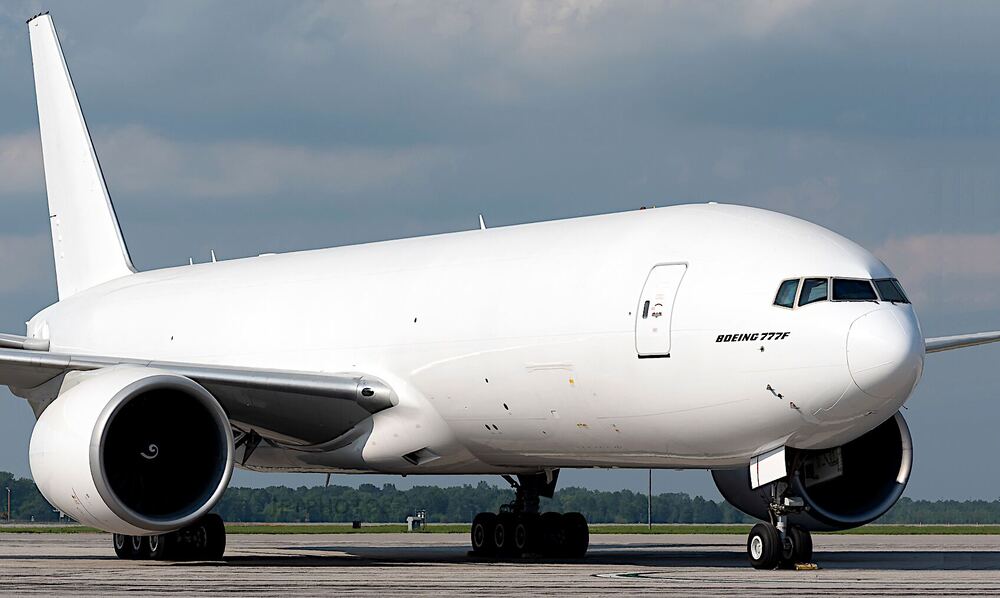
Widebody freighter aircraft on an airport ramp
    24/7 Operations Desk · Active Now

    Inbound · Australia Gateways

    Cargo Charter Into Australia

    Inbound freighter capacity to Sydney, Melbourne, Brisbane, Perth, Adelaide, Darwin, Cairns and Avalon, and the constraints that decide which of them is actually cheapest.

    Already have an RFQ prepared? Email charters@aviall.com.au

    8 gateways
    SYD MEL BNE PER ADL DRW CNS AVV
    <60 min
    Aircraft options on urgent work
    24/7
    Charter desk
    Full or part
    Charter models

    Why inbound charter into Australia is its own problem

    Australia is a long-haul destination at the end of most trade lanes, and that shapes charter economics more than anything about the cargo itself. Freighters are rarely sitting idle near your origin waiting for an Australia-bound task, so positioning is often a significant share of the price. Equally, an aircraft that arrives in Australia with nothing to take out is priced to cover both directions.

    That is why two apparently similar inbound charters can differ enormously in cost. The variables are where a suitable aircraft happens to be, what it can do afterwards, and whether your dates allow it to fit an existing rotation. Flexibility of even twelve hours on a ready date sometimes moves the price materially.

    • Positioning legs to reach your origin are a real cost component
    • Return-load potential out of Australia can reduce your price
    • Small date flexibility can unlock a better-placed aircraft
    • Right-sizing the type nearly always beats chartering something larger

    Choosing the Australian gateway

    Gateway choice is a total-cost decision, not a preference. A cheaper international sector into one port can be entirely consumed by a long domestic leg with special lifting at the other end, so the international and domestic segments should be priced together.

    Sydney handles the largest share of inbound technology and general freight, but its night curfew constrains late arrivals and can push a movement into the following morning. Melbourne, Brisbane and Perth operate without a curfew, which matters when equipment must clear and move to site overnight ahead of an installation window. Avalon offers an alternative Victorian option for some charter operations. Adelaide, Darwin and Cairns are all viable and are sometimes the better answer when the final destination is closer to them than to a capital, Darwin in particular for northern Australia and Southeast Asian sectors, Perth for Western Australian mining and infrastructure freight.

    • Sydney, largest inbound volume, night curfew constrains late arrivals
    • Melbourne and Avalon, curfew-free, strong for technology and project freight into Victoria
    • Brisbane, curfew-free, efficient for Queensland and northern NSW destinations
    • Perth, the practical gateway for Western Australian mining and resources cargo
    • Adelaide, useful for South Australian defence, wine and industrial freight
    • Darwin, shortest sectors from Southeast Asia, strong for northern projects
    • Cairns, Far North Queensland and Pacific-adjacent movements

    The corridors we see most

    Inbound charter into Australia clusters around a handful of lanes. North Asia, Hong Kong, mainland China, Taiwan, Korea and Japan, dominates technology, data centre and automotive freight. Southeast Asia handles both manufacturing output and short-sector urgent movements, especially into Darwin and Perth. Europe supplies electrical, power and industrial plant. North America contributes aerospace, energy equipment and high-value technology.

    Each lane has practical implications. Long sectors from Europe or the US may require a technical stop when the aircraft is close to payload limits, which adds hours and cost. Shorter Asian sectors give more type choice, including mid-size freighters that are often the better commercial fit than a widebody.

    • North Asia, technology, GPU and networking hardware, automotive, general urgent freight
    • Southeast Asia, manufacturing output, short-sector urgent capacity, project components
    • Europe, electrical infrastructure, switchgear, power and process plant
    • North America, aerospace, energy, high-value technology
    • Middle East, transhipment point and positioning source for widebody freighters
    • New Zealand and Pacific, regional and inter-island connections

    Aircraft selection for inbound movements

    The cargo decides the aircraft. Piece dimensions and the heaviest single item usually rule types in or out before payload does, a load can be well inside an aircraft's weight limit and still be unloadable through a side door. Nose-loading types such as the 747F accept long single pieces down the main deck centreline; ramp-loading types like the AN-124 and IL-76 handle genuinely outsize and tall cargo.

    For large but loadable freight, a 777F or A330F is frequently the better commercial answer than a 747F. For domestic onward legs, narrowbody freighters and turboprops cover regional and remote destinations. Aviall does not hold or guarantee access to any particular aircraft; we shortlist what is genuinely available for your dates and let the cargo drive the decision.

    • AN-124, genuine outsize, extreme tonnage, ramp and nose loading
    • 747F, highest volume with nose-door access for long pieces
    • 777F, efficient long-haul twin, strong payload, high availability
    • A330F, mid-size dedicated capacity for regional and medium-haul sectors
    • IL-76, dense moderate loads and less-developed airfields
    • Narrowbody freighters, domestic onward legs and urgent regional capacity

    Clearance, handling and the ground side

    A charter is only as good as its ground plan. Inbound freight into Australia is subject to customs and biosecurity requirements, and cargo that is not documented correctly can sit on the ramp while an installation window closes. Your customs broker keeps that work; we make sure the aircraft, slot, handling and equipment line up around it.

    Practical checks before we commit to a routing include ground handling availability at the arrival time, out-of-hours capability at secondary ports, high-loader and crane access for heavy or tall pieces, pavement strength at regional fields, and whether the destination airport can accept the type at the weight required.

    • Out-of-hours handling availability at the arrival airport
    • Loading and unloading equipment for heavy, tall or outsize pieces
    • Runway length and pavement strength at regional destinations
    • Slot availability and curfew constraints at the arrival gateway
    • Coordination with your customs broker and trucking, not replacement of them

    Lead times and what to send first

    Urgent charter can move within a day where a suitable aircraft is well placed and permits allow, but that is the exception rather than the plan. Two to five days is a more realistic window for a widebody inbound movement, and outsize cargo requiring loadability engineering, special equipment or additional permits should be planned further out.

    The fastest way to get a usable price is to send the packing list. With routing, ready date, total weight, total volume and piece dimensions we can shortlist aircraft immediately. Without dimensions, any quote is a guess that will change.

    Inbound charter capability

    Full freighter charter

    Whole-aircraft capacity into any suitable Australian gateway, with loading sequence and timing set around your readiness.

    Part charter and block space

    A defined share of a dedicated freighter when the cargo does not fill a main deck but still needs controlled capacity.

    Urgent and time-critical

    24/7 sourcing for movements where a scheduled routing cannot hold the date, including AOG and shutdown-critical freight.

    Outsize and project cargo

    Loadability review against nose and ramp-loading types, with special equipment planned at both ends.

    Programme rotations

    Pre-planned inbound capacity across a project pipeline rather than repeated spot buying under deadline pressure.

    Onward domestic legs

    Inbound international sectors priced together with the domestic leg to the actual destination.

    Live requirement

    Have a live cargo requirement?

    Send the six details below and our charter desk returns aircraft options, payload feasibility and an indicative wheels-up window. Partial information is enough to start. We will work with what you have while packing is finalised.

    Already have an RFQ? Email charters@aviall.com.au

    Send us

    • 01OriginAirport, city or plant
    • 02DestinationFinal airport or door address
    • 03PayloadGross weight and piece count
    • 04Ready dateWhen cargo is packed and released
    • 05CommodityIncluding any dangerous goods class
    • 06Packing listDimensions per piece, if available

    Urgent charter? Our ops desk is staffed 24/7.

    Aircraft options within the hour and a written quote with an indicative wheels-up window.

    Inbound planning reference

    Primary gateways
    SYD, MEL, BNE, PER, ADL, DRW, CNS, AVV
    Curfew constraint
    Sydney night curfew; MEL, BNE, PER curfew-free
    Common corridors
    North Asia, Southeast Asia, Europe, North America
    Typical lead time
    2-5 days widebody; longer for outsize cargo
    Charter models
    Full charter, part charter, programme rotations
    Aircraft considered
    AN-124, 747F, 777F, A330F, IL-76, narrowbody
    To quote accurately
    Routing, ready date, weight, volume, piece dimensions
    Charter desk
    24/7, 1800 796 769

    FAQ

    Frequently Asked Questions

    The one that produces the lowest total delivered cost, not the closest capital. Sydney carries the most volume but has a night curfew; Melbourne, Brisbane and Perth are curfew-free. We price the international sector and the domestic leg together before recommending a gateway.

    Need inbound freighter capacity into Australia?

    Send the packing list, paste the RFQ, or email the charter desk. We will come back with the aircraft options genuinely available for your dates.

    Have a live requirement?

    Send us origin, destination, payload and ready date. We return aircraft options. Attach an existing RFQ, packing list or photos straight from your phone, partial detail is enough to start.

    Requirement

    Cargo

    AttachmentsPacking list, cargo dimensions, manifest, RFQ document, images or other supporting documentation. Files up to 20MB each, 10 max. PDF, Word, Excel, CSV, images or email files.

    Goes straight to our charter desk at Charters@Aviall.com.au. Submitting an RFQ does not confirm an aircraft.