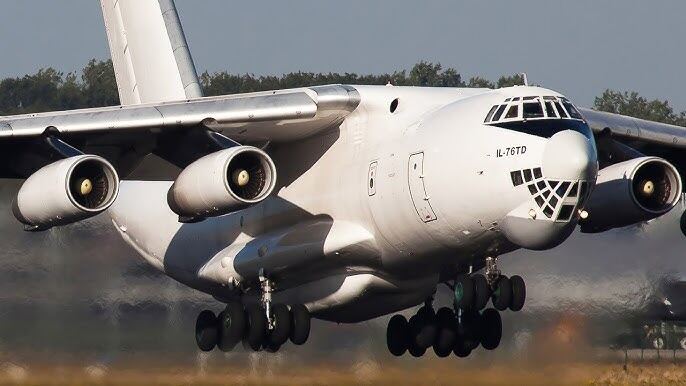
Freighter aircraft departing on an outbound cargo charter
    24/7 Operations Desk · Active Now

    Outbound · Export Charter

    Cargo Charter From Australia

    Outbound freighter capacity from Australian gateways, and how to structure an export charter so positioning does not dominate the price.

    Already have an RFQ prepared? Email charters@aviall.com.au

    Full or part
    Charter models
    <60 min
    Aircraft options on urgent work
    24/7
    Charter desk
    AU-based
    Local operational knowledge

    The economics of chartering out of Australia

    Outbound charter has a structural feature worth understanding before you price it: freighters are not usually parked in Australia waiting for export work. In many cases an aircraft has to be positioned in, which means your charter carries part or all of the cost of getting it here.

    The practical consequence is that the best outbound prices often come from aircraft already committed to an inbound movement. Where your dates have some flexibility, we can look for a freighter arriving into Australia that needs a load out, which converts what would be an empty positioning leg for the operator into capacity for you at a materially better rate.

    • Positioning into Australia is frequently the largest single cost driver
    • Aircraft arriving inbound and needing an outbound load produce the best rates
    • Date flexibility is worth real money on export charter
    • Right-sizing the aircraft matters more than maximising capacity

    Export gateways and what each is good for

    Sydney and Melbourne carry the bulk of outbound volume and have the deepest handling capability, including out-of-hours and specialist equipment. Perth is the natural gateway for resources and mining freight and for sectors into Southeast Asia and the Indian Ocean region. Brisbane serves Queensland agriculture, industrial and technology exports without curfew constraint. Darwin gives the shortest sectors into Southeast Asia. Adelaide, Cairns, Avalon, Hobart and Townsville all feature on specific movements, perishables, defence, resources and Pacific-adjacent tasks.

    As with inbound, the correct gateway is a total-cost question. Trucking cargo an extra 900 kilometres to reach a cheaper airport rarely survives the arithmetic once specialist lifting is involved, but sometimes it does. We price both options rather than assume.

    • Sydney and Melbourne, deepest handling, widest aircraft access
    • Perth, mining, resources and Southeast Asia / Indian Ocean sectors
    • Brisbane, curfew-free, Queensland agriculture, industrial and technology
    • Darwin, shortest sectors into Southeast Asia
    • Adelaide, Hobart, Cairns, Townsville, perishables, defence and regional exports

    What Australia exports by charter

    Outbound charter demand from Australia is less about volume and more about time and value. Perishables move by charter when a market window is short and scheduled capacity cannot absorb the peak. Resources and mining exports move when equipment has to be returned, repaired or redeployed. Project cargo moves when a piece is too large for scheduled uplift.

    Live animals, high-value technology, aerospace components under repair, humanitarian and government tasking, and event or touring freight also feature regularly. Each has handling requirements that shape the aircraft choice rather than the reverse.

    • Perishables and seafood into short market windows in Asia and the Middle East
    • Mining and resources equipment, including returns for repair or redeployment
    • Project and oversized cargo unsuited to scheduled main-deck capacity
    • Aerospace components and AOG parts outbound to operators and MROs
    • High-value technology and secure freight requiring controlled handling
    • Live animals with welfare-compliant handling and appropriate configuration
    • Humanitarian, government and defence-adjacent tasking
    • Event, touring and broadcast equipment on fixed schedules

    Corridors out of Australia

    Southeast and North Asia dominate outbound charter, short to medium sectors with broad type availability, which usually means more competitive options and easier positioning. The Pacific Islands and New Zealand are frequent short-sector destinations where smaller freighters and turboprops are often the right answer and airfield limitations matter more than payload.

    Longer runs to the Middle East, Europe and North America put aircraft close to payload limits and may require a technical stop, trading tonnage for fuel. That trade-off should be modelled before you commit to a single aircraft type, because a smaller aircraft with a stop occasionally beats a larger one flying non-stop.

    • Southeast Asia, Singapore, Malaysia, Indonesia, Thailand, Vietnam, Philippines
    • North Asia, China, Hong Kong, Taiwan, Korea, Japan
    • Pacific and New Zealand, short sectors, airfield-limited destinations
    • Middle East, long sectors, common transhipment and positioning point
    • Europe and North America, payload-versus-range trade-offs and technical stops

    Practical export-side planning

    Outbound charter usually fails on the ground, not in the air. Export documentation, permits for controlled goods, dangerous goods declarations, cold-chain continuity for perishables, welfare requirements for live animals and available loading equipment all need to line up with the aircraft's on-ground window.

    We coordinate the aviation side around your export process and tell you early where the timeline is unrealistic. A charter quoted against a ready date that the ground process cannot meet is not a saving. It is a cost waiting to happen.

    • Cargo readiness confirmed against the aircraft's ground window
    • Dangerous goods classification, packaging and declarations
    • Cold-chain continuity from origin to loading for perishables
    • Loading equipment and ramp access for heavy or tall pieces
    • Slots, permits and out-of-hours handling at the departure gateway

    How to get an accurate outbound price quickly

    Send the routing, the cargo ready date and window, total weight, total volume, and the dimensions of the largest and heaviest pieces. If you already have a packing list, upload it, that alone usually lets us shortlist aircraft immediately.

    Tell us where you have flexibility. On outbound charter in particular, a twelve to twenty-four hour window on departure is often the single most valuable piece of information you can give us, because it determines whether we can match your cargo to an aircraft already heading this way.

    Outbound charter capability

    Full freighter charter

    Whole-aircraft export capacity from any suitable Australian gateway on your schedule.

    Part charter and block space

    A defined share of a dedicated freighter where the cargo does not fill a main deck.

    Backhaul matching

    Matching your outbound cargo to freighters arriving into Australia that need a load out, usually the best available rate.

    Perishables and cold chain

    Configuration, timing and handling planned around cold-chain continuity and market windows.

    Project and outsize export

    Loadability review for pieces that scheduled main-deck capacity cannot take.

    Programme and seasonal capacity

    Planned rotations across a season or project instead of repeated spot buying.

    Live requirement

    Have a live cargo requirement?

    Send the six details below and our charter desk returns aircraft options, payload feasibility and an indicative wheels-up window. Partial information is enough to start. We will work with what you have while packing is finalised.

    Already have an RFQ? Email charters@aviall.com.au

    Send us

    • 01OriginAirport, city or plant
    • 02DestinationFinal airport or door address
    • 03PayloadGross weight and piece count
    • 04Ready dateWhen cargo is packed and released
    • 05CommodityIncluding any dangerous goods class
    • 06Packing listDimensions per piece, if available

    Urgent charter? Our ops desk is staffed 24/7.

    Aircraft options within the hour and a written quote with an indicative wheels-up window.

    Outbound planning reference

    Primary gateways
    SYD, MEL, PER, BNE, DRW, ADL, AVV, CNS
    Main corridors
    Southeast Asia, North Asia, Pacific, Middle East, Europe
    Key cost driver
    Positioning into Australia; backhaul matching reduces it
    Typical lead time
    2-5 days widebody; longer for outsize or live cargo
    Charter models
    Full charter, part charter, seasonal programmes
    Aircraft considered
    AN-124, 747F, 777F, A330F, IL-76, narrowbody, turboprop
    To quote accurately
    Routing, ready window, weight, volume, piece dimensions
    Charter desk
    24/7, 1800 796 769

    FAQ

    Frequently Asked Questions

    Because a suitable freighter often has to be positioned into Australia first, and that empty leg is part of the task's cost. Matching your cargo to an aircraft already arriving inbound is the most effective way to reduce it.

    Need outbound freighter capacity from Australia?

    Send the packing list, paste the RFQ, or email the charter desk. Tell us where your dates can flex and we will look for the best-placed aircraft.

    Have a live requirement?

    Send us origin, destination, payload and ready date. We return aircraft options. Attach an existing RFQ, packing list or photos straight from your phone, partial detail is enough to start.

    Requirement

    Cargo

    AttachmentsPacking list, cargo dimensions, manifest, RFQ document, images or other supporting documentation. Files up to 20MB each, 10 max. PDF, Word, Excel, CSV, images or email files.

    Goes straight to our charter desk at Charters@Aviall.com.au. Submitting an RFQ does not confirm an aircraft.