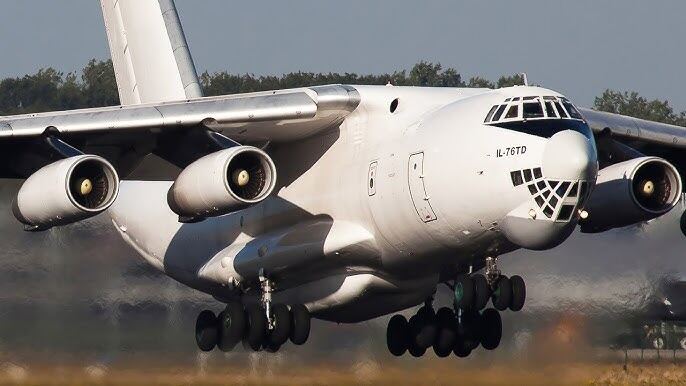
Four-engine main-deck freighter on takeoff, the aircraft type used for 747F cargo charters to and from Australia
    24/7 Operations Desk · Active Now

    Freighter Charter · 747-400F & 747-8F

    747F charter into and out of Australia for long, tall and heavy cargo

    The only widely available commercial freighter with a nose door. Here is when a 747F is genuinely the right aircraft for an Australian movement, when it is overkill, and what we need to price one.

    Already have an RFQ prepared? Email charters@aviall.com.au

    ~102–135 t
    Payload, 400F to 8F
    Nose door
    Straight-in loading
    ≤60 min
    Aircraft options target
    24/7
    Cargo charter desk

    What a 747F gives an Australian shipper

    Two things separate the 747 freighter from every other commercial freighter you can charter into Australia: main-deck volume and the hinged nose door. Volume matters because charter is priced for the aircraft and the task, not per kilogram. If your consignment is bulky rather than dense, the aircraft that can physically swallow it in one rotation is usually cheaper than two rotations of something smaller.

    The nose door matters because length is the constraint that stops most air charters, not weight. A side cargo door requires every piece to turn a corner into the deck. A nose door lets a long piece run straight down the main-deck centreline. If you have been told a shipment is "too long for air", the honest answer is often that it is too long for a side-loading freighter, and a 747F or an outsize type /an-124-charter-australia changes the conversation.

    Both current variants are in commercial service and can be chartered: the 747-400F, and the newer, higher-payload 747-8F. Aviall does not own or hold aircraft. We shortlist the types and operators genuinely available for your dates and your cargo, and tell you plainly when a smaller aircraft is the better commercial answer.

    • 747-8F, maximum structural payload approximately 135 tonnes, range roughly 7,300 nm
    • 747-400F, maximum structural payload approximately 102 tonnes on the same nose-door airframe layout
    • Loading, hinged nose door for long pieces, plus a main-deck side cargo door for standard pallets
    • Deck, built around standard aviation pallets and containers, so turnarounds are fast

    When a 747F is the right call, and when it is not

    A 747F earns its cost when at least one of these is true: the total volume genuinely fills a main deck; a single piece is too long or too tall for a side door; or the movement has to happen in one rotation because splitting it across flights breaks the installation sequence at the other end.

    If none of those apply, a 777F /777f-charter-australia or A330 freighter /a330f-charter-australia is very often cheaper for the same tonnage, and for a genuinely outsize single piece an AN-124 may be the only type that can accept it. Right-sizing the aircraft is the single biggest lever on charter cost, ahead of route, timing and handling.

    • Good fit, a full deployment tranche, a long single piece, a one-rotation deadline
    • Usually cheaper alternative, palletised, dense freight under ~100 tonnes with no length problem
    • Wrong aircraft, a genuinely outsize piece beyond main-deck section, which needs an outsize lifter
    • Also consider, part charter of a scheduled freighter when you do not need the whole aircraft

    Australian gateways: what constrains a 747F

    Runway length is rarely the limiting factor at Australia's international gateways. What constrains a 747F movement in practice is curfews, slots, ground handling equipment and pavement classification at the specific apron you need.

    Sydney operates a night curfew, which is the most common cause of a 747F arrival slipping to the following morning. Melbourne, Brisbane and Perth are curfew-free, which is why an inbound movement that must clear customs and move to site overnight is frequently better routed through them even when the final destination is Sydney. Darwin is a useful northern gateway for Asian sectors and for tech-stop planning; Adelaide and Canberra are both workable with advance coordination.

    The second gateway question is equipment. Nose loading requires the operator's own or contracted loading equipment and enough ramp time; heavy single pieces may need specific main-deck loaders and a pavement assessment. This is normal and it is planned, but it is a reason to send an enquiry with dimensions early rather than the day before readiness.

    • Sydney (SYD), highest inbound volume, night curfew constrains late arrivals
    • Melbourne (MEL), Brisbane (BNE), Perth (PER), curfew-free, favoured for overnight clearance and onward trucking
    • Darwin (DRW), northern gateway for Asian sectors and technical stops
    • Ask early about, apron availability, main-deck loader access, out-of-hours handling, slot windows

    Corridors: how 747F sectors into Australia are planned

    Australia is a long-sector destination from almost everywhere, so payload and fuel are traded against each other on nearly every 747F charter. From North and Southeast Asia, Hong Kong /cargo-charter-hong-kong, China /cargo-charter-china, Singapore /cargo-charter-singapore, a 747F typically operates non-stop to the east-coast gateways at commercially useful payloads, which is why these are the busiest charter corridors for technology and infrastructure freight.

    From Europe /cargo-charter-europe, the Middle East /cargo-charter-uae and the United States /cargo-charter-united-states, sector length usually means either a technical stop or a payload trade. That is not a problem in itself; it is a planning input that changes the price, the total transit time and sometimes the gateway. It is also why an accurate weight and dimension list is worth more to a quote than a target price.

    Positioning is the other corridor variable. Freighters are commercial assets already in a rotation somewhere. Where the nearest suitable aircraft is, and where it needs to be afterwards, can move a 747F charter price more than the sector itself, and an available return load can move it materially in your favour.

    What to send us so a 747F quote is real

    You do not need a complete dataset to start. Origin, destination, approximate total weight and the readiness date are enough for us to come back with aircraft options and an indicative structure. The detail below is what converts that into a firm, defensible price.

    If you already have a written RFQ or a packing list, do not retype it. Paste it or upload it (/submit-rfq?type=cargo), or email it straight to Charters@Aviall.com.au and we will work from your format.

    • Origin and destination airports, or the nearest usable ones
    • Total weight, plus the dimensions and weight of the largest single piece
    • Whether pieces are palletised, crated, on skids or loose
    • Readiness date and any fixed deadline at the destination
    • Dangerous goods classification, if any, and whether documentation exists
    • Any special handling, temperature, tilt, shock, security escort, chain of custody

    How we run a 747F charter

    Aircraft shortlist, not a sales pitch

    We come back with the freighter types genuinely available for your dates, including cheaper alternatives when a 747F is more aircraft than your cargo needs.

    Loadability checked before pricing

    Largest-piece dimensions are checked against main-deck and nose-door geometry so the quote reflects an aircraft that can actually accept the cargo.

    Gateway and slot planning

    Curfews, slots, apron access and out-of-hours handling are priced with the flight, not discovered afterwards.

    One accountable coordinator

    A single charter coordinator owns permits, handling, documentation and updates from quote to offload.

    Live requirement

    Have a live cargo requirement?

    Send the six details below and our charter desk returns aircraft options, payload feasibility and an indicative wheels-up window. Partial information is enough to start. We will work with what you have while packing is finalised.

    Already have an RFQ? Email charters@aviall.com.au

    Send us

    • 01OriginAirport, city or plant
    • 02DestinationFinal airport or door address
    • 03PayloadGross weight and piece count
    • 04Ready dateWhen cargo is packed and released
    • 05CommodityIncluding any dangerous goods class
    • 06Packing listDimensions per piece, if available

    Urgent charter? Our ops desk is staffed 24/7.

    Aircraft options within the hour and a written quote with an indicative wheels-up window.

    Mission examples · Illustrative

    What this looks like in operation

    Representative mission profiles drawn from recurring work. Identifying details, operators, hospitals, routes, aircraft tail numbers, are intentionally omitted.

    Heavy lift · Project cargo

    Outsize mining component into a remote regional strip

    An ASX-listed resources operator faced a stalled processing line waiting on a single oversized component too large for any scheduled freighter. Aviall sourced an outsize main-deck nose-loader, completed pavement and load-spread checks at the regional destination, and coordinated road movement permits at both ends.

    Outcome

    Component on site inside 72 hours of first call; production line restart same week.

    AOG · Time critical

    Replacement engine to a wide-body grounded overseas

    A major carrier had a wide-body grounded at a foreign hub, awaiting a replacement engine sitting in a domestic MRO. Aviall positioned a freighter to the MRO, coordinated dangerous goods documentation for the engine and stand, and held a flight-following bridge with the airline's tech ops cell door-to-door.

    Outcome

    Engine wheels-up inside 14 hours of release; aircraft returned to service the next operational day.

    747 freighter quick reference

    747-8F max structural payload
    Approximately 135 tonnes
    747-400F max structural payload
    Approximately 102 tonnes
    747-8F range
    Approximately 7,300 nm at typical payload
    Loading
    Hinged nose door plus main-deck side cargo door
    Deck configuration
    Standard aviation pallets and containers
    Typical Australian gateways
    SYD, MEL, BNE, PER, DRW, ADL, CBR
    Common alternatives
    777F, A330F, MD-11F, AN-124 for outsize
    Aircraft options returned
    Target within 60 minutes of a formed enquiry

    FAQ

    Frequently Asked Questions

    Yes. 747-400F and 747-8F freighters operate commercially into Australian international gateways and can be chartered for full or ad-hoc movements. Availability depends on where a suitable aircraft is positioned relative to your origin and your readiness date, which is why we shortlist available types rather than promising a specific airframe.

    Have a 747F-scale movement?

    Send origin, destination, total weight and your largest single piece. We come back with the freighter types genuinely available for your dates, and tell you if something smaller does the job for less.

    Have a live requirement?

    Send us origin, destination, payload and ready date. We return aircraft options. Attach an existing RFQ, packing list or photos straight from your phone, partial detail is enough to start.

    Requirement

    Cargo

    AttachmentsPacking list, cargo dimensions, manifest, RFQ document, images or other supporting documentation. Files up to 20MB each, 10 max. PDF, Word, Excel, CSV, images or email files.

    Goes straight to our charter desk at Charters@Aviall.com.au. Submitting an RFQ does not confirm an aircraft.