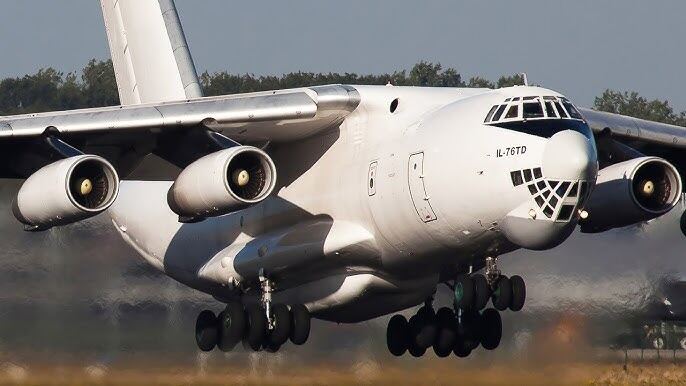
Cargo aircraft departing on a short-sector freight charter
    24/7 Operations Desk · Active Now

    New Zealand ↔ Australia · Freighter Charter

    New Zealand ↔ Australia Cargo Charter

    Trans-Tasman full-aircraft charter between Auckland, Christchurch, Wellington and Australian gateways, where sectors are short enough for genuine same-day delivery.

    Already have an RFQ prepared? Email charters@aviall.com.au

    2,150 km
    AKL-SYD sector
    Same day
    Routinely achievable
    <60 min
    Aircraft options returned
    24/7
    Australian charter desk

    Why the Tasman is a same-day charter lane

    Auckland to Sydney is about 2,150 km and roughly three hours in the air. Christchurch to Melbourne is a similar proposition. At that distance a freighter can position, load, fly, unload and return within a single working day, which makes the Tasman one of the few international lanes where a same-day charter is routine rather than exceptional.

    That changes the commercial logic. Charter here is not usually about capability that scheduled services lack, the Tasman is well served. It is about timing that scheduled services cannot commit to. A part that must be on a hangar floor before the night shift, a perishable consignment that must reach a Monday market, an event load that must be rigged tomorrow morning: these do not fit around scheduled uplift and connection windows.

    Because both ends have capable airports and short sectors, aircraft choice is wide and the cost of a charter is far lower than the long-haul figures buyers often assume.

    Commodities that typically move

    Eastbound to New Zealand: aviation AOG rotables and engines, mining and industrial spares, tooling and machinery, event, film and broadcast equipment, and construction and infrastructure components during compressed build programmes.

    Westbound to Australia: chilled and live seafood including crayfish and salmon, cut flowers, fresh produce, dairy and premium food products, thoroughbred and livestock-related freight requirements, machinery and repaired components, and film and production equipment moving between shoots.

    Aircraft suited to the sector

    Short sectors mean the aircraft is chosen almost entirely on cargo weight, volume and door requirements. There is no meaningful range constraint, so the practical question is how much you need to move and how large the largest single piece is.

    • 737-800F or A321F, the most common trans-Tasman choice for 20-25 tonne loads and urgent partial loads
    • ATR-72F or similar turboprop freighter, for lighter loads or regional New Zealand fields
    • 767-300F, used where the consignment reaches 40-50 tonnes or where a large door aperture is needed
    • 777F or A330-200F, for consolidated volume, event and broadcast programmes or full-deck perishable movements
    • Learjet or Metroliner class, for courier-scale single components where speed dominates and payload is minimal

    Airport and border considerations

    Auckland (AKL) is the main freight gateway and operates around the clock. Christchurch (CHC) is the South Island gateway and matters for seafood, Antarctic programme support and South Island machinery. Wellington (WLG) is constrained by runway length and is rarely the right field for a freighter. Hamilton (HLZ) and Palmerston North (PMR) are useful secondary options for regional cargo.

    On the Australian side, Sydney's curfew shapes late-evening arrivals; Melbourne and Brisbane are curfew-free and often preferred for overnight perishable movements.

    Both countries apply strict biosecurity. New Zealand's requirements on incoming machinery, soil, timber and food are among the most rigorous anywhere, and Australia's are comparable in the other direction. Cleaning certificates, treatment records and packaging standards should be settled before departure, because a biosecurity hold on arrival can cost more time than the entire flight saved.

    Time-critical use cases we see repeatedly

    Aircraft on ground is the most frequent trigger. A grounded aircraft on either side of the Tasman waiting for a rotable, where the charter is measured against the cost of a cancelled flying programme rather than against airfreight rates.

    Perishables are the second: seafood, flowers and produce with a defined market window, where a missed connection destroys the value of the consignment rather than merely delaying it.

    The third is event, sport and production freight, broadcast kit, staging, and team or production equipment moving between venues on a fixed schedule where a late arrival is not recoverable.

    Trans-Tasman lane capability

    Same-day rotations

    Aircraft positioned, loaded and delivered within one working day where cargo is ready and slots allow.

    AOG escalation

    Sourcing begins on approximate part weight so the aircraft is being arranged while release paperwork completes.

    Perishable and cool chain

    Loading temperature, tarmac exposure and arrival handling planned so market windows are actually met.

    Biosecurity preparation

    Cleaning, treatment and documentation requirements confirmed for both directions before departure.

    Event and broadcast freight

    Fixed-schedule movements planned around rigging and venue access rather than freight convenience.

    Right-sized aircraft

    Turboprop, narrowbody or widebody selected on actual payload rather than defaulting to a widebody charter.

    New Zealand ↔ Australia · Live requirement

    Have a live cargo requirement?

    Send the six details below and our charter desk returns aircraft options, payload feasibility and an indicative wheels-up window. Partial information is enough to start. We will work with what you have while packing is finalised.

    Already have an RFQ? Email charters@aviall.com.au

    Send us

    • 01OriginAirport, city or plant
    • 02DestinationFinal airport or door address
    • 03PayloadGross weight and piece count
    • 04Ready dateWhen cargo is packed and released
    • 05CommodityIncluding any dangerous goods class
    • 06Packing listDimensions per piece, if available

    Urgent charter? Our ops desk is staffed 24/7.

    Aircraft options within the hour and a written quote with an indicative wheels-up window.

    Mission examples · Illustrative

    What this looks like in operation

    Representative mission profiles drawn from recurring work. Identifying details, operators, hospitals, routes, aircraft tail numbers, are intentionally omitted.

    AOG · Time critical

    Replacement engine to a wide-body grounded overseas

    A major carrier had a wide-body grounded at a foreign hub, awaiting a replacement engine sitting in a domestic MRO. Aviall positioned a freighter to the MRO, coordinated dangerous goods documentation for the engine and stand, and held a flight-following bridge with the airline's tech ops cell door-to-door.

    Outcome

    Engine wheels-up inside 14 hours of release; aircraft returned to service the next operational day.

    Humanitarian · Surge

    Multi-rotation airlift after a regional disaster

    Following a sudden-onset disaster in the wider region, an aid consortium needed shelter, water and medical kit moved on consecutive days into a damaged airfield with reduced services. Aviall built a rotation plan around aircraft suited to the strip and pre-positioned ground handling support.

    Outcome

    Sustained airlift maintained across consecutive days without diversion.

    New Zealand ↔ Australia, quick reference

    Sector length
    2,150 km (AKL-SYD) - 2,700 km (CHC-BNE)
    Block time
    Approx. 3 - 4 hours
    Typical payload band
    0.5 - 100 tonnes
    Main origin airports
    Auckland (AKL), Christchurch (CHC), Hamilton (HLZ)
    Common Australian gateways
    SYD, MEL, BNE, ADL
    Usual constraint
    Slots, curfews and biosecurity, not range

    FAQ

    Frequently Asked Questions

    Yes, regularly. The flight is around three hours, so the constraint is positioning, slots, curfews and cargo readiness rather than flying time. If the cargo is packed and the paperwork is in order in the morning, delivery the same day is a reasonable expectation.

    Why operators, brokers and end clients keep calling back

    Credibility built on operational discipline, not marketing

    "Quote came back inside the hour with two aircraft options, written wheels-up windows and the cost-versus-time trade-off laid out. That is what we expect and rarely get."

    , Project logistics manager · Resources sector

    Moving cargo across the Tasman?

    Send origin, destination, payload, ready date, commodity and packing list. Our desk returns aircraft options, payload feasibility and an indicative wheels-up window.

    Have a live requirement?

    Send us origin, destination, payload and ready date. We return aircraft options. Attach an existing RFQ, packing list or photos straight from your phone, partial detail is enough to start.

    Requirement

    Cargo

    AttachmentsPacking list, cargo dimensions, manifest, RFQ document, images or other supporting documentation. Files up to 20MB each, 10 max. PDF, Word, Excel, CSV, images or email files.

    Goes straight to our charter desk at Charters@Aviall.com.au. Submitting an RFQ does not confirm an aircraft.