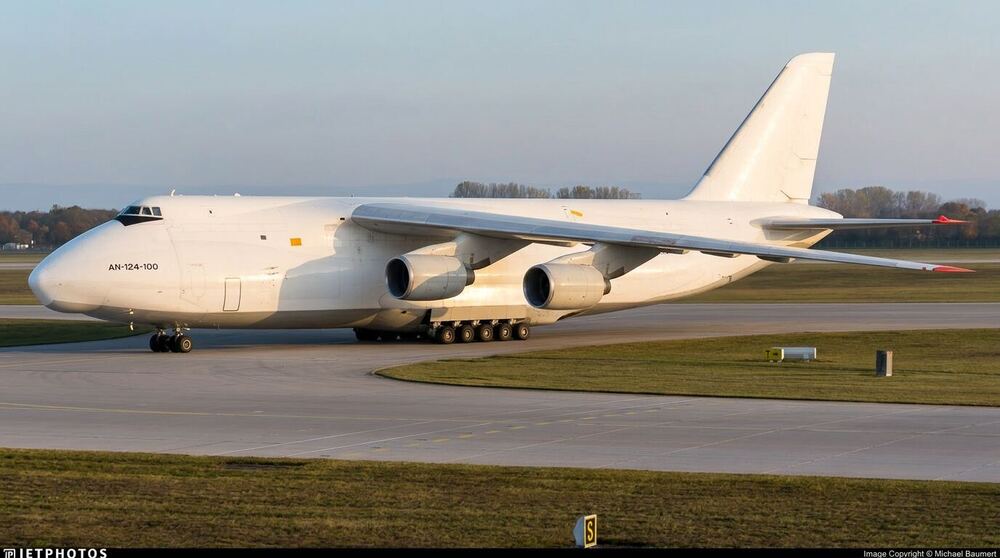
Heavy lift freighter aircraft loading outsize project cargo on the tarmac
    24/7 Operations Desk · Active Now

    PNG ↔ Australia · Freighter Charter

    PNG ↔ Australia Cargo Charter

    Full-aircraft charter between Port Moresby, Lae, Mount Hagen and Australian gateways, built for resources project cargo and airstrips that scheduled freight cannot serve.

    Already have an RFQ prepared? Email charters@aviall.com.au

    840 km
    CNS-POM sector
    Same day
    Achievable from Cairns
    <60 min
    Aircraft options returned
    Outsize
    Up to 120 t capability

    Why charter is the default on the PNG lane

    Papua New Guinea is close to Australia but hard to serve. Cairns to Port Moresby is only about 840 km, yet the terrain, the limited road network and the concentration of economic activity around mining, energy, agriculture and remote communities mean much of the country is reachable only by air. Where scheduled freight capacity exists it is thin and rarely sized for project or oversize cargo.

    The result is that charter on this lane is often not a premium option chosen for speed. It is the only way to move the cargo at all. A drilling component for a highlands project, a generator set for a processing plant, or medical and relief supplies after a landslide or flood are not shipments that scheduled services can absorb.

    Short sectors from Cairns, Brisbane and Townsville also make PNG one of the more affordable international charter lanes, because flying hours are limited and aircraft can often complete a rotation and return the same day.

    Commodities and mission types that typically move

    Northbound to PNG: mining and drilling components, generator sets and process modules, pipes, structural steel and construction materials, fuel-system and camp infrastructure, spare parts for plant and heavy vehicles, medical supplies and vaccines, and food and consumables for remote camps and communities.

    Southbound to Australia: repaired and unserviceable plant components returning for overhaul, mineral and core samples for laboratory analysis, high-value agricultural products including coffee and cocoa in urgent lots, and equipment demobilised at the end of a project phase.

    Relief and emergency airlift is a recurring requirement given PNG's exposure to earthquake, volcanic, landslide and flood events, and these missions frequently involve airfields with degraded capability where aircraft selection is dictated by the strip rather than the cargo.

    Aircraft matched to the airstrip, not just the cargo

    PNG is the clearest example of a lane where the destination decides the aircraft. Many strips are short, unsealed, at altitude, surrounded by terrain, and without ground loading equipment. A larger freighter with plenty of payload is useless if it cannot land, turn or be unloaded there.

    • IL-76, valued in this environment for rear-ramp loading, onboard cranes and unimproved-strip capability with heavy payloads
    • AN-124, used for genuinely outsize project plant into major airports such as Port Moresby or Lae
    • 737-800F or A321F, standard for 20-25 tonne loads between Australian gateways and PNG's main airports
    • ATR-72F and similar turboprop freighters, the practical answer for short, unsealed or terrain-constrained highland strips
    • Twin Otter, Metroliner and light freighters, for the smallest strips and for onward distribution inside PNG

    Airport, permit and operational considerations

    Port Moresby Jacksons (POM) is the main international gateway and the only field in the country that routinely handles widebody freighters. Lae Nadzab (LAE) serves the industrial and agricultural north coast, Mount Hagen (HGU) the highlands, and Kiunga, Tabubil and Tari the western and highlands mining regions with significant operating limitations.

    For any non-primary field we verify runway length and surface, pavement strength, elevation and terrain-driven performance limits, fuel availability, daylight-only restrictions, and whether loading equipment exists on site or must be flown in with the cargo. Weather is a genuine planning variable: highland cloud and afternoon build-up frequently confine operations to early morning windows.

    Landing and overflight permits are required for non-scheduled international operations and lead times should be confirmed at booking. On the Australian side, Cairns is the shortest and often the most economical gateway, Brisbane offers wider aircraft and handling choice, and Townsville is used for defence-adjacent and northern project cargo.

    Payload considerations on short, hot and high sectors

    The sectors are short, so fuel rarely limits payload on the international leg. What does limit it is the destination: high elevation, high temperature and short unsealed runways reduce the weight an aircraft can safely lift or land with, sometimes substantially. A load that a freighter carries easily from Cairns to Port Moresby may need to be split into two rotations to reach a highlands strip.

    Dimensions are the second limit. Generator sets, process modules and structural steel frequently fail on height or on a single protruding fitting rather than on weight, which is why a packing list with per-piece dimensions, weights and centre of gravity is what actually determines the aircraft.

    PNG lane capability

    Airstrip feasibility assessment

    Runway, surface, pavement strength, elevation, fuel and daylight limits verified before an aircraft is committed.

    Self-unloading options

    Rear-ramp and crane-equipped freighters used where the destination has no ground loading equipment.

    Project phase planning

    Mobilisation, construction and demobilisation lift planned as a sequence rather than as disconnected flights.

    Highlands weather windows

    Departure timing planned around morning windows and terrain-driven cloud rather than optimistic schedules.

    Relief airlift

    Short-notice humanitarian and medical movements into constrained fields, with sustainment rotations as capacity allows.

    Two-way load pairing

    Southbound returns of unserviceable plant or samples paired with northbound lift to reduce empty sectors.

    PNG ↔ Australia · Live requirement

    Have a live cargo requirement?

    Send the six details below and our charter desk returns aircraft options, payload feasibility and an indicative wheels-up window. Partial information is enough to start. We will work with what you have while packing is finalised.

    Already have an RFQ? Email charters@aviall.com.au

    Send us

    • 01OriginAirport, city or plant
    • 02DestinationFinal airport or door address
    • 03PayloadGross weight and piece count
    • 04Ready dateWhen cargo is packed and released
    • 05CommodityIncluding any dangerous goods class
    • 06Packing listDimensions per piece, if available

    Urgent charter? Our ops desk is staffed 24/7.

    Aircraft options within the hour and a written quote with an indicative wheels-up window.

    Mission examples · Illustrative

    What this looks like in operation

    Representative mission profiles drawn from recurring work. Identifying details, operators, hospitals, routes, aircraft tail numbers, are intentionally omitted.

    Heavy lift · Project cargo

    Outsize mining component into a remote regional strip

    An ASX-listed resources operator faced a stalled processing line waiting on a single oversized component too large for any scheduled freighter. Aviall sourced an outsize main-deck nose-loader, completed pavement and load-spread checks at the regional destination, and coordinated road movement permits at both ends.

    Outcome

    Component on site inside 72 hours of first call; production line restart same week.

    Humanitarian · Surge

    Multi-rotation airlift after a regional disaster

    Following a sudden-onset disaster in the wider region, an aid consortium needed shelter, water and medical kit moved on consecutive days into a damaged airfield with reduced services. Aviall built a rotation plan around aircraft suited to the strip and pre-positioned ground handling support.

    Outcome

    Sustained airlift maintained across consecutive days without diversion.

    PNG ↔ Australia, quick reference

    Sector length
    840 km (CNS-POM) - 2,800 km (SYD-POM)
    Block time
    Approx. 1.5 - 4 hours
    Typical payload band
    0.5 - 120 tonnes
    Main PNG airports
    POM, Lae Nadzab, Mount Hagen, Tabubil, Kiunga
    Common Australian gateways
    CNS, BNE, TSV, SYD
    Usual constraint
    Airstrip capability and weather windows

    FAQ

    Frequently Asked Questions

    Frequently yes, but the strip determines the aircraft. We verify runway length and surface, pavement strength, elevation, terrain-driven performance limits, fuel and loading equipment before committing. Where a jet freighter cannot operate, a turboprop freighter or a two-stage movement through Port Moresby or Lae is the usual solution.

    Why operators, brokers and end clients keep calling back

    Credibility built on operational discipline, not marketing

    "They run the mission like an operator, not like a broker. That distinction matters when the cargo is heavy, the route is hard and the clock is real."

    , Charter broker · International network

    Moving cargo between PNG and Australia?

    Send origin, destination, payload, ready date, commodity and packing list. Our desk returns aircraft options, airstrip feasibility and an indicative wheels-up window.

    Have a live requirement?

    Send us origin, destination, payload and ready date. We return aircraft options. Attach an existing RFQ, packing list or photos straight from your phone, partial detail is enough to start.

    Requirement

    Cargo

    AttachmentsPacking list, cargo dimensions, manifest, RFQ document, images or other supporting documentation. Files up to 20MB each, 10 max. PDF, Word, Excel, CSV, images or email files.

    Goes straight to our charter desk at Charters@Aviall.com.au. Submitting an RFQ does not confirm an aircraft.