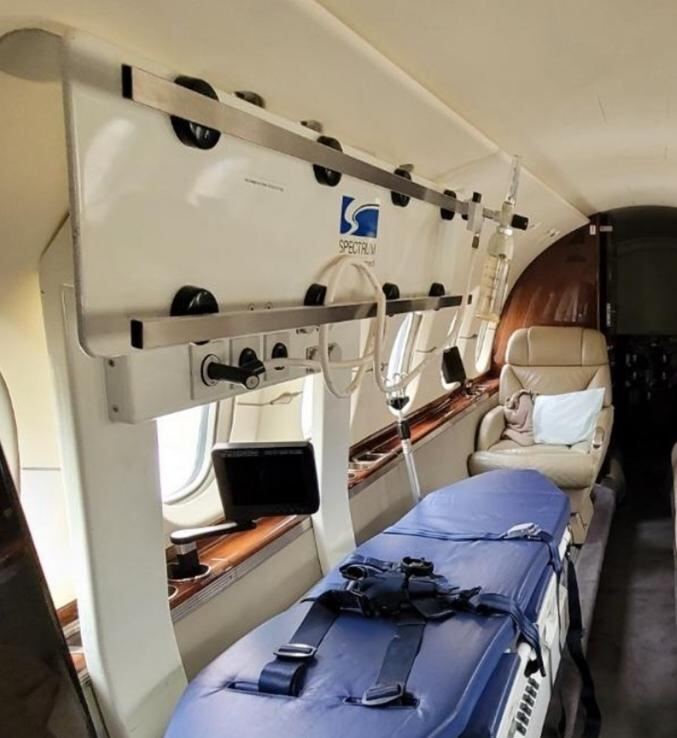
Thailand's resort regions and major cities generate steady demand for patient transfer, road trauma, marine and diving incidents, cardiac events and post-operative repatriation. The corridor to Australia is well established.
Speaking to someone is usually the fastest way to start.
Our medical transfer desk is staffed 24 hours. You do not need complete information to make the first call, the current location of the patient and where they need to go is enough to begin.
Patient information is treated as sensitive. Medical detail and uploaded reports go only to the clinical and operations coordinators handling the case, are never placed in web addresses, and are never shared with advertising or analytics platforms.
Why Thailand generates patient transfers
Thailand combines very high visitor volumes with a wide spread in the level of definitive care available between major cities and resort provinces. A patient stabilised in a regional facility often needs to move, either to a larger centre within the region, or home to Australia to continue treatment closer to family and under domestic cover.
Common presentations include road and motorcycle trauma, marine and diving incidents, cardiac and neurological events, orthopaedic injuries requiring surgery, and complications following elective procedures.
Origins we work from
We arrange transfers from Thailand's main international gateways and from provincial airports where the runway supports the aircraft required.
Bangkok, the primary long-range gateway
Phuket, high visitor volume and marine incident load
Koh Samui and the Gulf islands, generally via a connecting sector
Chiang Mai and northern Thailand
Pattaya region via nearby airports
Provincial facilities, with a road or short air leg to a suitable departure airport
How the transfer is put together
Bangkok to Australia is a long sector. Depending on the acuity and the destination, that may mean a long-range jet direct, a mid-size jet with a technical stop, a commercial stretcher where approvals and timing allow, or a staged transfer via a regional centre.
Clinical configuration is set to the patient's current support level. Stable seated patients frequently travel with a medical escort on scheduled services at a fraction of the cost of a dedicated aircraft, and we will recommend that when it is appropriate.
Diving and decompression cases with appropriate cabin-altitude management
Insurers, assistance companies and families
Many Thailand cases are insurer-driven, and we work directly with insurers and assistance companies on authorisation, clinical justification and reporting. Where there is no cover, or cover is disputed, we give an honest indicative range early so a family can make decisions with real numbers rather than guesses.
Patient information is handled as sensitive: reports go to restricted storage and only to the coordinators and clinicians working the case.
Related pages
These pages cover the corridor and the cost basis in more detail.
Connecting legs from provincial facilities to a suitable departure airport.
Long-range to Australia
Direct or single-stop routings depending on acuity and destination.
Marine & diving cases
Cabin-altitude management appropriate to decompression presentations.
Trauma transfers
Orthopaedic and neurological cases moved to definitive care.
Insurer coordination
Direct liaison and documentation for insurers and assistance companies.
Bed-to-bed
Monitored ground ambulance and documented handover at both ends.
Medical transfer & repatriation desk
Request a medical transfer
You do not need a complete clinical picture to contact us. Tell us where the patient is and where they need to go, and a coordinator will start assessing options, aircraft, clinical configuration, crewing, clearances and ground ambulance, while the rest of the information is still being gathered.
Enough to start
Where the patient is now
City or country, and the facility type if you know it
Where they need to go
City, country, or receiving hospital if already arranged
Rough timing
Today, within 24 hours, or later this week
How they are travelling
Seated, wheelchair, stretcher, or intensive care, an estimate is fine
Helpful, but can follow
A medical report, discharge summary or fit-to-fly assessment, uploaded securely
Treating team or transfer-desk contact, so our clinical coordinator can speak with them directly
Insurer, assistance company or funding arrangement, if one applies
Receiving hospital acceptance, where that is still being organised
Clinical acceptance and aircraft availability are confirmed after review by the clinical team and the receiving facility. Contacting us does not by itself confirm a flight, a crew or acceptance of the patient.
Privacy: patient details and uploaded reports are handled as sensitive information, stored in restricted storage, and passed only to the coordinators and clinicians working the case. They are never written into web addresses, advertising platforms or analytics events.
Urgent charter? Our ops desk is staffed 24/7.
Aircraft options within the hour and a written quote with an indicative wheels-up window.
Representative mission profiles drawn from recurring work. Identifying details, operators, hospitals, routes, aircraft tail numbers, are intentionally omitted.
International · Repatriation
Long-range stretcher repatriation across the Pacific
A complex case with ventilator and infusion support required movement from a regional Pacific facility back to a domestic tertiary centre. Aviall configured a long-range jet with a critical-care medical fit-out, coordinated bed-to-bed handover with both treating teams, and managed customs and immigration at each stop.
Outcome
Bed-to-bed transfer completed without clinical deterioration en route.
Neonatal · Critical
Neonatal transfer to a tertiary paediatric centre
A neonate requiring escalated care had to be moved from a regional hospital to a metropolitan paediatric tertiary centre. Aviall coordinated an aeromedical aircraft and a specialist retrieval team, with isolette-compatible loading and parent transit on the same airframe.
Outcome
Patient delivered to receiving NICU within the clinical window agreed by both teams.
Remote · Mining medevac
Trauma extraction from a remote mine site
An incident at a remote mine site required immediate movement of a trauma patient to a metropolitan trauma centre. Aviall launched on the standing medevac protocol, with a clinical team mobilised in parallel and the receiving trauma team pre-briefed before take-off.
Outcome
Patient on the operating table at the receiving centre well inside the planned window.
Yes, usually with a connecting road or short air leg to an airport that supports the aircraft required for the onward sector.
Single point of clinical accountability from the call to bed-to-bed handover. Our retrieval team had everything they needed before wheels-up.
Aeromedical retrieval lead · Tertiary hospital network
The case management discipline matched our internal standards. That is unusual in the assistance market.
Operations director · International medical assistance company
Aircraft selection was driven by the patient's clinical picture, not by what was on the apron. That is the right way around.
Critical-care physician · Repatriation case
Need a patient moved from Thailand?
Tell us where the patient is and where they need to go, that is enough to start. Our medical desk is staffed 24 hours. Attach an existing RFQ, packing list or photos straight from your phone, partial detail is enough to start.