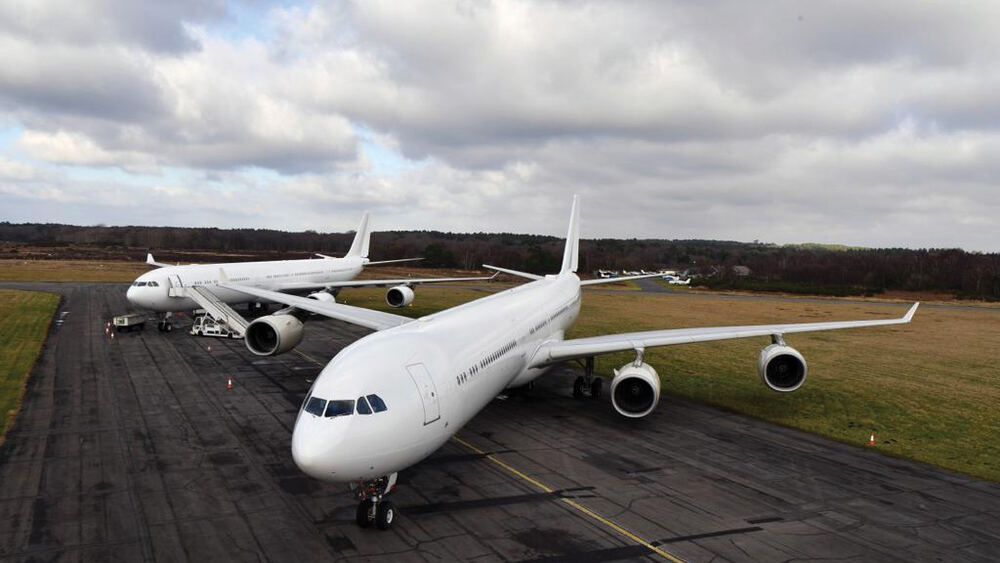
Charter aircraft positioned for a short-notice crew movement
    24/7 Operations Desk · Active Now

    FIFO & Workforce · Surge

    Ad-Hoc and Peak-Period Workforce Charter

    Shutdowns, delayed mobilisations, weather disruptions and unplanned crew changes do not wait for a tender cycle. This is the capacity that covers them.

    Already have an RFQ prepared? Email charters@aviall.com.au

    24/7
    Desk staffed
    Same day
    Options where available
    Surge
    Shutdown capacity
    Multi-operator
    Sourcing base

    What ad-hoc workforce charter is for

    Ad-hoc charter is the tool for movements that are not in a program: a shutdown that needs three extra rotations inside a fortnight, a contractor mobilisation that slipped two weeks, a specialist crew required on site tomorrow, or a scheduled service cancellation that has left a full swing stranded in a capital city.

    It is bought differently from a program. There is no pattern to price, so the answer depends on what aircraft is genuinely available, where it is positioned, and whether crew duty allows the movement in the window you need. The desk's job is to establish those three facts quickly and honestly rather than promise a schedule that cannot be flown.

    • Shutdown, turnaround and maintenance campaign surges
    • Project mobilisation and demobilisation movements
    • Delayed or accelerated contractor deployments
    • Specialist crews required at short notice
    • Recovery movements after scheduled-service disruption
    • Weather, cyclone and site-event related crew movements

    Shutdown and turnaround surge

    Shutdowns are the defining peak in Australian resource aviation. Hundreds of additional workers arrive in a region inside a narrow window, they carry substantially more tooling than steady-state crews, and every operator in the region is fielding the same requests for the same days at the same hours.

    Two things make a shutdown movement work. The first is early notice, even indicative dates months out materially improve both aircraft availability and price. The second is planning the surge as its own set of rotations layered over the base pattern, rather than trying to compress it into the existing schedule and hoping load factors absorb it.

    • Share indicative shutdown windows as early as they exist
    • Scope surge rotations separately from the base roster pattern
    • Allow for heavier tooling and equipment loads on maintenance crews
    • Plan the return wave, not just the inbound mobilisation

    Genuine short notice

    Short-notice work is a real part of what the desk does, and it is staffed 24 hours for that reason. Between sealed regional airports with well-positioned aircraft, a rotation can often be arranged within hours. Into a constrained or private aerodrome, or outside operating hours, the field narrows and the honest answer may be a different aerodrome with a road transfer.

    What speeds it up is a complete requirement in the first message. Origin, destination, passenger numbers, the time crew must be on site, and any baggage or tooling gives us enough to start sourcing immediately instead of exchanging clarifications while availability disappears.

    • Origin and destination, including the site aerodrome if not a public airport
    • Passenger numbers and any split across multiple movements
    • The time crew must be usable on site, and the latest acceptable arrival
    • Baggage and tooling, including any dangerous goods
    • Who can approve the movement, so a quote can be accepted quickly

    Peak-period capacity, and what constrains it

    Regional Australian charter capacity is finite, and during peak periods it is genuinely tight rather than tactically scarce. Aircraft availability, crew duty limits, aerodrome slots, ground handling capacity and screening availability all bind at the same time, which is why a movement that is trivial in a quiet month can be difficult in a peak week.

    Being straight about this is more useful than optimism. Where a date carries real risk we will say so, present the alternatives, earlier or later departure, alternate aerodrome, split rotations, different aircraft class, and let your operations team make the trade-off with accurate information.

    • Aircraft and crew availability across the regional operator base
    • Aerodrome operating hours, slots and daylight limitations
    • Ground handling and screening capacity at the hours required
    • Weather and seasonal serviceability, particularly in northern regions

    How ad-hoc and program capacity fit together

    The strongest arrangement for most projects is a contracted core pattern with ad-hoc capacity layered over it. The program protects the base cost and secures aircraft for the predictable rotations; ad-hoc covers the peaks and the surprises without disturbing the pattern.

    Where a project has no program yet, ad-hoc rotations are also a reasonable way to establish what the real demand looks like. Once a pattern becomes visible in the data, it can be contracted, usually at a better rate than the ad-hoc movements it replaces.

    Surge and short-notice capability

    24/7 activation

    A staffed desk at any hour, not a business-hours enquiry queue.

    Multi-operator sourcing

    Availability checked across a broad base, not one fleet.

    Shutdown surge planning

    Additional rotations scoped and priced before peak season binds.

    Disruption recovery

    Crews repositioned after cancellations and weather events.

    Alternate aerodrome options

    Road-transfer alternatives when the preferred strip is unusable.

    Honest availability

    Clear advice where a date or window carries genuine risk.

    FIFO & workforce charter

    Have a FIFO requirement?

    Send us the requirement.

    We take both recurring programs and one-off movements. Estimates are enough to start. We come back with aircraft options, capacity and baggage feasibility, and indicative pricing you can put in front of a budget holder or a tender response.

    Recurring charter program

    Roster flying, workforce rotations, seasonal campaigns and scheduled corporate shuttles. Send the pattern and we price the program, not just a single flight.

    • 01OriginCrew source city or port
    • 02DestinationSite aerodrome or nearest town
    • 03Passenger countPer rotation, and peak numbers
    • 04Days of operatione.g. Monday and Thursday
    • 05Required departure timesOutbound and return windows
    • 06Program commencementFirst flight date, even approximate
    • 07Program duratione.g. 12 months, or campaign length
    • 08BaggageChecked allowance, tooling, freight in hold
    • 09FrequencyRotations per week or per swing
    • 10Additional requirementsRunway, compliance, aircraft preference
    Submit FIFO requirement

    One-off group movement

    A single group flight, a team, a tour, a conference, a delegation, an event crew or a shutdown surge. Five details are usually enough for a workable quote.

    • 01Origin and destinationAirports or cities
    • 02Passenger countPlus any staff or officials travelling
    • 03Dates and timesDeparture, return, and how fixed they are
    • 04BaggageChecked bags, sports gear, equipment, instruments
    • 05Group typeCorporate, sports, tour, event, government, education
    Request group charter quote

    Urgent charter? Our ops desk is staffed 24/7.

    Aircraft options within the hour and a written quote with an indicative wheels-up window.

    Ad-hoc workforce charter, quick reference

    Typical uses
    Shutdowns, mobilisations, specialist crews, disruption recovery
    Activation
    24/7; aircraft options same day where availability allows
    Fastest scenarios
    Sealed regional airports with well-positioned aircraft
    Slower scenarios
    Private strips, night operations, peak shutdown weeks
    Best structure
    Contracted core pattern with ad-hoc surge layered over it
    To start
    Origin, destination, pax, on-site time, baggage and approver

    FAQ

    Frequently Asked Questions

    Between sealed regional airports with a well-positioned aircraft, often within hours. Into a constrained or private aerodrome, or outside operating hours, it takes longer and the answer may be an alternate airport with a road transfer. The desk is staffed 24/7 either way.

    Need workforce capacity at short notice?

    Send origin, destination, passenger numbers, the time crew must be on site, baggage and any tooling. The desk is staffed 24/7 and will return options as soon as availability is confirmed.

    Have a live requirement?

    Send us the roster pattern, ports and headcount. We return a schedule and pricing basis. Attach an existing RFQ, packing list or photos straight from your phone, partial detail is enough to start.

    Requirement

    FIFO / Workforce

    AttachmentsRoster patterns, tender documents or an existing RFQ. Files up to 20MB each, 10 max. PDF, Word, Excel, CSV, images or email files.

    Goes straight to our charter desk at Charters@Aviall.com.au. Submitting an RFQ does not confirm an aircraft.