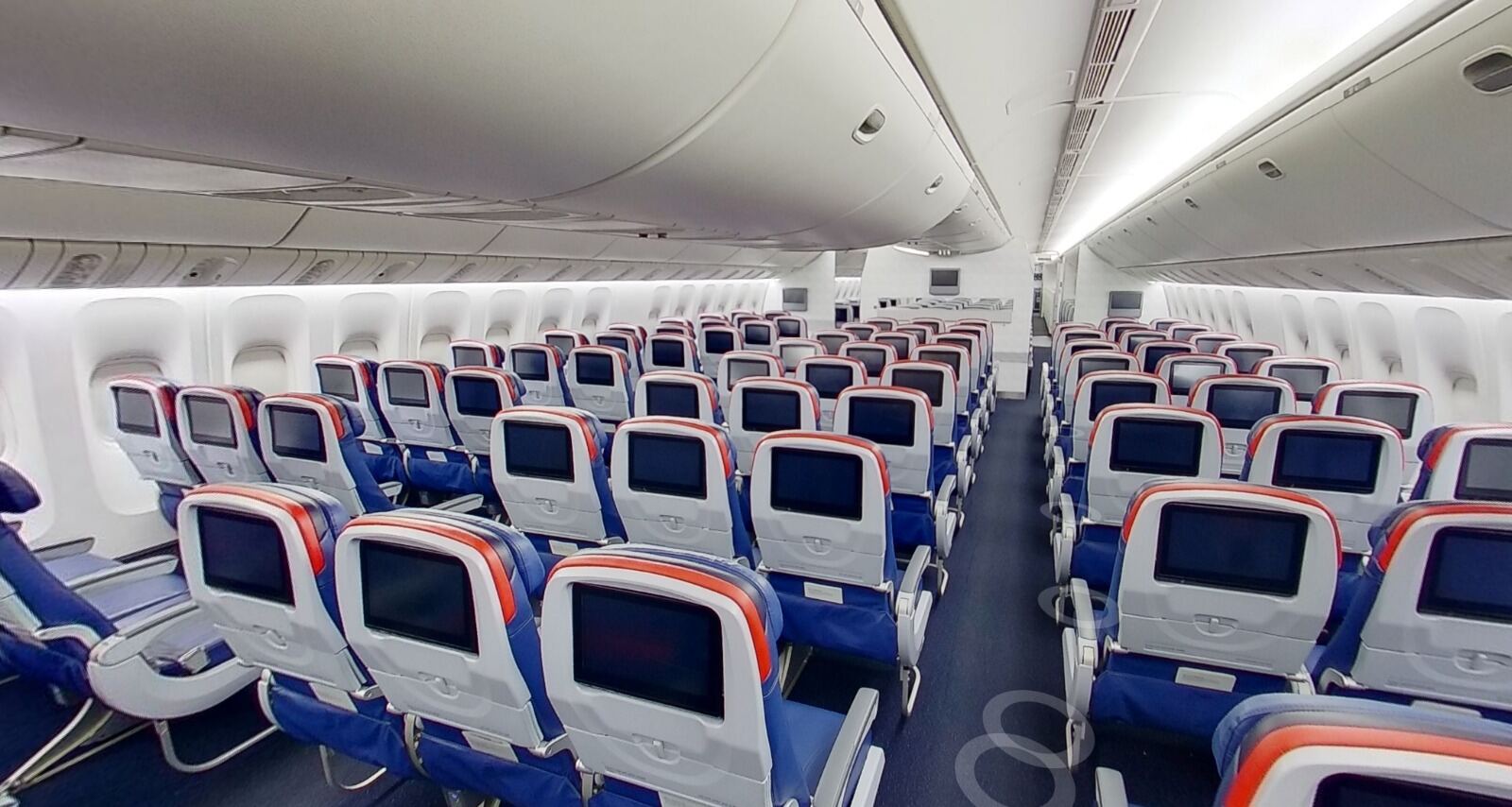
Single-aisle charter cabin configured for a large passenger group
    24/7 Operations Desk · Active Now

    Educational Resource · Aircraft Selection

    Which Aircraft Suits Your Group Size?

    Seat count is where aircraft selection starts, not where it ends. Runway, sector length, baggage and cost per seat all move with the group, here is how the bands actually work.

    Already have an RFQ prepared? Email charters@aviall.com.au

    8-400+
    Seat range available
    5 bands
    Practical size groupings
    <60 min
    Quote turnaround
    24/7
    Charter desk

    Why group size alone does not choose the aircraft

    Almost every group charter enquiry starts with a passenger number, and it is the right place to start. But seat count only narrows the field. Four other variables finish the job: sector length, the runway and facilities at both ends, baggage and equipment volume, and how fixed the schedule is.

    A group of fifty travelling ninety minutes between capitals and a group of fifty travelling eight hours internationally do not shortlist the same aircraft, even though the manifest is identical. The first is comfortably a regional jet or turboprop; the second needs range, and range at that seat count usually means a narrowbody with a favourable payload-range combination or a widebody flown well below its seat capacity.

    The practical approach is to treat group size as a band rather than an exact number, then let route and baggage decide within the band. Marginal manifests matter too: fifty-two passengers on a fifty-seat aircraft is not a rounding error, it is a different aircraft or a different configuration.

    Around 10 passengers

    At roughly eight to sixteen seats the field is executive jets and light turboprops: midsize and super-midsize jets, long-range business jets for international sectors, and King Air or Metroliner class aircraft for short regional legs into modest airstrips.

    This band is chosen for time value rather than cost efficiency, boards, executive teams, technical inspection parties, government officials. Cost per seat is the highest of any band, so the justification is usually the itinerary: multiple ports in a day, or a destination without a workable scheduled service.

    Watch baggage. Executive jets have limited hold volume, and ten passengers with checked luggage plus equipment can exceed it well before the seats run out. Where baggage is heavy, a small turboprop with a larger hold is often the better aircraft despite looking like a downgrade.

    • Typical types: midsize to long-range business jets, King Air, Metroliner
    • Best for: executive, government, technical and inspection movements
    • Strengths: schedule freedom, small-airport access, multi-port days
    • Constraints: highest cost per seat, limited baggage volume

    Around 20 to 30 passengers

    This is often the least intuitive band. Twenty to thirty passengers is too many for an executive jet and too few to fill a regional jet, so the answer is usually a turboprop, Dash 8 or ATR class, or a regional jet flown partly empty because it is the type available on the route and date.

    Turboprops suit this band well in Australia: they handle shorter and unsealed-adjacent regional runways, they are economical over sectors up to roughly two hours, and their holds absorb real baggage. Where the sector is longer or the destination is a major port, a regional jet may cost more per rotation but recover time.

    Groups in this band are frequently better served by two aircraft than one in remote operations, because two smaller airframes can serve two sites in a single wave. That is a scheduling decision, not just an aircraft decision.

    • Typical types: Dash 8, ATR 42/72, small regional jets
    • Best for: mid-size corporate groups, site visits, regional sports fixtures, delegations
    • Strengths: regional runway access, sensible cost, good hold capacity
    • Constraints: slower on longer sectors, jet may be unavoidable for range

    Around 50 to 80 passengers

    This band is the natural home of the regional jet, Embraer E170 to E190 and CRJ family, and the larger turboprops at the lower end. It is the most common band for professional sports squads with staff, conference groups, and workforce rotations that do not justify a narrowbody.

    Economics improve markedly here. Cost per seat falls sharply compared with the smaller bands, and the aircraft still access most regional airports with sealed runways of adequate length. Cabin comfort on modern regional jets is genuinely adequate for sectors of two to four hours.

    The band's weakness is long-haul: a regional jet is not the aircraft for a trans-Pacific or Europe sector. Groups of this size travelling internationally usually end up on a narrowbody with the appropriate range, or a widebody used well below capacity where the routing demands it.

    • Typical types: E170/E175/E190, CRJ700/900, ATR 72 at the lower end
    • Best for: sports squads, conferences, workforce rotations, tour groups
    • Strengths: strong cost per seat, wide airport access, good cabin standard
    • Constraints: limited range for intercontinental sectors

    Around 100 to 200 passengers

    This is narrowbody territory: 737 and A320 family aircraft, typically 150 to 189 seats depending on configuration. It is the workhorse band for large FIFO rotations, full conference and event movements, large touring parties and multi-team sports movements.

    Cost per seat is at or near its best in this band, provided the aircraft is genuinely well filled. A 180-seat aircraft carrying 110 passengers still costs what the rotation costs, so the honest comparison for a 110-passenger group is a well-filled narrowbody against two regional jets, and sometimes the two smaller aircraft win on both cost and schedule flexibility.

    Airport requirements tighten. Narrowbodies need adequate runway length, pavement strength, a suitable stand and appropriate handling. Most Australian capitals and major regional ports are straightforward; remote strips are frequently not, which is why large workforce programmes sometimes fly a narrowbody to a regional hub and shuttle onwards.

    • Typical types: 737-700/800, A319/A320/A321
    • Best for: large conferences and events, FIFO rotations, large touring groups
    • Strengths: best practical cost per seat, wide availability, real hold capacity
    • Constraints: needs a capable airport; part-empty rotations waste money

    200+ passengers

    Above roughly 200 passengers the choice is a larger narrowbody variant, a widebody such as an A330 or 777 at 250 to 400 seats, or multiple aircraft flown in a coordinated wave. Which of those is right is usually decided by airport capability and by whether the group must genuinely arrive together.

    Widebody charter is used for large delegations, major event and tournament movements, large-scale relocation and repatriation cohorts, and long-haul touring parties. It brings substantial hold capacity, which matters when the group travels with equipment, staging or production freight.

    Multiple coordinated aircraft are often the better answer for very large groups moving into constrained airports, or where the group can be split by function, squad on one aircraft, support and media on another. The trade-off is coordination complexity at both ends of the rotation.

    • Typical types: A321, A330, 767, 777, or several narrowbodies in a wave
    • Best for: major events, large delegations, relocation and repatriation cohorts
    • Strengths: whole group on one airframe, large hold capacity
    • Constraints: airport capability, longer lead times, higher absolute cost

    Practical rules that hold across every band

    A few principles apply regardless of size, and they are where most avoidable cost and disruption comes from.

    • Count everyone: staff, officials, media, medical, security and accompanying family are all seats
    • Give baggage a number, not an adjective, kilograms and item counts, including equipment
    • State how fixed the schedule is; a hard fixture or start time changes the shortlist
    • Name both airports, including the preferred alternate, so runway limits are checked early
    • Flag anything unusual early: dangerous goods, firearms for sporting teams, live broadcast gear, minors, accessibility needs

    How we match aircraft to your group

    Manifest assessment

    Total travelling party counted, including staff, officials and accompanying personnel.

    Baggage and equipment

    Hold volume and weight checked against real baggage rather than a generic allowance.

    Route and range check

    Payload-range confirmed for the sector, including any technical stop implications.

    Airport suitability

    Runway length, pavement, stand and handling verified at both ends.

    Single versus multiple aircraft

    One larger rotation priced against two smaller ones on cost and schedule.

    Written quote

    Aircraft type, configuration and baggage allowance stated in writing before commitment.

    Group & corporate charter

    Have a group movement?

    Send us the requirement.

    We take both recurring programs and one-off movements. Estimates are enough to start. We come back with aircraft options, capacity and baggage feasibility, and indicative pricing you can put in front of a budget holder or a tender response.

    Recurring charter program

    Roster flying, workforce rotations, seasonal campaigns and scheduled corporate shuttles. Send the pattern and we price the program, not just a single flight.

    • 01OriginCrew source city or port
    • 02DestinationSite aerodrome or nearest town
    • 03Passenger countPer rotation, and peak numbers
    • 04Days of operatione.g. Monday and Thursday
    • 05Required departure timesOutbound and return windows
    • 06Program commencementFirst flight date, even approximate
    • 07Program duratione.g. 12 months, or campaign length
    • 08BaggageChecked allowance, tooling, freight in hold
    • 09FrequencyRotations per week or per swing
    • 10Additional requirementsRunway, compliance, aircraft preference
    Submit FIFO requirement

    One-off group movement

    A single group flight, a team, a tour, a conference, a delegation, an event crew or a shutdown surge. Five details are usually enough for a workable quote.

    • 01Origin and destinationAirports or cities
    • 02Passenger countPlus any staff or officials travelling
    • 03Dates and timesDeparture, return, and how fixed they are
    • 04BaggageChecked bags, sports gear, equipment, instruments
    • 05Group typeCorporate, sports, tour, event, government, education
    Request group charter quote

    Urgent charter? Our ops desk is staffed 24/7.

    Aircraft options within the hour and a written quote with an indicative wheels-up window.

    Mission examples · Illustrative

    What this looks like in operation

    Representative mission profiles drawn from recurring work. Identifying details, operators, hospitals, routes, aircraft tail numbers, are intentionally omitted.

    Sport · Team movement

    Professional squad on a tight fixture turnaround

    A professional sporting organisation required a squad, support staff and freight moved between two domestic fixtures on a turnaround scheduled flights could not deliver. Aviall configured a narrow-body charter with a freight pallet and custom catering aligned to performance protocols.

    Outcome

    Squad on the ground at the next venue with a full evening's recovery time intact.

    Group size bands, quick reference

    8-16 passengers
    Executive jets, King Air, Metroliner class
    20-30 passengers
    Dash 8, ATR, small regional jets
    50-80 passengers
    E170-E190, CRJ700/900, ATR 72
    100-200 passengers
    737 and A320 family narrowbodies
    200+ passengers
    A321, A330, 767, 777, or multiple aircraft
    Deciding factors
    Sector length, airport limits, baggage, schedule rigidity

    FAQ

    Frequently Asked Questions

    A regional jet such as an E175, E190 or CRJ900 is the usual answer, with a larger turboprop like an ATR 72 an option on shorter regional sectors. For long international sectors a group of fifty typically moves on a narrowbody with the required range instead, because regional jets are not built for those distances.

    Tell us the group and we will tell you the aircraft

    Send passenger count, origin and destination, dates, baggage and how fixed the schedule is. We shortlist the appropriate aircraft categories and return a written quote, usually within the hour.

    Have a live requirement?

    Send us route, dates and passenger numbers. We return aircraft options. Attach an existing RFQ, packing list or photos straight from your phone, partial detail is enough to start.

    Requirement

    Group / Passenger

    AttachmentsPassenger lists, itineraries or an existing RFQ document. Files up to 20MB each, 10 max. PDF, Word, Excel, CSV, images or email files.

    Goes straight to our charter desk at Charters@Aviall.com.au. Submitting an RFQ does not confirm an aircraft.