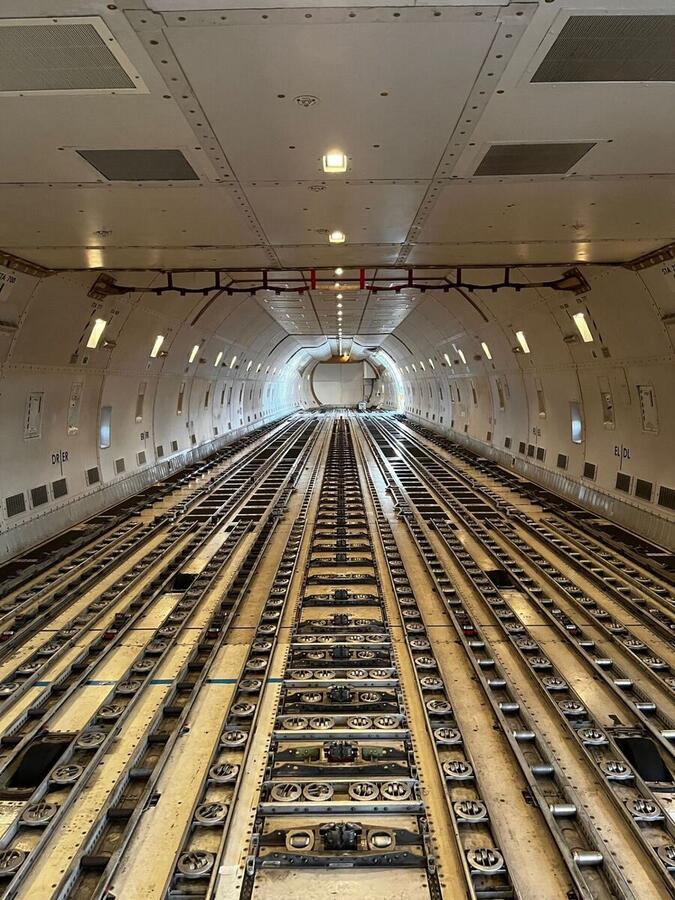
Aircraft hold loaded with group baggage and equipment cases
    24/7 Operations Desk · Active Now

    Educational Resource · Baggage & Equipment

    Baggage and Equipment on Group Charter Flights

    Groups run out of hold before they run out of seats more often than they expect. Equipment is an aircraft-selection input, not a detail to settle later.

    Already have an RFQ prepared? Email charters@aviall.com.au

    Hold-first
    Sizing approach
    Declared
    Dangerous goods handled
    <60 min
    Quote turnaround
    24/7
    Charter desk

    Why baggage decides the aircraft more often than seats do

    Charter aircraft have two capacity limits: seats and hold. Groups reliably think about the first and underestimate the second. A squad of thirty with playing kit, medical equipment and analysis gear, or a touring band with backline and cases, can exhaust the hold of an aircraft with plenty of spare seats.

    There are two separate constraints inside the hold as well: volume and weight, and either can bind first. Instrument and production cases are bulky but relatively light, so they hit volume limits. Sporting equipment, tooling and battery packs are dense, so they hit weight and sometimes floor-loading limits. The aircraft that suits each is not necessarily the same.

    This is why we ask for kilograms and item counts rather than a general description. 'Normal luggage plus some equipment' cannot be sized against a hold; a list can.

    How charter baggage allowances work

    There is no fixed charter baggage allowance in the way scheduled airlines publish one. The allowance is whatever the aircraft can carry, given the number of passengers, fuel required for the sector and the aircraft's limits. On a well-matched aircraft that is usually generous compared with a scheduled ticket; on a marginal one it can be tighter.

    The allowance is confirmed in writing with the quote, expressed in kilograms per passenger or as a total hold figure with equipment listed separately. Where a group's baggage is close to the limit, we would rather propose a larger aircraft or a second airframe than issue an allowance the group cannot live within.

    Long sectors reduce the allowance. Fuel is payload, so an aircraft near its range limit carries less baggage than the same aircraft on a short hop. On some long international sectors this is the difference between one aircraft and two, or a technical stop.

    • Allowance is derived from aircraft capacity, passenger count and sector fuel
    • Stated in writing with the quote, not assumed from a scheduled-airline norm
    • Volume and weight are separate limits; either can be the binding one
    • Long sectors reduce available payload for baggage

    Sports equipment

    Sporting groups carry the widest range of awkward items, and most of it is manageable when declared early. Bicycles, rowing shells, pole vault poles, javelins, kayaks, surfboards, hockey and lacrosse kit, weights and rehabilitation equipment, ice and snow gear, and full medical and physiotherapy setups are all routine, provided the aircraft is chosen with them in mind.

    Long items are the real test. A hold door aperture and internal hold length set a hard maximum, and some items simply will not enter certain aircraft. Rowing shells and vaulting poles in particular often determine the aircraft type outright rather than being accommodated within it.

    Two categories need declaration well ahead: firearms and ammunition for shooting disciplines, which require permits and secure handling arrangements, and anything with lithium batteries, electric bikes, mobility equipment, powered analysis gear, which is dangerous goods and must be assessed before it reaches the aircraft.

    • Give item type, dimensions and weight for anything longer than about two metres
    • Firearms and ammunition require permits and secure handling; declare at enquiry
    • Lithium battery equipment must be declared and assessed as dangerous goods
    • Medical and physiotherapy setups counted as equipment, not personal luggage

    Instruments, production and broadcast equipment

    Touring music and production groups usually travel with equipment that is worth more than the flight and cannot be replaced on arrival. The practical advantages of charter here are that the equipment travels with the group on the same airframe, loading is supervised, and there is no scheduled bag system to lose it in.

    Bulky flight cases can often be loaded into the cabin on aircraft configured for it, or a combi arrangement can carry equipment on part of the main deck with passengers in the remainder. Where equipment volume exceeds what a passenger aircraft can absorb, the honest answer is sometimes a separate cargo movement running ahead of the group.

    Broadcast and production kit almost always contains lithium batteries and sometimes other dangerous goods. A packing list with battery types and watt-hour ratings lets us handle that properly rather than discovering it at the ramp.

    • Cabin loading or combi configuration considered where hold volume is short
    • Supervised loading with the group, no public baggage system
    • Packing list with dimensions, weights and battery ratings requested up front
    • Separate freight movement proposed where equipment exceeds passenger-aircraft capacity

    Dangerous goods, declarations and what cannot fly

    Charter does not exempt a group from dangerous goods rules. Lithium batteries, aerosols, compressed gases, fuel-powered equipment, some medical oxygen arrangements and certain adhesives and paints are all regulated, and some items cannot be carried at all on a passenger aircraft.

    The workable approach is disclosure at enquiry. Almost everything can be handled with the right packaging, documentation and operator approval when there is time to arrange it. Very little can be handled at the aircraft door on the day.

    • Declare lithium batteries with type and watt-hour rating, including spares
    • Declare compressed gases, fuels, aerosols and medical oxygen requirements
    • Some items are prohibited on passenger aircraft regardless of packaging
    • Operator approval and documentation take time; disclose at enquiry, not at check-in

    What to send us

    A short list is enough for us to size the aircraft correctly the first time and issue an allowance the group can actually live within.

    • Passenger count and expected personal baggage in kilograms per person
    • Equipment list with dimensions and weights, longest and heaviest items flagged
    • Anything that may be dangerous goods, including batteries
    • Whether equipment must travel with the group or can move separately
    • Any handling constraints at either end, such as loading equipment availability

    How we handle group baggage and equipment

    Hold-first sizing

    Aircraft assessed against real baggage and equipment volume, not just seat count.

    Written allowance

    Baggage allowance stated in kilograms with equipment listed separately.

    Oversized items

    Long and awkward items checked against hold aperture and internal dimensions.

    Dangerous goods

    Batteries, firearms and regulated items assessed and documented before departure.

    Supervised loading

    Equipment loaded with the group rather than through a public bag system.

    Combi and freight options

    Cabin loading, combi configuration or a separate cargo movement where required.

    Group & corporate charter

    Have a group movement?

    Send us the requirement.

    We take both recurring programs and one-off movements. Estimates are enough to start. We come back with aircraft options, capacity and baggage feasibility, and indicative pricing you can put in front of a budget holder or a tender response.

    Recurring charter program

    Roster flying, workforce rotations, seasonal campaigns and scheduled corporate shuttles. Send the pattern and we price the program, not just a single flight.

    • 01OriginCrew source city or port
    • 02DestinationSite aerodrome or nearest town
    • 03Passenger countPer rotation, and peak numbers
    • 04Days of operatione.g. Monday and Thursday
    • 05Required departure timesOutbound and return windows
    • 06Program commencementFirst flight date, even approximate
    • 07Program duratione.g. 12 months, or campaign length
    • 08BaggageChecked allowance, tooling, freight in hold
    • 09FrequencyRotations per week or per swing
    • 10Additional requirementsRunway, compliance, aircraft preference
    Submit FIFO requirement

    One-off group movement

    A single group flight, a team, a tour, a conference, a delegation, an event crew or a shutdown surge. Five details are usually enough for a workable quote.

    • 01Origin and destinationAirports or cities
    • 02Passenger countPlus any staff or officials travelling
    • 03Dates and timesDeparture, return, and how fixed they are
    • 04BaggageChecked bags, sports gear, equipment, instruments
    • 05Group typeCorporate, sports, tour, event, government, education
    Request group charter quote

    Urgent charter? Our ops desk is staffed 24/7.

    Aircraft options within the hour and a written quote with an indicative wheels-up window.

    Mission examples · Illustrative

    What this looks like in operation

    Representative mission profiles drawn from recurring work. Identifying details, operators, hospitals, routes, aircraft tail numbers, are intentionally omitted.

    Sport · Team movement

    Professional squad on a tight fixture turnaround

    A professional sporting organisation required a squad, support staff and freight moved between two domestic fixtures on a turnaround scheduled flights could not deliver. Aviall configured a narrow-body charter with a freight pallet and custom catering aligned to performance protocols.

    Outcome

    Squad on the ground at the next venue with a full evening's recovery time intact.

    Baggage and equipment, quick reference

    Allowance basis
    Aircraft capacity, passenger count and sector fuel
    Binding limits
    Hold volume and weight, plus door aperture for long items
    Sports gear
    Routine when declared; long items may set the aircraft type
    Instruments and production
    Cabin or combi loading considered where hold volume is short
    Dangerous goods
    Declared at enquiry, documented and operator-approved
    What we need
    Item list with dimensions and weights

    FAQ

    Frequently Asked Questions

    It is set by the aircraft rather than by a published fare rule: the hold capacity available after passengers and the fuel for the sector. On a well-matched aircraft it is usually more generous than a scheduled ticket. We confirm it in kilograms in writing with the quote.

    Send the equipment list with the manifest

    Passenger count, origin and destination, dates, and an equipment list with dimensions and weights. We size the aircraft against the hold as well as the seats and confirm the allowance in writing.

    Have a live requirement?

    Send us route, dates and passenger numbers. We return aircraft options. Attach an existing RFQ, packing list or photos straight from your phone, partial detail is enough to start.

    Requirement

    Group / Passenger

    AttachmentsPassenger lists, itineraries or an existing RFQ document. Files up to 20MB each, 10 max. PDF, Word, Excel, CSV, images or email files.

    Goes straight to our charter desk at Charters@Aviall.com.au. Submitting an RFQ does not confirm an aircraft.