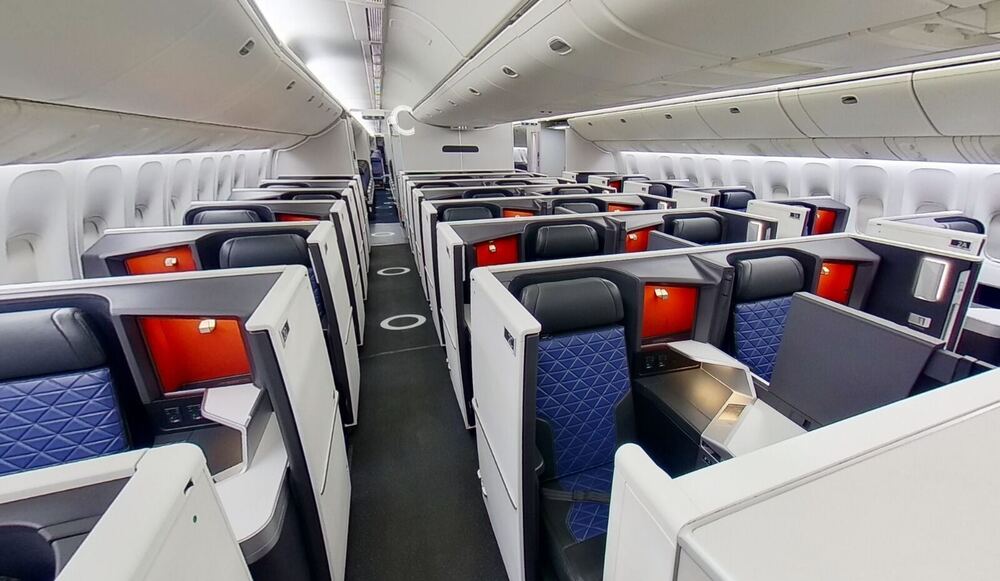
Premium charter cabin configured for a corporate group movement
    24/7 Operations Desk · Active Now

    Educational Resource · Charter Economics

    Group Charter Cost in Australia: What Actually Drives the Price

    Charter is priced by the aircraft and the rotation, not by the seat. Understanding the components is how groups make real savings without cutting anything that matters.

    Already have an RFQ prepared? Email charters@aviall.com.au

    Per rotation
    How charter is priced
    <60 min
    Quote turnaround
    Written
    Inclusions stated
    24/7
    Charter desk

    Charter is priced by the aircraft, not the passenger

    The single most useful thing to understand about group charter pricing is that you are buying an aircraft and a rotation, not seats. The cost of flying a 180-seat narrowbody between two ports is essentially the same whether 120 or 178 people are on board. Cost per seat is an output of the quote, not an input to it.

    That has a direct commercial consequence: the largest lever available to almost every group is aircraft utilisation. Filling the aircraft you charter, or right-sizing to a smaller one, moves the per-passenger number far more than negotiating on the margin ever will.

    It also means a genuine quote requires the operating picture, not just a passenger count. Route, dates, times, turnaround pattern, baggage and airports all change the number, sometimes substantially.

    The cost components in a group charter quote

    A charter price is built from a small number of identifiable components. Different operators bundle them differently, which is why comparing two quotes line by line matters more than comparing headline totals.

    • Aircraft and crew for the flying hours in the rotation, including any minimum daily utilisation
    • Positioning (ferry) flights to bring the aircraft to your departure port and return it afterwards
    • Fuel, which moves with sector length, payload, routing and prevailing prices
    • Airport charges: landing, parking, terminal or FBO use, and slots where applicable
    • Ground handling, including passenger handling, baggage loading and any airside transfers
    • Crew costs beyond the flight itself: duty limits, overnight accommodation, and additional crew for long or split duties
    • Catering and cabin service to the standard specified
    • Overflight and navigation charges on international sectors, plus permits where required
    • Insurance, taxes and applicable government charges

    Positioning: the cost most groups do not expect

    Aircraft are not parked where you need them. If the nearest suitable aircraft is based two hours from your departure port, that ferry flight is part of your cost, as is returning the aircraft to base or on to its next task. On short passenger sectors positioning can be a large proportion of the total.

    This is why flexibility on departure port, date or time genuinely reduces price rather than just sounding cooperative. An aircraft already positioned near your route, or one that can complete your rotation without an empty return, prices differently to one that must be flown across the country twice.

    Return same-day rotations are often more economical than an overnight, because the aircraft and crew are not held on the ground away from base. Where an overnight is unavoidable, accommodation and duty implications enter the price.

    What makes a group charter more expensive

    Certain requirements reliably increase cost. None of them are unreasonable, but knowing which ones bite allows a group to spend where it matters.

    • Short notice, which restricts the aircraft available and often forces longer positioning
    • Rigid departure or arrival times that leave no room to optimise the aircraft's day
    • Part-empty aircraft, the most common and most avoidable source of high cost per seat
    • Remote or constrained airports requiring specific aircraft capability or additional handling
    • Overnight or multi-day stays where the aircraft and crew are held away from base
    • Long sectors near an aircraft's range limits, which can reduce payload or add a technical stop
    • Heavy or bulky baggage that forces a larger aircraft than the seat count alone requires
    • Peak periods around major events, holidays and tournament windows, when the market tightens

    What reliably reduces it

    The levers that work are mostly about giving the operator room to plan and about matching the aircraft honestly to the group.

    • Right-sizing the aircraft to the confirmed manifest instead of building in spare seats
    • Lead time, weeks rather than days materially widens the available fleet
    • Flexibility of a few hours on departure time, or a choice of nearby departure port
    • Same-day return rotations rather than holding the aircraft overnight
    • Series or recurring programmes, which price better than a sequence of one-off charters
    • Using a nearby major airport where a constrained one would require special capability
    • Confirming baggage accurately so the aircraft is not upsized as a precaution

    How to compare quotes properly

    Two quotes for the same movement can differ by a wide margin and both be honest, because they include different things. Before comparing totals, confirm that both cover the same rotation, the same aircraft standard and the same inclusions.

    Ask specifically what is excluded. Common exclusions are de-icing, airport charges at one end, additional handling, extended crew duty, catering above a base level, and any charges arising if the schedule shifts. Also confirm the baggage allowance in kilograms and the aircraft type and configuration offered, not just the class of aircraft.

    • Same aircraft type and cabin configuration, or a clearly stated equivalent
    • Positioning included or excluded, stated explicitly
    • Baggage allowance in kilograms plus any equipment provisions
    • Airport, handling and catering inclusions at both ends
    • Terms if the schedule changes, and cancellation conditions
    • Whether the price is firm or subject to confirmation of aircraft availability

    Why we do not publish a price list

    Any published per-hour or per-seat figure for group charter is either so wide it is useless or so narrow it is misleading. The same 100-passenger movement can differ by a large multiple depending on positioning, airports, sector length and how tight the schedule is.

    What we do commit to is a written quote that states the aircraft type, the rotation, the inclusions and the baggage allowance, usually within the hour of receiving a complete requirement. Availability and price are confirmed at the time of quoting; neither is guaranteed in advance of that.

    How we quote a group movement

    Complete requirement

    Manifest, route, dates, baggage and airports captured before sourcing begins.

    Multiple operators

    Suitable aircraft sourced from more than one operator where the market allows.

    Right-sizing advice

    We will tell you when a smaller aircraft or two smaller aircraft is the better answer.

    Positioning transparency

    Ferry flights identified so you can see what flexibility would save.

    Written inclusions

    Aircraft, configuration, baggage allowance and exclusions stated in writing.

    Programme pricing

    Series and recurring movements structured rather than quoted flight by flight.

    Group & corporate charter

    Have a group movement?

    Send us the requirement.

    We take both recurring programs and one-off movements. Estimates are enough to start. We come back with aircraft options, capacity and baggage feasibility, and indicative pricing you can put in front of a budget holder or a tender response.

    Recurring charter program

    Roster flying, workforce rotations, seasonal campaigns and scheduled corporate shuttles. Send the pattern and we price the program, not just a single flight.

    • 01OriginCrew source city or port
    • 02DestinationSite aerodrome or nearest town
    • 03Passenger countPer rotation, and peak numbers
    • 04Days of operatione.g. Monday and Thursday
    • 05Required departure timesOutbound and return windows
    • 06Program commencementFirst flight date, even approximate
    • 07Program duratione.g. 12 months, or campaign length
    • 08BaggageChecked allowance, tooling, freight in hold
    • 09FrequencyRotations per week or per swing
    • 10Additional requirementsRunway, compliance, aircraft preference
    Submit FIFO requirement

    One-off group movement

    A single group flight, a team, a tour, a conference, a delegation, an event crew or a shutdown surge. Five details are usually enough for a workable quote.

    • 01Origin and destinationAirports or cities
    • 02Passenger countPlus any staff or officials travelling
    • 03Dates and timesDeparture, return, and how fixed they are
    • 04BaggageChecked bags, sports gear, equipment, instruments
    • 05Group typeCorporate, sports, tour, event, government, education
    Request group charter quote

    Urgent charter? Our ops desk is staffed 24/7.

    Aircraft options within the hour and a written quote with an indicative wheels-up window.

    Mission examples · Illustrative

    What this looks like in operation

    Representative mission profiles drawn from recurring work. Identifying details, operators, hospitals, routes, aircraft tail numbers, are intentionally omitted.

    Sport · Team movement

    Professional squad on a tight fixture turnaround

    A professional sporting organisation required a squad, support staff and freight moved between two domestic fixtures on a turnaround scheduled flights could not deliver. Aviall configured a narrow-body charter with a freight pallet and custom catering aligned to performance protocols.

    Outcome

    Squad on the ground at the next venue with a full evening's recovery time intact.

    Cost structure, quick reference

    Pricing basis
    Per aircraft and per rotation, not per seat
    Largest variable
    Aircraft type and utilisation
    Most overlooked
    Positioning (ferry) flights
    Biggest saving lever
    Right-sizing plus lead time
    Quote turnaround
    Typically under 60 minutes for a complete requirement
    Price validity
    Subject to confirmation of aircraft availability

    FAQ

    Frequently Asked Questions

    There is no single figure, because the price is built from the aircraft, the rotation, positioning, airports, crew duty and handling. The same movement can vary by a large multiple depending on those inputs. Send the requirement and we return a written quote, usually within the hour.

    Want a real number for your group movement?

    Send passenger count, origin and destination, dates and times, baggage and how fixed the schedule is. You will get a written quote with the aircraft type, inclusions and baggage allowance stated.

    Have a live requirement?

    Send us route, dates and passenger numbers. We return aircraft options. Attach an existing RFQ, packing list or photos straight from your phone, partial detail is enough to start.

    Requirement

    Group / Passenger

    AttachmentsPassenger lists, itineraries or an existing RFQ document. Files up to 20MB each, 10 max. PDF, Word, Excel, CSV, images or email files.

    Goes straight to our charter desk at Charters@Aviall.com.au. Submitting an RFQ does not confirm an aircraft.