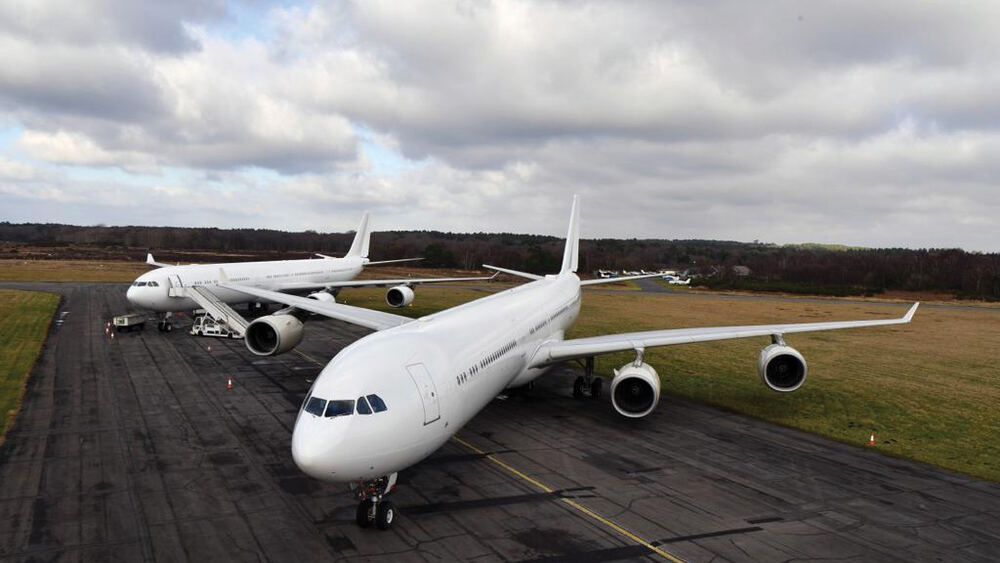
Charter aircraft on the runway ahead of a group departure
    24/7 Operations Desk · Active Now

    Educational Resource · Process

    How Group Charter Works, Step by Step

    From first enquiry to wheels-up: what happens, what we need from you, how long each stage takes, and the decisions that shape the day of travel.

    Already have an RFQ prepared? Email charters@aviall.com.au

    <60 min
    Typical quote turnaround
    1 manager
    Accountable per mission
    24/7
    Operations desk
    Written
    Terms before commitment

    The process in outline

    Group charter is more straightforward than most first-time charterers expect, and the majority of the work happens before anyone boards. The sequence is: define the requirement, source and shortlist aircraft, quote, contract, build the operational detail, then fly with a named point of contact through the rotation.

    The one thing that determines how smoothly it runs is the quality of the initial requirement. A complete brief allows accurate sourcing on the first pass; an incomplete one produces a quote that changes later, which is the most common source of frustration in charter.

    • Enquiry, route, dates, times, passenger count, baggage, how fixed the schedule is
    • Sourcing, suitable aircraft identified with operators, availability checked live
    • Quote, written, stating aircraft type, rotation, inclusions and baggage allowance
    • Contract, charter agreement, payment terms and cancellation conditions
    • Operational build, manifest, timings, catering, handling, permits where applicable
    • Day of travel, check-in, loading, departure, with a named contact throughout
    • Post-flight, reconciliation and, for programmes, performance reporting

    What we need from you to quote

    A complete requirement is short. These are the fields that actually change the aircraft and the price, and it is worth being precise on all of them rather than approximate on several.

    • Origin and destination airports, including any acceptable alternates
    • Total travelling party, including staff, officials, media, medical and security
    • Dates and preferred times, plus how much either can move
    • Return pattern: same-day return, overnight, multi-leg or one-way
    • Baggage in kilograms and item counts, with equipment listed separately
    • Group type and anything unusual: minors, accessibility, firearms for sport, dangerous goods, broadcast gear

    Lead times: how early is early enough

    Charter can be arranged quickly. We regularly quote within the hour and have moved groups within a day where aircraft and crew were available. But lead time is one of the cheapest advantages available to a group, because it widens the fleet you are choosing from and reduces positioning.

    As a rough guide: a straightforward domestic movement on a small or regional aircraft can often be arranged within days. Narrowbody and widebody movements, international sectors requiring permits, and anything during a peak event window benefit from weeks. Recurring programmes should be discussed months ahead so crew and aircraft can be planned properly.

    Short-notice work is a normal part of what the desk does. It simply costs more and offers less choice. If the movement is genuinely urgent, call rather than email; the 24/7 desk is staffed for exactly that.

    Airport and terminal selection

    Airport choice is a real decision, not a formality. The nearest airport to the venue is not always the right one: runway length and strength, operating hours and curfews, customs and immigration availability, and ground handling capability all determine whether an aircraft can actually use it.

    Where a group departs from a major capital, charter can often use a general aviation terminal or FBO rather than the main terminal. That typically means a faster, more private check-in, baggage loaded directly with the group, and shorter time from arrival at the airport to departure. For sports teams and delegations it also reduces public exposure.

    For international sectors, customs and immigration availability at the intended airport and hour is a hard constraint. Some regional ports can be cleared with notice; others cannot at all, which is why an inbound international charter sometimes clears at a gateway then continues domestically.

    • Runway length, width and pavement strength for the aircraft type
    • Operating hours, curfews and slot availability
    • Customs, immigration and quarantine availability for international sectors
    • Ground handling, stairs or airbridge, and baggage loading capability
    • FBO or general aviation terminal access for faster, more private processing

    Manifests, documentation and compliance

    Everything operational on a group charter hangs off the manifest. Full names as they appear on identification are required, and passport details for international sectors. Late changes are workable, but there is a cut-off before departure after which changes become difficult, particularly on international flights where advance passenger information has already been filed.

    Certain groups carry additional documentation requirements: unaccompanied minors and school groups need consent and safeguarding paperwork, sporting teams travelling with firearms for shooting disciplines require permits, medical passengers need fitness-to-fly documentation, and any dangerous goods content, including lithium batteries in broadcast and production equipment, must be declared before it arrives at the aircraft.

    The day of travel

    Charter check-in is normally considerably shorter than a scheduled departure. A typical instruction for a domestic group charter is to arrive around 60 to 90 minutes before departure, and less at a general aviation terminal; international sectors need more for immigration processing. We confirm the exact call time with the final schedule.

    Baggage is loaded with the group rather than through a public bag system, which is one of the practical reasons teams and touring groups prefer charter. Catering is loaded to the specification agreed, including dietary requirements captured with the manifest.

    Through the rotation there is one accountable charter manager with a direct number. If weather, traffic or a venue overrun changes the plan, the decision-making happens between that manager, the operator and your nominated contact, not through a call centre.

    Contracts, payment and changes

    A charter agreement covers the rotation, the aircraft, the inclusions, payment terms and cancellation conditions. Payment is typically required before departure for one-off charters; contracted programmes are invoiced on agreed terms.

    Changes are normal. Schedule shifts within the same day are usually absorbable, subject to crew duty limits and airport hours. Larger changes, a different date, a different aircraft size because the manifest grew, additional legs, are re-quoted. Cancellation terms tighten as departure approaches, which is the operator's exposure on crew and aircraft already committed.

    One point we state plainly: no aircraft is confirmed until it is contracted. Availability quoted at enquiry is a live market condition, not a reservation.

    What the charter desk handles for you

    Aircraft sourcing

    Suitable types identified and availability checked live with operators.

    Airport suitability

    Runway, hours, curfews, customs and handling verified at both ends.

    Manifest management

    Names, documentation and advance passenger information handled to the cut-off.

    Ground and terminal

    FBO or terminal arrangements, stairs, baggage and airside transfers.

    Permits and clearances

    Overflight, landing and customs arrangements for international sectors.

    One accountable manager

    A single named contact with a direct number from quote through post-flight.

    Group & corporate charter

    Have a group movement?

    Send us the requirement.

    We take both recurring programs and one-off movements. Estimates are enough to start. We come back with aircraft options, capacity and baggage feasibility, and indicative pricing you can put in front of a budget holder or a tender response.

    Recurring charter program

    Roster flying, workforce rotations, seasonal campaigns and scheduled corporate shuttles. Send the pattern and we price the program, not just a single flight.

    • 01OriginCrew source city or port
    • 02DestinationSite aerodrome or nearest town
    • 03Passenger countPer rotation, and peak numbers
    • 04Days of operatione.g. Monday and Thursday
    • 05Required departure timesOutbound and return windows
    • 06Program commencementFirst flight date, even approximate
    • 07Program duratione.g. 12 months, or campaign length
    • 08BaggageChecked allowance, tooling, freight in hold
    • 09FrequencyRotations per week or per swing
    • 10Additional requirementsRunway, compliance, aircraft preference
    Submit FIFO requirement

    One-off group movement

    A single group flight, a team, a tour, a conference, a delegation, an event crew or a shutdown surge. Five details are usually enough for a workable quote.

    • 01Origin and destinationAirports or cities
    • 02Passenger countPlus any staff or officials travelling
    • 03Dates and timesDeparture, return, and how fixed they are
    • 04BaggageChecked bags, sports gear, equipment, instruments
    • 05Group typeCorporate, sports, tour, event, government, education
    Request group charter quote

    Urgent charter? Our ops desk is staffed 24/7.

    Aircraft options within the hour and a written quote with an indicative wheels-up window.

    Mission examples · Illustrative

    What this looks like in operation

    Representative mission profiles drawn from recurring work. Identifying details, operators, hospitals, routes, aircraft tail numbers, are intentionally omitted.

    Sport · Team movement

    Professional squad on a tight fixture turnaround

    A professional sporting organisation required a squad, support staff and freight moved between two domestic fixtures on a turnaround scheduled flights could not deliver. Aviall configured a narrow-body charter with a freight pallet and custom catering aligned to performance protocols.

    Outcome

    Squad on the ground at the next venue with a full evening's recovery time intact.

    Process, quick reference

    Quote turnaround
    Typically under 60 minutes for a complete requirement
    Comfortable lead time
    Days for regional aircraft, weeks for narrowbody and international
    Check-in
    Usually 60-90 minutes domestic, longer for international
    Manifest
    Full legal names, passport details for international sectors
    Terminal
    Main terminal or general aviation FBO, depending on port
    Point of contact
    One charter manager per mission, 24/7

    FAQ

    Frequently Asked Questions

    Earlier widens your choice and reduces positioning cost. Straightforward domestic movements on regional aircraft can often be arranged within days; narrowbody, widebody and international sectors benefit from weeks; recurring programmes should be discussed months ahead. Short-notice work is still routinely handled.

    Ready to start, or just want to sanity-check the plan?

    Send the route, dates, passenger count and baggage. If you would rather talk it through first, the 24/7 desk will tell you honestly whether charter is the right answer for your movement.

    Have a live requirement?

    Send us route, dates and passenger numbers. We return aircraft options. Attach an existing RFQ, packing list or photos straight from your phone, partial detail is enough to start.

    Requirement

    Group / Passenger

    AttachmentsPassenger lists, itineraries or an existing RFQ document. Files up to 20MB each, 10 max. PDF, Word, Excel, CSV, images or email files.

    Goes straight to our charter desk at Charters@Aviall.com.au. Submitting an RFQ does not confirm an aircraft.