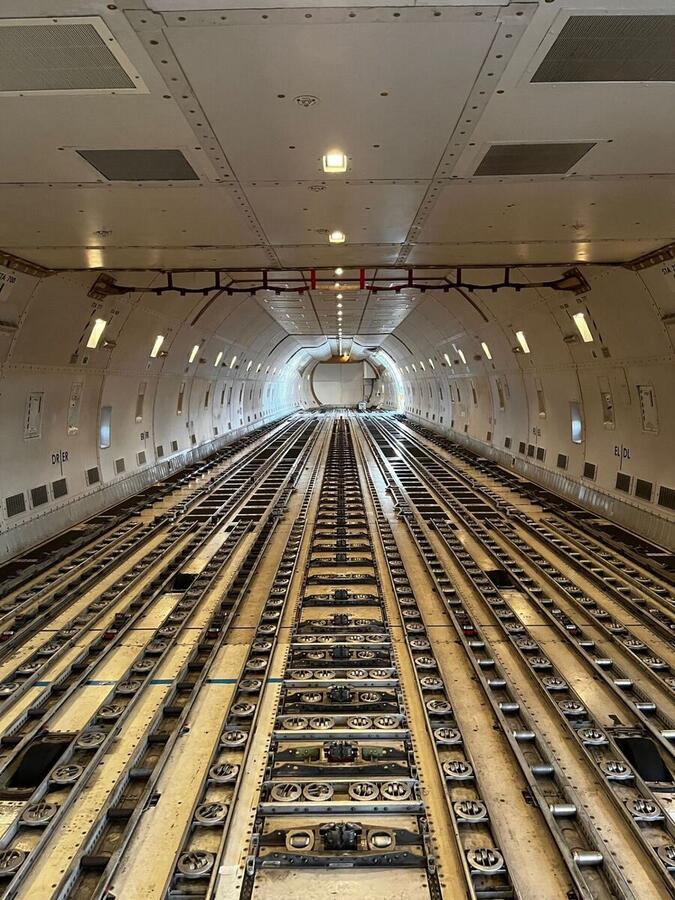
Project cargo secured in a freighter hold for a phased industrial airlift programme
    24/7 Operations Desk · Active Now

    Project Logistics · Programme Capacity

    Project Cargo Air Charter Australia

    Projects do not need one aircraft. They need capacity aligned to a schedule that keeps moving, planned in advance, with a contingency path for the milestone that slips.

    Already have an RFQ prepared? Email charters@aviall.com.au

    Programme
    Not one-off spot buys
    Phased
    Mobilisation to commissioning
    Site-aware
    Airport-to-site planned
    24/7
    Escalation desk

    Why project airlift is a different discipline to a single charter

    A one-off charter is a transaction: one aircraft, one cargo, one date. A project is a schedule under constant revision, where the freight requirement changes shape as fabrication slips, scopes grow and a commissioning date refuses to move. Buying project airlift the way you buy a single charter, reactively, under pressure, after a milestone is already at risk, is the most expensive way to do it.

    The alternative is planning capacity against the programme. When the equipment pipeline is known even approximately, capacity can be structured ahead: rates negotiated with lead time, aircraft types matched to each phase, and a contingency path pre-agreed for the piece that will inevitably arrive late from the fabricator. That converts a series of emergency purchases into a costed logistics plan, usually cheaper, and always an easier internal conversation.

    • Plan capacity to the schedule, not to individual crises
    • Lead time is a pricing lever; urgency is a pricing penalty
    • Contingency capacity pre-agreed for predictable slippage
    • Full charter, part charter and consolidation mixed by phase

    The phases, and what each one needs

    Australian projects follow a recognisable airlift profile. Recognising which phase you are in tells us which aircraft and which commercial structure fits.

    Sectors we support in Australia

    Project airlift into Australia is concentrated in a handful of capital-intensive sectors, each with its own destination profile and site-access reality.

    Gateway and site access: where project plans go wrong

    Project cargo is delivered to a site, not an airport, and the gap between the two is where schedules and budgets fail. An oversize piece on Australian roads needs a route survey, permits, escorts and sometimes structural assessment, and to a remote resources site that can consume more time and money than the flight from overseas.

    So the sequence matters. We assess the site access first, then the receiving airport's pavement, apron and lifting capability, then the sector. A slightly more expensive flight into a closer, better-equipped gateway regularly delivers a cheaper and faster total outcome than the cheapest sector into the wrong port.

    • Site access first, road route, permits, escorts, receiving cranes and hardstand
    • Then the gateway, pavement classification, apron space, ground equipment, curfews
    • Then the sector, aircraft type, routing, technical stops
    • Perth for Western Australian resources; Darwin and Townsville for northern and Pacific destinations

    Documentation, customs and quarantine on project freight

    Project consignments carry more documentation risk than routine freight: multiple suppliers, mixed classifications, used or soil-contaminated plant, timber packaging, and dangerous goods buried in a long packing list. Australian biosecurity attention to used equipment and timber is a well-known cause of delay after arrival.

    We flag these at enquiry stage, because a clearance problem discovered after landing costs more than the same problem solved before departure. Cleaning certificates for used plant, treatment certification for timber packaging and correct dangerous goods declarations are the three that most often bite.

    • Used plant and equipment, cleaning and inspection requirements
    • Timber packaging and crating, treatment certification
    • Dangerous goods hidden in mixed consignments, batteries, aerosols, fuels, chemicals
    • Multi-supplier consolidation, one accurate manifest instead of several partial ones

    Starting a project conversation early costs nothing

    You do not need a finalised equipment list. A rough schedule, an indicative equipment register and the destination are enough for us to model capacity, identify the pieces that will drive aircraft selection, and flag the constraints worth designing around now rather than discovering later.

    Paste or upload what you have (/submit-rfq?type=cargo) or email Charters@Aviall.com.au. Equipment registers, packing lists and drawings are ideal.

    • Project location and nearest usable airport, plus the road access position
    • Indicative equipment register with weights and dimensions where known
    • Programme dates, milestones and the consequence of each slipping
    • Origins, single supplier or multiple countries
    • Which pieces are known to be heavy, outsize or hazardous
    • Whether personnel movements are in scope alongside the freight

    How we run project airlift

    Capacity planned to the programme

    Aircraft and commercial structure matched to each project phase, with contingency capacity pre-agreed for predictable slippage.

    Site access assessed first

    Road route, permits and receiving equipment inform the gateway choice, because you are buying delivery to site, not to an apron.

    Documentation risk flagged early

    Used plant, timber packaging and hidden dangerous goods identified before departure rather than at the border.

    One coordinator across the programme

    Consistent point of contact for every rotation, with 24/7 escalation when a critical path item is at risk.

    Live requirement

    Have a live cargo requirement?

    Send the six details below and our charter desk returns aircraft options, payload feasibility and an indicative wheels-up window. Partial information is enough to start. We will work with what you have while packing is finalised.

    Already have an RFQ? Email charters@aviall.com.au

    Send us

    • 01OriginAirport, city or plant
    • 02DestinationFinal airport or door address
    • 03PayloadGross weight and piece count
    • 04Ready dateWhen cargo is packed and released
    • 05CommodityIncluding any dangerous goods class
    • 06Packing listDimensions per piece, if available

    Urgent charter? Our ops desk is staffed 24/7.

    Aircraft options within the hour and a written quote with an indicative wheels-up window.

    Mission examples · Illustrative

    What this looks like in operation

    Representative mission profiles drawn from recurring work. Identifying details, operators, hospitals, routes, aircraft tail numbers, are intentionally omitted.

    Heavy lift · Project cargo

    Outsize mining component into a remote regional strip

    An ASX-listed resources operator faced a stalled processing line waiting on a single oversized component too large for any scheduled freighter. Aviall sourced an outsize main-deck nose-loader, completed pavement and load-spread checks at the regional destination, and coordinated road movement permits at both ends.

    Outcome

    Component on site inside 72 hours of first call; production line restart same week.

    AOG · Time critical

    Replacement engine to a wide-body grounded overseas

    A major carrier had a wide-body grounded at a foreign hub, awaiting a replacement engine sitting in a domestic MRO. Aviall positioned a freighter to the MRO, coordinated dangerous goods documentation for the engine and stand, and held a flight-following bridge with the airline's tech ops cell door-to-door.

    Outcome

    Engine wheels-up inside 14 hours of release; aircraft returned to service the next operational day.

    Project airlift planning reference

    Structures available
    Full charter · part charter · programme rotations · consolidation
    Phases covered
    Mobilisation · heavy delivery · sustainment · recovery · commissioning · demob
    Aircraft range
    Narrowbody freighter to AN-124 class outsize capacity
    Planning sequence
    Site access, then gateway, then sector
    Resources gateways
    Perth · Darwin · Townsville · Cairns
    Documentation risks
    Used plant cleaning · timber treatment · hidden dangerous goods
    Best time to engage
    Before the equipment register is final

    FAQ

    Frequently Asked Questions

    Air capacity planned around a project schedule rather than a single shipment. It covers mobilisation freight, heavy and outsize equipment delivery, construction sustainment, critical path recovery and commissioning, using a mix of full charter, part charter and consolidation as each phase requires.

    Planning airlift for an Australian project?

    Send the location, an indicative equipment register and your programme dates. We model capacity, flag the constraints worth designing around, and quote the phases you need.

    Have a live requirement?

    Send us origin, destination, payload and ready date. We return aircraft options. Attach an existing RFQ, packing list or photos straight from your phone, partial detail is enough to start.

    Requirement

    Cargo

    AttachmentsPacking list, cargo dimensions, manifest, RFQ document, images or other supporting documentation. Files up to 20MB each, 10 max. PDF, Word, Excel, CSV, images or email files.

    Goes straight to our charter desk at Charters@Aviall.com.au. Submitting an RFQ does not confirm an aircraft.