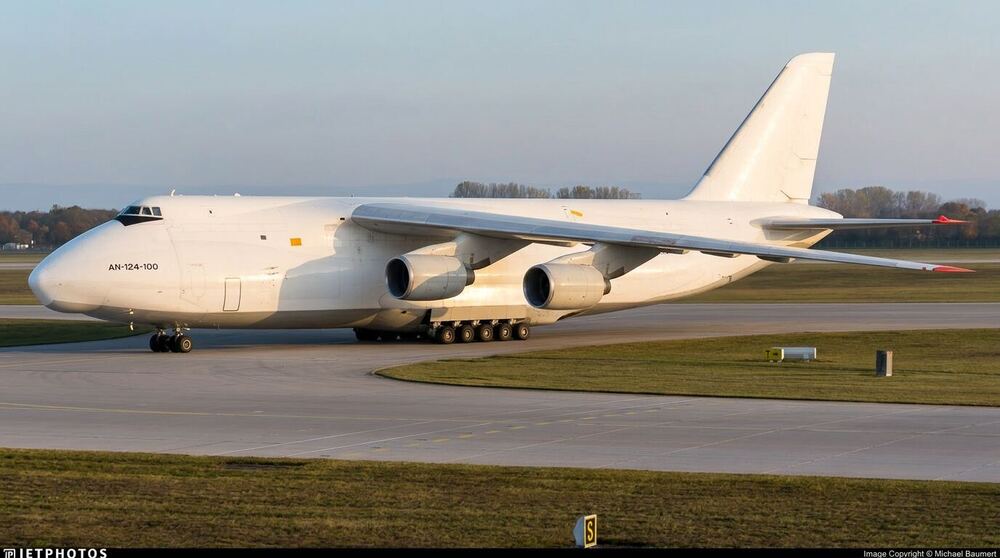
Outsize freighter aircraft loading heavy electrical plant for an infrastructure recovery charter
    24/7 Operations Desk · Active Now

    Industry Vertical · Utilities & Networks

    Critical Infrastructure Air Charter: Airlift Against the Outage Clock

    Transformers, switchgear, turbine components, pumps and network equipment, moved when the cost of the outage has already overtaken the cost of the aircraft.

    Already have an RFQ prepared? Email charters@aviall.com.au

    ≤60 min
    Aircraft options target
    Outsize
    Ramp and nose loading
    24/7
    Emergency desk
    Site-aware
    Airport-to-site planning

    Why infrastructure failures end up on aircraft

    Critical infrastructure equipment is heavy, long-lead and rarely held in local spares. When a transformer fails, a turbine sheds a component or a pump station goes down, the replacement is often on another continent with a manufacturing lead time measured in months. Sea freight adds weeks on top. Meanwhile the cost of the outage accrues daily. In lost generation, service credits, regulatory exposure, or a community without power or water.

    That arithmetic is what puts a transformer on a freighter. The charter is expensive in absolute terms and almost always cheap relative to the alternative, and the decision is usually made under pressure with incomplete information. Our job in that moment is to give you accurate feasibility fast: which aircraft can accept the piece, from where, by when, and at roughly what structure, so the commercial decision can be made on facts rather than hope.

    • Long-lead equipment with no local spare, the common denominator
    • Outage cost per day usually dwarfs the sector cost
    • Decisions made under pressure, accurate feasibility beats optimistic promises
    • Loadability, not tonnage, decides which aircraft can help

    Equipment we move for network operators

    The pieces differ by sector but the planning problem is consistent: heavy, dense, awkward, and occasionally too large for a conventional cargo door.

    • Power, transformers, switchgear, circuit breakers, cable drums, insulators
    • Generation, turbine components, rotors, generators, control and cooling plant
    • Renewables, nacelle and gearbox components, inverters, blade sections where loadable
    • Water and wastewater, large pumps, motors, valves, treatment plant modules
    • Telecommunications, exchange and data equipment, towers, power systems
    • Rail and transport, traction components, signalling equipment, track plant
    • Support equipment, temporary generation, mobile substations, specialised tooling

    Loadability is the first question, not the price

    Large electrical plant is dense and frequently out of gauge. A transformer that fits a main deck by weight can still be too tall for the door aperture, and one that fits dimensionally can exceed floor loading limits at its footprint. These are the questions that determine whether an aircraft is a real option.

    Send dimensions, weight, centre of gravity and lifting points, and drawings or photographs if they exist. A drawing frequently answers in one look what a written description cannot. If the piece is genuinely outsize, ramp-loading capacity applies /an-124-charter-australia; if it is long but conventional, nose-door loading on a 747F may be sufficient /747f-charter-australia at materially lower cost.

    • Overall dimensions including protrusions, bushings and skid or cradle
    • Weight, centre of gravity and floor footprint, floor loading limits bind before payload does
    • Lifting and tie-down points, and whether a cradle or skid is fitted
    • Whether the item can be drained, de-oiled or partly stripped to reduce weight or height
    • Receiving capability at destination, crane, low loader, hardstand

    The leg most plans underestimate: airport to site

    Infrastructure sites are rarely next to airports. The surface leg for a heavy, oversize piece needs a route survey, oversize permits, escorts, and sometimes assessment of bridges and overhead lines, and on regional and remote sites that leg can take longer than the flight and cost more.

    So we choose the gateway around the road move rather than the reverse. A slightly more expensive sector into a closer, better-equipped port regularly delivers a faster and cheaper restoration than the cheapest flight into the wrong airport. Where the surface leg is the binding constraint, we will tell you plainly, including when flying to a different city is the better answer.

    Planned outages and strategic spares

    Not all of this is emergency work. Planned outages and shutdowns have fixed windows and severe penalties for overrun, and airlift is often the insurance that protects the window: a spare positioned before the outage starts, or capacity pre-planned so a discovery on day two does not become a three-week extension.

    Where a maintenance programme is known, planning capacity in advance produces better rates and better availability than buying spot capacity after a window is already at risk. It also converts an unbudgeted emergency into a costed contingency, usually an easier internal conversation.

    • Pre-outage positioning of critical spares
    • Contingency capacity planned around the outage window
    • Programme rotations across a multi-site maintenance schedule
    • Return movement of failed units for repair or forensic assessment

    Getting a quote while the clock is running

    Do not wait for complete information. Send what you have now, paste or upload it (/submit-rfq?type=cargo) or email Charters@Aviall.com.au, and we will begin the availability search while the rest is confirmed.

    Aircraft options are typically returned within the hour, with an honest view of what is genuinely achievable against your restoration deadline rather than what sounds best.

    • Where the equipment is now, and the nearest usable airport
    • Destination airport, and the site it must reach
    • Weight, dimensions and any drawings or photographs
    • Restoration deadline and the consequence of missing it
    • Hazard classification, oil-filled, batteries, pressurised components
    • Who can authorise on your side, so nothing waits on approval

    How we run infrastructure recovery airlift

    Feasibility fast, honestly

    Loadability and availability confirmed against your deadline within the hour, including when the answer is that a different approach serves you better.

    Outsize and heavy capability

    Access to ramp-loading and nose-loading capacity for transformers, turbine components and plant modules that conventional freighters cannot accept.

    Airport-to-site planning

    Gateway selection accounts for the oversize road leg, permits and receiving equipment, because restoration time is what you are actually buying.

    24/7 single point of contact

    One coordinator for aircraft, permits, loading supervision, documentation and status through to offload, around the clock.

    Live requirement

    Have a live cargo requirement?

    Send the six details below and our charter desk returns aircraft options, payload feasibility and an indicative wheels-up window. Partial information is enough to start. We will work with what you have while packing is finalised.

    Already have an RFQ? Email charters@aviall.com.au

    Send us

    • 01OriginAirport, city or plant
    • 02DestinationFinal airport or door address
    • 03PayloadGross weight and piece count
    • 04Ready dateWhen cargo is packed and released
    • 05CommodityIncluding any dangerous goods class
    • 06Packing listDimensions per piece, if available

    Urgent charter? Our ops desk is staffed 24/7.

    Aircraft options within the hour and a written quote with an indicative wheels-up window.

    Mission examples · Illustrative

    What this looks like in operation

    Representative mission profiles drawn from recurring work. Identifying details, operators, hospitals, routes, aircraft tail numbers, are intentionally omitted.

    Heavy lift · Project cargo

    Outsize mining component into a remote regional strip

    An ASX-listed resources operator faced a stalled processing line waiting on a single oversized component too large for any scheduled freighter. Aviall sourced an outsize main-deck nose-loader, completed pavement and load-spread checks at the regional destination, and coordinated road movement permits at both ends.

    Outcome

    Component on site inside 72 hours of first call; production line restart same week.

    Pharma · Cool chain

    Temperature-controlled biologics on a single-shipper aircraft

    A global health programme required a high-value biologics consignment moved on a controlled cool-chain into the Asia-Pacific without consolidation risk. Aviall chartered a freighter dedicated to the shipment, with active containers, written ramp-time targets, and continuous data-logger oversight.

    Outcome

    Zero temperature excursions; chain-of-custody documentation closed within 24 hours of landing.

    Infrastructure airlift quick reference

    Typical cargo
    Transformers · switchgear · turbine components · pumps · network equipment
    Aircraft range
    Narrowbody freighter to AN-124 class outsize capacity
    Binding constraint
    Door aperture and floor loading, more often than payload
    Loading methods
    Palletised · nose-door · ramp drive-on and winched
    Surface leg
    Route survey, oversize permits, escorts, planned with the gateway choice
    Response
    Aircraft options typically within the hour, 24/7
    Planned work
    Pre-outage spare positioning and contingency capacity

    FAQ

    Frequently Asked Questions

    Frequently, yes. The limits are usually the aircraft door aperture and floor loading at the item's footprint rather than total payload. Smaller distribution units fit conventional freighters, while large power transformers typically need nose-door or ramp-loading capacity. Send dimensions, weight and any drawing and we will confirm which aircraft can genuinely accept it.

    Infrastructure down, or an outage window to protect?

    Send the equipment details and your restoration deadline, drawings if you have them. Aircraft options and an indicative cost structure typically come back within the hour, 24/7.

    Have a live requirement?

    Send us origin, destination, payload and ready date. We return aircraft options. Attach an existing RFQ, packing list or photos straight from your phone, partial detail is enough to start.

    Requirement

    Cargo

    AttachmentsPacking list, cargo dimensions, manifest, RFQ document, images or other supporting documentation. Files up to 20MB each, 10 max. PDF, Word, Excel, CSV, images or email files.

    Goes straight to our charter desk at Charters@Aviall.com.au. Submitting an RFQ does not confirm an aircraft.