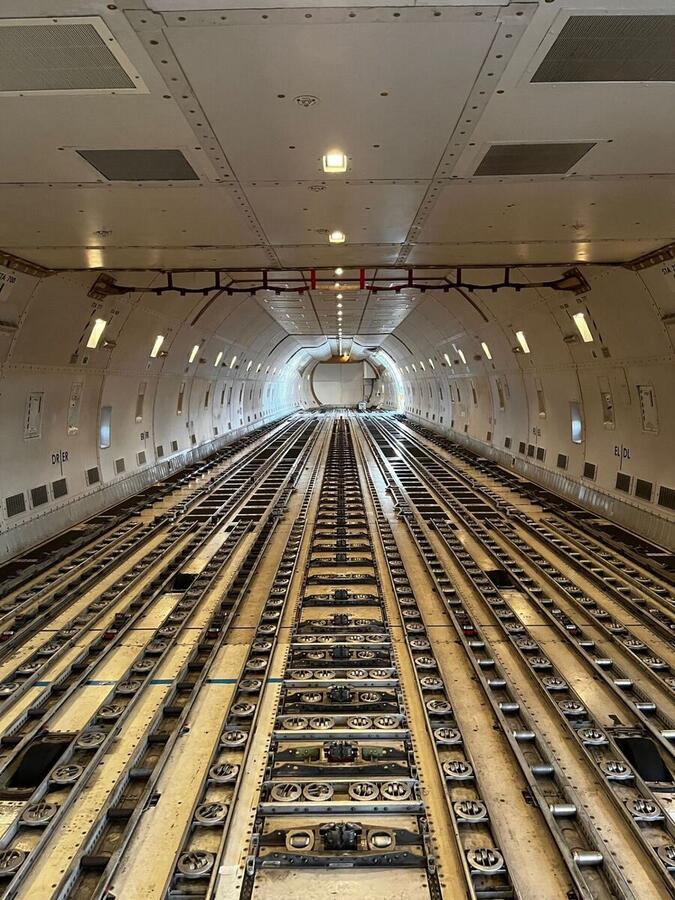
Crated data centre equipment prepared for air transport in a cargo hold
    24/7 Operations Desk · Active Now

    Educational Resource · Australia & APAC

    Data Centre Logistics in Australia

    Gateways, clearance, staging and site access, the practical chain a build depends on, and the points where air charter changes the outcome.

    Already have an RFQ prepared? Email charters@aviall.com.au

    SYD MEL BNE
    Primary gateways
    PER CBR
    Growing demand
    Site first
    Delivery planning
    24/7
    Charter desk

    What makes Australian data centre logistics distinctive

    Australia combines strong data centre demand with long supply lines. Almost all technology hardware is imported, most of it from North and Southeast Asia, the United States and Europe, and the distances involved mean the difference between sea freight and air freight is not days but weeks. When a build schedule compresses, and grid connection and customer handover dates rarely move, that gap is what turns air capacity from a luxury into the mechanism that protects the milestone.

    The second distinctive factor is concentration. Sydney and Melbourne dominate capacity, with strong growth in Perth, Canberra, Brisbane and regional locations selected for power availability and land. That concentration means gateway choice, curfew rules and metropolitan road access shape a great deal of the practical logistics plan.

    The third is biosecurity. Australia applies some of the world's strictest requirements to timber packaging, contamination and used equipment, and technology cargo is not exempt. A packaging problem discovered at the border can cost more time than the entire freight decision saved.

    Gateways and how to choose between them

    Sydney handles the largest share of inbound technology freight and has the deepest handling capability, but its night curfew constrains late arrivals and can push a movement to the following morning. Melbourne, Brisbane and Perth operate without a curfew, which matters when a tranche must clear and reach site overnight ahead of an installation window. Canberra and Adelaide are viable freighter gateways and are occasionally the better choice on total cost when the site is closer to them.

    Gateway selection should be a total-cost calculation, not an international-sector calculation. A cheaper flight into one port can be entirely consumed by a longer domestic leg requiring specialised lifting, escorts or out-of-hours access at the other end. We price the international and domestic legs together for exactly this reason.

    • Sydney, largest volume and handling depth, night curfew constrains late arrivals
    • Melbourne, curfew-free, strong freighter handling, common for overnight clearance and delivery
    • Brisbane, curfew-free, useful for Queensland and northern NSW sites
    • Perth, the shortest sectors from Southeast Asia and the natural gateway for WA sites
    • Canberra and Adelaide, viable freighter options, sometimes better on total cost

    Customs, clearance and biosecurity

    Import clearance runs through Australian Border Force, with tariff classification, valuation and GST handled by the client's customs broker. High-value technology consignments attract scrutiny on valuation and description, so accurate commercial documentation matters more here than on general freight, a documentation query on a single line can hold an entire consignment.

    Biosecurity requirements are administered separately and focus on timber packaging treatment and marking under ISPM 15, contamination by soil, plant material or pests, and the condition of used or returned equipment. Where equipment is returning from a site overseas, cleanliness inspection is a genuine risk to the schedule and should be addressed before departure.

    Charter does not exempt a consignment from either process, but it does allow the clearance sequence to be planned rather than inherited: documentation pre-lodged, the broker briefed before wheels-up, and the arrival handling arranged so a high-value consignment is not standing airside while a query is resolved.

    Staging, bonded storage and release to site

    Data centre sites are frequently not ready to receive equipment on the day it can land. Construction sequencing, limited hardstand, restricted access hours and installation capacity all constrain what a site can absorb, and forcing equipment onto a site that cannot take it creates handling, security and damage risk.

    Staging near the gateway. In bonded storage where clearance is not complete, or in secure warehousing where it is, lets a landed tranche be released to site in the order and at the pace the installation team can actually work. For high-value hardware, a secure, monitored staging facility is usually a better environment than a live construction site anyway.

    The final leg to site

    Site delivery is where plans most often fail. Access hours may be restricted by council conditions, the approach may not suit large vehicles, hardstand may be limited, and offloading may require a crane, tail-lift or specific rigging capability that has to be booked separately. Some equipment can only be placed in a particular order because of how the hall is being built.

    The domestic leg is therefore planned against the site's real receiving capability: vehicle type, lifting arrangement, access window and delivery sequence agreed with the site team before the international movement even departs. On regional and remote sites, a domestic freighter or turboprop leg is sometimes part of that plan rather than road transport all the way.

    Where charter changes the outcome

    Charter is not the answer to most of a data centre supply chain, and any provider claiming otherwise is selling rather than advising. It matters in a narrow set of situations that recur on almost every compressed build: the first large technology tranche when the schedule has already slipped, outsize or heavy power and cooling plant that scheduled capacity cannot take, a live facility with a failed critical unit, and recovery movements when upstream delay has consumed the float.

    In each of those, the comparison is not charter against airfreight rates. It is charter against the cost of a delayed energisation, a missed handover, an idle hall of installed hardware, or a degraded facility, figures that are usually an order of magnitude larger than the freight difference.

    Where our desk fits in the chain

    Gateway and total-cost analysis

    International and domestic legs priced together so the cheapest port is cheapest overall.

    Clearance sequencing

    Documentation pre-lodged and the broker briefed before departure to avoid airside dwell.

    Biosecurity readiness

    ISPM 15 treatment, cleanliness and used-equipment requirements confirmed at origin.

    Staging coordination

    Bonded or secure staging arranged so release matches installation pace.

    Site delivery planning

    Vehicle, lifting, access window and delivery order agreed with the site team.

    Escalation capability

    A 24/7 desk and pre-agreed path for the urgent movements that inevitably arise.

    Data centre & AI infrastructure

    Have a live technology shipment?

    Send us the requirement.

    Our charter desk works to the same inputs a forwarder or project logistics team already holds. Send the details below and we return suitable aircraft options, payload and volume feasibility, and an indicative wheels-up window. Estimates are enough to start while crating and release paperwork are finalised.

    Already have an RFQ?

    Email charters@aviall.com.au

    Send us

    • 01OriginAirport, factory, integrator or staging warehouse
    • 02DestinationArrival airport and final site address
    • 03PayloadGross weight, piece count, crated or uncrated
    • 04Dimensions / CBMPer crate: L x W x H, plus total volume
    • 05Ready dateWhen the equipment is crated and released
    • 06CommodityRacks, GPU nodes, UPS, switchgear, cooling plant
    • 07Packing listUpload with the RFQ, the fastest route to an answer

    Packing lists, drawings and crate schedules can be uploaded directly with the RFQ form, up to 10 files.

    Urgent charter? Our ops desk is staffed 24/7.

    Aircraft options within the hour and a written quote with an indicative wheels-up window.

    Mission examples · Illustrative

    What this looks like in operation

    Representative mission profiles drawn from recurring work. Identifying details, operators, hospitals, routes, aircraft tail numbers, are intentionally omitted.

    Heavy lift · Project cargo

    Outsize mining component into a remote regional strip

    An ASX-listed resources operator faced a stalled processing line waiting on a single oversized component too large for any scheduled freighter. Aviall sourced an outsize main-deck nose-loader, completed pavement and load-spread checks at the regional destination, and coordinated road movement permits at both ends.

    Outcome

    Component on site inside 72 hours of first call; production line restart same week.

    AOG · Time critical

    Replacement engine to a wide-body grounded overseas

    A major carrier had a wide-body grounded at a foreign hub, awaiting a replacement engine sitting in a domestic MRO. Aviall positioned a freighter to the MRO, coordinated dangerous goods documentation for the engine and stand, and held a flight-following bridge with the airline's tech ops cell door-to-door.

    Outcome

    Engine wheels-up inside 14 hours of release; aircraft returned to service the next operational day.

    Australian data centre logistics, quick reference

    Primary gateways
    SYD, MEL, BNE, PER, CBR, ADL
    Curfew-free gateways
    MEL, BNE, PER
    Clearance
    Australian Border Force via your customs broker
    Biosecurity
    ISPM 15 packaging, contamination and used-equipment checks
    Staging options
    Bonded or secure warehousing near the gateway
    Final leg
    Road, domestic freighter or turboprop to site

    FAQ

    Frequently Asked Questions

    Sea freight from Asia is typically measured in weeks and from Europe or North America longer, before clearance and domestic transport. Air freight compresses the transport element to days, and a dedicated charter compresses it further and makes the arrival date firm. The right choice depends on how much float the milestone still has.

    Working on an Australian data centre build?

    Send origin, destination, payload, dimensions or CBM, ready date, commodity and packing list. We return aircraft options, feasibility and an indicative wheels-up window.

    Have a live requirement?

    Send us origin, destination, payload and ready date. We return aircraft options. Attach an existing RFQ, packing list or photos straight from your phone, partial detail is enough to start.

    Requirement

    Cargo

    AttachmentsPacking list, cargo dimensions, manifest, RFQ document, images or other supporting documentation. Files up to 20MB each, 10 max. PDF, Word, Excel, CSV, images or email files.

    Goes straight to our charter desk at Charters@Aviall.com.au. Submitting an RFQ does not confirm an aircraft.