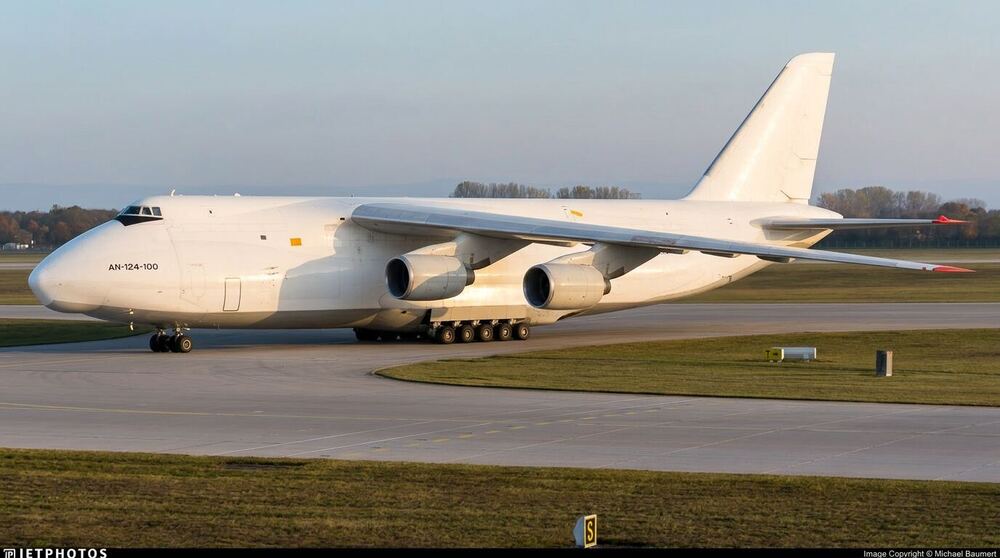
Freighter aircraft being loaded with project infrastructure cargo
    24/7 Operations Desk · Active Now

    Educational Resource · Programme Planning

    Planning Dedicated Air Capacity for Data Centre Projects

    Charter is cheapest and most available before it becomes urgent. Programme planning turns a series of emergencies into a schedule.

    Already have an RFQ prepared? Email charters@aviall.com.au

    Milestone led
    Not shipment led
    Tranche model
    Volume and weight
    Contingency
    Planned, not improvised
    24/7
    Charter desk

    Start from the milestone, not from the shipment

    Data centre programmes are governed by a small number of immovable dates: grid connection, energisation, integrated systems testing, customer handover and, on AI builds, the allocation window for compute. Freight planning that starts from shipment readiness will always be reactive, because the equipment pipeline slips and the milestone does not.

    Planning from the milestone backwards produces a different question: what has to be on site by when, in what order, and what is the latest credible departure for each of those tranches. That framing exposes which movements have real slack and which are already fragile, usually well before anyone is asking for an urgent charter.

    Model tranches by volume, weight and dependency

    A useful capacity model does not need final packing lists. It needs, for each tranche, an approximate total volume in CBM, an approximate gross weight, the largest single piece dimension, whether the tranche is only useful complete, and what it blocks if it is late.

    With that, aircraft requirements can be sized realistically. Technology tranches are almost always volume-limited rather than weight-limited, so the model should count pallet positions and cubic metres. Power and electrical plant behaves the opposite way and introduces floor-loading constraints. Most builds contain both, and mixing them intelligently across rotations is where cost is genuinely saved.

    • Total CBM and gross weight per tranche, approximate is sufficient
    • Largest single piece, length, width, height, and whether it can be laid down
    • Whether the tranche must arrive complete to be useful
    • The dependency it releases: energisation, fit-out, install, testing or handover
    • Origin and the realistic release date, including integration or staging time
    • Dangerous goods content, particularly lithium and battery systems

    Where charter belongs in the mix

    Most of a data centre's supply chain should not fly. Sea freight for structural, mechanical and non-critical items, consolidated airfreight for steady technology flow, and charter reserved for the movements where scheduled capacity genuinely cannot deliver the outcome.

    The typical pattern is that charter earns its place in three places: the first major technology tranche where the schedule is already compressed, outsize or heavy power and cooling plant that cannot travel as standard air freight, and recovery movements when an upstream delay has eaten the float. Identifying those three in advance is more valuable than any rate negotiation.

    Commit early or buy spot, the real trade-off

    Committing capacity in advance secures aircraft and usually a better rate, but carries exposure if the pipeline moves. Buying spot capacity keeps flexibility but means competing for aircraft at the moment the whole market is also under pressure, and at the moment your own leverage is lowest.

    In practice a hybrid works best on most programmes: plan and pre-agree the rotations tied to genuinely fixed milestones, keep flexible sourcing for the tranches whose readiness is uncertain, and pre-agree an escalation route so that when something does slip, the urgent movement is a phone call rather than a fresh procurement exercise.

    Build contingency into the plan, not the panic

    Contingency on these programmes is not simply extra time. It is a pre-decided answer to the failure modes that recur: a manufacturing release slipping past the planned departure, a dangerous goods issue disqualifying the intended operator, a curfew or slot preventing a planned arrival, a site not able to receive equipment on the day it lands, and a single gating item, optics, a transformer bushing, a controller, holding a whole hall.

    Each of those has a cheap answer if it is planned and an expensive answer if it is not. Knowing in advance which curfew-free gateway you would divert to, which alternative aircraft type your crate dimensions still fit, and where equipment can be staged if the site is not ready, converts most of these from crises into decisions.

    The site end is usually the weakest link

    Air capacity planning that stops at the arrival airport tends to fail at the last five kilometres. Data centre sites frequently have restricted access hours, limited hardstand, specific crane or tail-lift requirements, active construction traffic and an installation sequence that will only accept equipment in a defined order.

    The domestic leg should therefore be planned against the site's actual receiving capability and sequence, including whether equipment needs to be staged in a bonded or secure warehouse before delivery. On more than a few programmes, staging near the gateway and releasing to site on the installation team's schedule is both cheaper and faster than pushing equipment to a site that cannot take it.

    What programme planning covers

    Milestone mapping

    Latest credible departure dates derived from grid connection, testing and handover dates.

    Tranche modelling

    Volume, weight and largest-piece modelling into realistic aircraft requirements.

    Mode allocation

    An honest split between sea, consolidated airfreight and charter rather than charter by default.

    Rotation scheduling

    Pre-planned capacity aligned to manufacturing releases across a build phase.

    Escalation route

    A pre-agreed path for urgent movements so recovery is a call, not a procurement cycle.

    Staging and site sequencing

    Bonded or secure staging and delivery order matched to installation capability.

    Data centre & AI infrastructure

    Have a live technology shipment?

    Send us the requirement.

    Our charter desk works to the same inputs a forwarder or project logistics team already holds. Send the details below and we return suitable aircraft options, payload and volume feasibility, and an indicative wheels-up window. Estimates are enough to start while crating and release paperwork are finalised.

    Already have an RFQ?

    Email charters@aviall.com.au

    Send us

    • 01OriginAirport, factory, integrator or staging warehouse
    • 02DestinationArrival airport and final site address
    • 03PayloadGross weight, piece count, crated or uncrated
    • 04Dimensions / CBMPer crate: L x W x H, plus total volume
    • 05Ready dateWhen the equipment is crated and released
    • 06CommodityRacks, GPU nodes, UPS, switchgear, cooling plant
    • 07Packing listUpload with the RFQ, the fastest route to an answer

    Packing lists, drawings and crate schedules can be uploaded directly with the RFQ form, up to 10 files.

    Urgent charter? Our ops desk is staffed 24/7.

    Aircraft options within the hour and a written quote with an indicative wheels-up window.

    Mission examples · Illustrative

    What this looks like in operation

    Representative mission profiles drawn from recurring work. Identifying details, operators, hospitals, routes, aircraft tail numbers, are intentionally omitted.

    Pharma · Cool chain

    Temperature-controlled biologics on a single-shipper aircraft

    A global health programme required a high-value biologics consignment moved on a controlled cool-chain into the Asia-Pacific without consolidation risk. Aviall chartered a freighter dedicated to the shipment, with active containers, written ramp-time targets, and continuous data-logger oversight.

    Outcome

    Zero temperature excursions; chain-of-custody documentation closed within 24 hours of landing.

    Planning inputs, quick reference

    Per tranche
    Total CBM, gross weight, largest single piece
    Dependency
    What the tranche releases if it lands on time
    Fixed dates
    Grid connection, energisation, testing, handover
    Origins
    Manufacturer, integrator or staging warehouse
    DG content
    Lithium, batteries, UPS systems, flammables
    Site limits
    Access hours, hardstand, lifting capability, install order

    FAQ

    Frequently Asked Questions

    As soon as the milestone calendar and an approximate equipment pipeline exist. At that point we can model aircraft requirements, flag where the plan is fragile and pre-agree an escalation path. There is no obligation attached to planning, and the alternative, a first conversation at the point of crisis, is where both cost and risk concentrate.

    Planning air capacity for a data centre build?

    Send your milestone dates and approximate tranche volumes and weights. We will model aircraft requirements and flag where the schedule is fragile.

    Have a live requirement?

    Send us origin, destination, payload and ready date. We return aircraft options. Attach an existing RFQ, packing list or photos straight from your phone, partial detail is enough to start.

    Requirement

    Cargo

    AttachmentsPacking list, cargo dimensions, manifest, RFQ document, images or other supporting documentation. Files up to 20MB each, 10 max. PDF, Word, Excel, CSV, images or email files.

    Goes straight to our charter desk at Charters@Aviall.com.au. Submitting an RFQ does not confirm an aircraft.