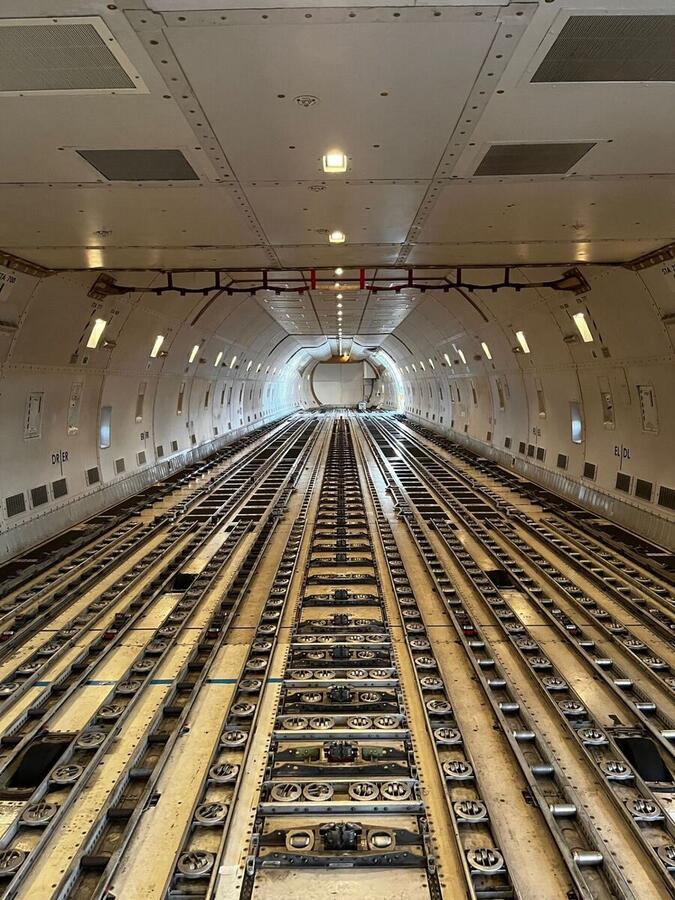
Aircraft hold loaded for a workforce rotation
    24/7 Operations Desk · Active Now

    FIFO & Workforce · Baggage

    FIFO Charter Baggage, Tooling and Dangerous Goods

    Crew baggage is not a detail on a resource rotation. Hold volume, payload and declaration requirements shape which aircraft can be used and whether everything travels on the day.

    Already have an RFQ prepared? Email charters@aviall.com.au

    In kg
    Allowance in writing
    Volume
    Assessed, not assumed
    DG
    Declaration handled
    24/7
    Charter desk

    Why baggage decides more than people expect

    A FIFO crew of 90 on a two-week swing is not a light load. Personal baggage, PPE, boots, laptops, instruments and tooling combine into a hold requirement that frequently runs well above typical airline assumptions, and on Australian resource routes the binding constraint is often hold volume rather than total weight.

    That matters because it feeds directly into aircraft selection. An aircraft that seats the manifest but cannot carry its baggage is not a solution, and discovering the gap at check-in means either leaving equipment behind or delaying a shift start. Baggage belongs in the requirement, not in the exceptions.

    Allowances and how they are set

    On charter, the allowance is not an airline policy. It is a number derived from the aircraft, the sector and the manifest. We confirm it in kilograms per person in writing with the quote, so site and travel teams can communicate a single figure to crews rather than guessing.

    Where a swing genuinely requires more than a standard allowance, the options are a larger aircraft, a reduced manifest on that rotation, or moving the excess as separate freight. All three are workable; what does not work is assuming.

    • Allowance stated per person in kilograms, plus any cabin baggage limit
    • Hold volume checked against real bag counts and dimensions, not weight alone
    • Additional allowance priced where the aircraft and sector support it
    • Excess moved as separate freight where that is cheaper than upsizing

    PPE, tooling and site equipment

    Most resource rotations carry more than personal luggage. Hard hats, high-visibility clothing, safety boots, harnesses, hand tools, calibrated instruments, sampling kits and spares are routine, and specialist crews such as maintenance, shutdown or survey teams carry considerably more.

    Declare these at requirement stage with rough weights and dimensions. Oversized or awkward items, long tooling, cases, drill core boxes, survey equipment, may need a specific aircraft with a suitable hold door, and it is far cheaper to know that before the rotation is priced.

    • Personal baggage and PPE per crew member
    • Hand tools, calibrated instruments and test equipment
    • Sampling and core boxes, survey gear and specialist cases
    • Spares and consumables travelling with a maintenance or shutdown crew
    • Oversized items requiring hold door and volume checks

    Dangerous goods, honestly handled

    A meaningful proportion of resource-sector equipment falls into dangerous goods categories, and this is an area where informality creates genuine risk. Lithium batteries in tools and instruments, aerosols, adhesives and solvents, compressed gas cylinders, fuels and sample chemicals all have carriage rules that apply on charter exactly as they do on scheduled services.

    The practical approach is disclosure up front. Where an item is carriable it is declared and packed correctly under the operator's arrangements; where it is not, we say so and propose a compliant alternative, which is often a separate freight movement. Undeclared dangerous goods are the fastest way to have items removed at the aircraft and a rotation delayed.

    • Declare lithium batteries, aerosols, solvents, gas cylinders and fuels at requirement stage
    • Carriage confirmed against the operator's approvals and applicable regulations
    • Correct packing, labelling and documentation arranged before the movement
    • Non-carriable items routed as a separate compliant freight movement

    Practical rules that keep rotations clean

    Programs that run well share a few habits. None of them are complicated; they simply move decisions earlier than the day of travel.

    • Publish the kilogram allowance to crews with the roster, not at the airport
    • Nominate one site contact responsible for tooling and freight on each rotation
    • Include tooling in the manifest process so it is visible before departure
    • Flag equipment changes for shutdown rotations, where loads spike
    • Keep a standing declaration process for recurring dangerous goods items

    What we handle on baggage and equipment

    Written allowances

    Kilogram allowance per person confirmed with the quote.

    Volume assessment

    Hold capacity checked against real bag counts and dimensions.

    Tooling planning

    Oversized and specialist equipment factored into aircraft selection.

    Dangerous goods

    Declaration, packing and documentation arranged with the operator.

    Separate freight

    Non-carriable or excess load moved as a compliant cargo movement.

    Shutdown load spikes

    Equipment-heavy surge rotations planned rather than absorbed.

    FIFO & workforce charter

    Have a FIFO requirement?

    Send us the requirement.

    We take both recurring programs and one-off movements. Estimates are enough to start. We come back with aircraft options, capacity and baggage feasibility, and indicative pricing you can put in front of a budget holder or a tender response.

    Recurring charter program

    Roster flying, workforce rotations, seasonal campaigns and scheduled corporate shuttles. Send the pattern and we price the program, not just a single flight.

    • 01OriginCrew source city or port
    • 02DestinationSite aerodrome or nearest town
    • 03Passenger countPer rotation, and peak numbers
    • 04Days of operatione.g. Monday and Thursday
    • 05Required departure timesOutbound and return windows
    • 06Program commencementFirst flight date, even approximate
    • 07Program duratione.g. 12 months, or campaign length
    • 08BaggageChecked allowance, tooling, freight in hold
    • 09FrequencyRotations per week or per swing
    • 10Additional requirementsRunway, compliance, aircraft preference
    Submit FIFO requirement

    One-off group movement

    A single group flight, a team, a tour, a conference, a delegation, an event crew or a shutdown surge. Five details are usually enough for a workable quote.

    • 01Origin and destinationAirports or cities
    • 02Passenger countPlus any staff or officials travelling
    • 03Dates and timesDeparture, return, and how fixed they are
    • 04BaggageChecked bags, sports gear, equipment, instruments
    • 05Group typeCorporate, sports, tour, event, government, education
    Request group charter quote

    Urgent charter? Our ops desk is staffed 24/7.

    Aircraft options within the hour and a written quote with an indicative wheels-up window.

    FIFO baggage, quick reference

    Allowance basis
    Set per aircraft, sector and manifest; confirmed in kilograms
    Usual constraint
    Hold volume as often as total weight
    Declare early
    Tooling, instruments, spares, oversized cases
    Dangerous goods
    Lithium batteries, aerosols, solvents, gas, fuels, samples
    Excess options
    Larger aircraft, reduced manifest, or separate freight
    Shutdown rotations
    Expect higher equipment loads; plan capacity accordingly

    FAQ

    Frequently Asked Questions

    It is set by the aircraft, the sector and the manifest rather than an airline policy, and we confirm it in kilograms per person in writing with the quote so crews receive one clear figure with the roster.

    Heavy baggage or tooling on your rotation?

    Send origin, destination, passenger numbers, baggage and tooling profile, frequency, days and times, program duration and start date. We will size the aircraft correctly and confirm allowances in writing.

    Have a live requirement?

    Send us the roster pattern, ports and headcount. We return a schedule and pricing basis. Attach an existing RFQ, packing list or photos straight from your phone, partial detail is enough to start.

    Requirement

    FIFO / Workforce

    AttachmentsRoster patterns, tender documents or an existing RFQ. Files up to 20MB each, 10 max. PDF, Word, Excel, CSV, images or email files.

    Goes straight to our charter desk at Charters@Aviall.com.au. Submitting an RFQ does not confirm an aircraft.