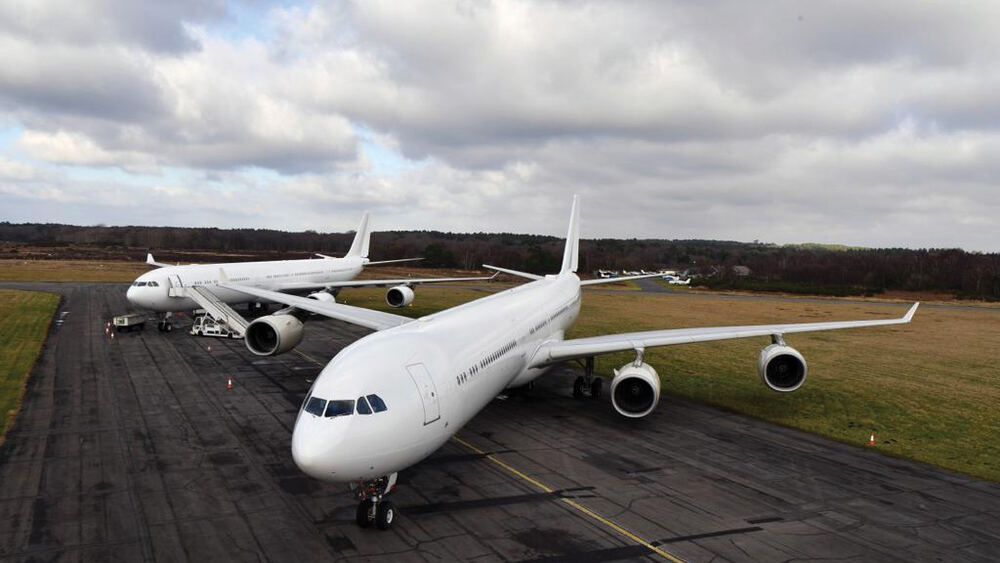
Aircraft operating from a remote sealed runway in outback Australia
    24/7 Operations Desk · Active Now

    FIFO & Workforce · Aerodromes

    Remote Airports and Mine Airstrips: What Aircraft Can Actually Use Your Site

    Aircraft selection for resource projects is decided at the far end. Runway, approach, fire coverage and fuel determine what is flyable long before headcount enters the conversation.

    Already have an RFQ prepared? Email charters@aviall.com.au

    Feasibility
    Checked before quoting
    Strip-capable
    Turboprop access
    Operator
    Aerodrome approvals verified
    24/7
    Charter desk

    Australia's resource aerodromes are not uniform

    Site access in Australian resource aviation spans a wide range. At one end are established regional airports with long sealed runways, instrument approaches, dedicated FIFO terminals, screening and refuelling, capable of narrowbody jet operations at scale. At the other are private mine strips: short, sometimes unsealed, occasionally daylight-only, with limited or no permanent ground infrastructure.

    Between those extremes sit dozens of aerodromes that are technically usable but constrained in a way that materially affects which aircraft can operate and how much payload it can carry. Establishing where your destination sits is the first genuine step in scoping any FIFO program.

    What determines aircraft suitability

    Operators assess a destination against a consistent set of physical and procedural factors. Any one of them can rule out an aircraft type regardless of how well it suits the manifest.

    • Runway length, with a take-off performance margin for temperature, payload and slope
    • Surface, sealed, gravel or natural, and its condition and dust characteristics
    • Width and strip dimensions, including runway strip and obstacle clearances
    • Pavement strength, whether the surface supports the aircraft's weight and tyre pressure
    • Approach aids and procedures, instrument approach availability versus visual-only access
    • Lighting, whether night operations are possible at all
    • Fire and rescue coverage, required category for the aircraft and operation type
    • Fuel, availability, type and whether the aircraft can tanker fuel for the return
    • Handling and GSE, steps, baggage handling, water and waste servicing, screening capability
    • Operator approval, whether the operator is approved for that specific aerodrome

    The performance trade-offs nobody mentions in a tender

    A runway that is technically long enough on a cool morning may not be long enough at 42 degrees with a full manifest and full baggage. High ambient temperature, runway slope, surface condition and wind all reduce available performance, and the aircraft's response is to reduce payload or fuel.

    The practical consequences are worth planning for: a manifest cap on hot-season rotations, a technical fuel stop on a longer sector, or an intermediate aerodrome where fuel is available. None of these are problems if they are known at scoping; all of them are problems if they appear on the morning of a swing change.

    • Hot-day performance can reduce payload on marginal runways
    • Unsealed surfaces limit type and can restrict operations after rain
    • No fuel on site means tankering, which trades fuel against payload
    • Visual-only access limits operations in poor weather or after dark

    Seasonal serviceability, particularly in the north

    In northern Australia, the Kimberley, the Top End, Cape York and the Gulf, the wet season is an operational factor rather than a footnote. Unsealed strips can become unserviceable after rain, convective weather affects reliability, and a site that operates comfortably in August can be intermittently unreachable in February.

    Programs in these regions should be built with contingency: an alternate aerodrome with a road transfer leg, a schedule with recovery capacity, or a change in aircraft type for the wet months. We plan for it explicitly rather than treating disruption as an exception.

    When the nearest airport is not the right answer

    The lowest total cost is not always the closest runway. A short unsealed strip beside the site may force a turboprop and two rotations, while a sealed regional airport ninety minutes away by road may allow a single narrowbody rotation at a materially lower cost per seat, including the bus.

    Equally, the reverse holds where road access is poor, wet-season roads are unreliable, or the ground leg would erode too much of the shift. The comparison is worth doing properly: total door-to-shift time and total cost, not sector distance.

    • Compare total cost including ground transfer, not just the flight
    • Compare door-to-shift time, since lost shift hours have a real value
    • Consider road reliability, particularly during the wet season
    • Consider screening and handling capability at each option

    How we confirm access

    For any new destination we establish the published aerodrome data, confirm the physical and procedural constraints, and verify that the proposed operator holds the approvals and experience for that aerodrome. Where a site is privately operated we work with the site's aviation contact on access arrangements, handling and any local operating requirements.

    The output is a straight answer: which aircraft types are genuinely usable, at what payload, in what conditions, and what the alternatives are. Aviall Group arranges the capacity and is not the operator, which means the feasibility answer is not shaped by what one fleet can do.

    Aerodrome capability we handle

    Feasibility assessment

    Runway, approach, fire, fuel and lighting checked before quoting.

    Operator approvals

    Verification that the operator is approved for your aerodrome.

    Payload modelling

    Hot-day and short-runway payload limits identified up front.

    Alternate planning

    Road-transfer and alternate aerodrome options costed properly.

    Wet-season contingency

    Seasonal serviceability built into northern programs.

    Private strip coordination

    Access, handling and local requirements arranged with site aviation.

    FIFO & workforce charter

    Have a FIFO requirement?

    Send us the requirement.

    We take both recurring programs and one-off movements. Estimates are enough to start. We come back with aircraft options, capacity and baggage feasibility, and indicative pricing you can put in front of a budget holder or a tender response.

    Recurring charter program

    Roster flying, workforce rotations, seasonal campaigns and scheduled corporate shuttles. Send the pattern and we price the program, not just a single flight.

    • 01OriginCrew source city or port
    • 02DestinationSite aerodrome or nearest town
    • 03Passenger countPer rotation, and peak numbers
    • 04Days of operatione.g. Monday and Thursday
    • 05Required departure timesOutbound and return windows
    • 06Program commencementFirst flight date, even approximate
    • 07Program duratione.g. 12 months, or campaign length
    • 08BaggageChecked allowance, tooling, freight in hold
    • 09FrequencyRotations per week or per swing
    • 10Additional requirementsRunway, compliance, aircraft preference
    Submit FIFO requirement

    One-off group movement

    A single group flight, a team, a tour, a conference, a delegation, an event crew or a shutdown surge. Five details are usually enough for a workable quote.

    • 01Origin and destinationAirports or cities
    • 02Passenger countPlus any staff or officials travelling
    • 03Dates and timesDeparture, return, and how fixed they are
    • 04BaggageChecked bags, sports gear, equipment, instruments
    • 05Group typeCorporate, sports, tour, event, government, education
    Request group charter quote

    Urgent charter? Our ops desk is staffed 24/7.

    Aircraft options within the hour and a written quote with an indicative wheels-up window.

    Aerodrome feasibility, quick reference

    Decides the aircraft
    Runway length and surface, pavement strength, width
    Decides the hours
    Lighting, approach aids, published operating hours
    Decides the payload
    Temperature, slope, fuel availability, sector length
    Often overlooked
    Fire category, screening capability, ground handling equipment
    Seasonal factor
    Wet-season serviceability across northern Australia
    Alternative
    Sealed regional airport with a road transfer, costed end to end

    FAQ

    Frequently Asked Questions

    Sometimes, but many private strips are turboprop-only. It depends on runway length and surface, pavement strength, width, approach aids, fire coverage and fuel, plus the operator's approvals for that aerodrome. Send the destination and we will confirm which types are genuinely usable.

    Need to know what can fly into your site?

    Send the destination aerodrome, origin, passenger numbers, frequency, days and times, program duration, baggage and start date. We will confirm feasibility and shortlist workable aircraft.

    Have a live requirement?

    Send us the roster pattern, ports and headcount. We return a schedule and pricing basis. Attach an existing RFQ, packing list or photos straight from your phone, partial detail is enough to start.

    Requirement

    FIFO / Workforce

    AttachmentsRoster patterns, tender documents or an existing RFQ. Files up to 20MB each, 10 max. PDF, Word, Excel, CSV, images or email files.

    Goes straight to our charter desk at Charters@Aviall.com.au. Submitting an RFQ does not confirm an aircraft.