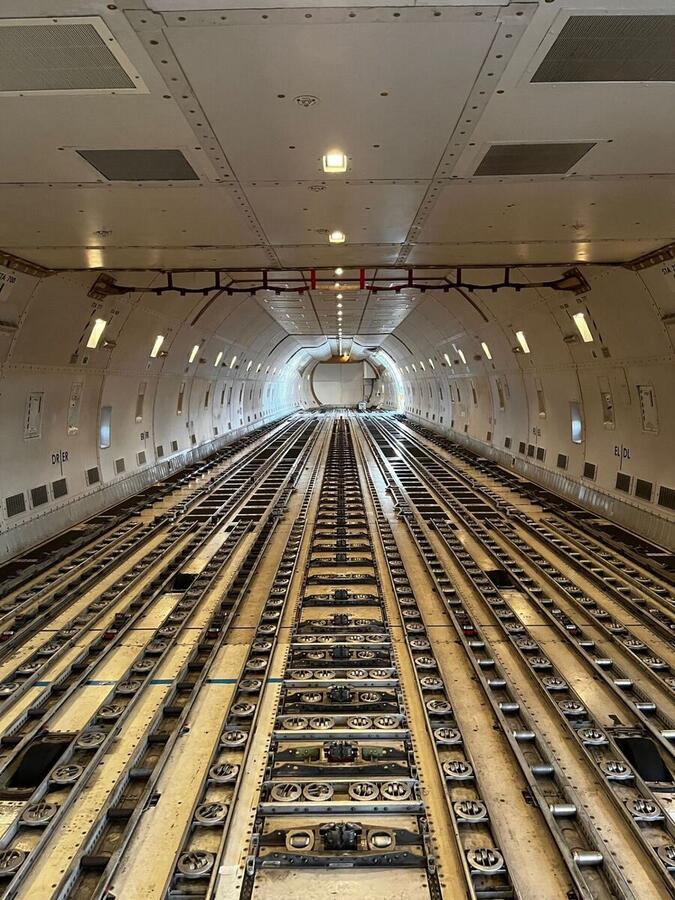
High-value crated electronics secured in a freighter cargo hold
    24/7 Operations Desk · Active Now

    Educational Resource · Network & Fabric Hardware

    Networking Equipment Air Freight to Australia

    Light, compact and extremely valuable, network hardware rarely fills an aircraft, but it frequently decides whether a hall can be commissioned.

    Already have an RFQ prepared? Email charters@aviall.com.au

    High value
    Low volume cargo
    Custody
    Planned end to end
    Part charter
    Often the right answer
    24/7
    Charter desk

    Small cargo, disproportionate schedule impact

    Network fabric is the least bulky category in a data centre build and one of the most consequential. Spine and leaf switches, routers, optical transceivers, patch panels and structured cabling represent a modest weight and volume, yet without them a hall full of installed compute cannot be interconnected, tested or accepted.

    That asymmetry is why network hardware appears so often in urgent air movements. A rack tranche can be commissioned progressively; a fabric cannot. When optics or switching slip against a manufacturing or allocation window, the entire deployment slips with them, and the freight decision stops being about cost per kilogram.

    The practical consequence is that the right answer is frequently not a full aircraft. A part charter, a dedicated narrowbody or expedited scheduled capacity often serves a fabric shipment better than a widebody freighter, and we will say so when that is the case.

    Value density, custody and where the risk sits

    High-end switching and optics concentrate substantial value into a few pallets. On this cargo the exposure is not in the air. It sits in the ground segments: staging at the integrator, the road leg to the airport, ramp handling, transit stops and the arrival dwell before clearance and release.

    Reducing that exposure is mostly about eliminating unnecessary handling events. A dedicated aircraft removes transhipment and consolidation with unknown cargo, and lets the shipper control loading, sealing and timing. Where a full aircraft is not warranted, the same principles apply on a smaller scale: minimise connections, seal units, agree the arrival handling sequence in advance, and never leave a high-value consignment standing airside because nobody planned the release.

    Where an insurer, OEM or end customer imposes escort, sealing or monitoring conditions, those requirements should shape operator selection rather than be retrofitted after booking.

    • Tamper-evident sealing where the insurer or end customer requires it
    • Minimised transit and technical stops, because each stop is a handling and exposure event
    • Controlled ramp exposure at both ends, planned rather than left to handler convenience
    • Arrival clearance and release sequence agreed with the broker before departure
    • Serialised packing list detail so discrepancies are identifiable on receipt

    Battery content and dangerous goods in network hardware

    Network hardware is often assumed to be free of dangerous goods, and that assumption causes acceptance problems. Chassis-based systems, management modules and cache protection can contain lithium cells, and shipments frequently travel alongside battery-backed accessories that were not on the original commodity description.

    Declaring battery content at enquiry stage, UN numbers, watt-hour ratings, whether cells are installed in or packed with equipment, lets us confirm operator acceptance before capacity is held. It is a short conversation at enquiry and an expensive one at the acceptance desk.

    Aircraft and capacity options

    Because a fabric shipment rarely needs a full widebody, the useful question is what gets the consignment there intact by the required date at a defensible cost. Aviall is not an aircraft operator; we source across a wide operator base and return the options genuinely available.

    • Part charter on a scheduled freighter rotation, dedicated space without paying for a whole aircraft
    • Narrowbody freighters such as 737-800F and A321F, well matched to fabric-only urgent shipments
    • Boeing 767F and A330-200F, where the network shipment moves with a wider equipment tranche
    • Boeing 777F and 747F, where fabric is consolidated into a full deployment tranche
    • Business jet or light freighter lift, a single critical module against a same-day requirement

    Clearance, gateways and delivery into the hall

    Australian gateway choice for network hardware is usually driven by clearance and delivery rather than aircraft capability, since almost any gateway can handle the volume involved. What matters is which airport allows the fastest realistic clearance and release into a site delivery window, and whether Sydney's night curfew constrains the arrival.

    The delivery leg into an operating facility has its own controls: escorted access, delivery windows, loading dock restrictions and goods-receipt procedures that must be satisfied before hardware can be moved to the hall. Planning that ahead of arrival avoids the common outcome where a high-value consignment sits in a bonded warehouse over a weekend while an install crew waits.

    How Aviall is engaged on these movements

    Aviall Group arranges dedicated aircraft charter capacity. We are not the hardware manufacturer, integrator, freight forwarder, customs broker or aircraft operator, and we do not present ourselves as any of those.

    Most network hardware enquiries reach us from freight forwarders, project logistics teams and procurement groups running a deployment. We quote to the party engaging us, provide the technical detail needed to present the option to their client, and are equally willing to advise that scheduled or expedited airfreight is the better answer when the shipment does not justify a dedicated aircraft.

    What our desk provides

    Right-sized capacity advice

    Full charter, part charter or expedited scheduled, recommended on the evidence, not by default.

    Custody planning

    Sealing, supervision, minimised stops and an agreed arrival handling sequence.

    DG acceptance screening

    Battery content assessed against operator acceptance before capacity is held.

    Aircraft options

    Shortlisted across a wide operator base on genuine availability for your dates.

    Gateway and clearance timing

    Arrival chosen for fastest realistic release into the delivery window.

    Secure site delivery

    Onward leg planned around escorted access and goods-receipt procedures.

    Consolidation with a tranche

    Fabric shipped alongside racks and power equipment when the schedule allows.

    Forwarder-friendly engagement

    Air movement only, or coordinated collection, handling and the leg to site.

    Data centre & AI infrastructure

    Have a live technology shipment?

    Send us the requirement.

    Our charter desk works to the same inputs a forwarder or project logistics team already holds. Send the details below and we return suitable aircraft options, payload and volume feasibility, and an indicative wheels-up window. Estimates are enough to start while crating and release paperwork are finalised.

    Already have an RFQ?

    Email charters@aviall.com.au

    Send us

    • 01OriginAirport, factory, integrator or staging warehouse
    • 02DestinationArrival airport and final site address
    • 03PayloadGross weight, piece count, crated or uncrated
    • 04Dimensions / CBMPer crate: L x W x H, plus total volume
    • 05Ready dateWhen the equipment is crated and released
    • 06CommodityRacks, GPU nodes, UPS, switchgear, cooling plant
    • 07Packing listUpload with the RFQ, the fastest route to an answer

    Packing lists, drawings and crate schedules can be uploaded directly with the RFQ form, up to 10 files.

    Urgent charter? Our ops desk is staffed 24/7.

    Aircraft options within the hour and a written quote with an indicative wheels-up window.

    Network hardware air freight, quick reference

    Typical cargo
    Spine and leaf switches, routers, optics, patch panels, cabling
    Profile
    Low weight, low volume, very high value
    Usual constraint
    Custody and clearance timing, not aircraft capacity
    Common answer
    Part charter, narrowbody charter or consolidation with a tranche
    Watch item
    Unexpected lithium content in chassis and accessories
    Australian gateways
    SYD, MEL, BNE, PER, CBR, ADL, DRW
    Response time
    Aircraft options usually within the hour

    FAQ

    Frequently Asked Questions

    Often not. Fabric shipments are small, so a part charter, a narrowbody freighter or expedited scheduled capacity frequently serves better. A full aircraft becomes justified when the fabric moves as part of a larger tranche, when custody requirements rule out consolidation with unknown cargo, or when the delivery window is shorter than scheduled routings can achieve.

    Fabric hardware gating a commissioning date?

    Send origin, destination, payload, dimensions or CBM, ready date, commodity and packing list. We will recommend the right capacity option and return aircraft availability.

    Have a live requirement?

    Send us origin, destination, payload and ready date. We return aircraft options. Attach an existing RFQ, packing list or photos straight from your phone, partial detail is enough to start.

    Requirement

    Cargo

    AttachmentsPacking list, cargo dimensions, manifest, RFQ document, images or other supporting documentation. Files up to 20MB each, 10 max. PDF, Word, Excel, CSV, images or email files.

    Goes straight to our charter desk at Charters@Aviall.com.au. Submitting an RFQ does not confirm an aircraft.