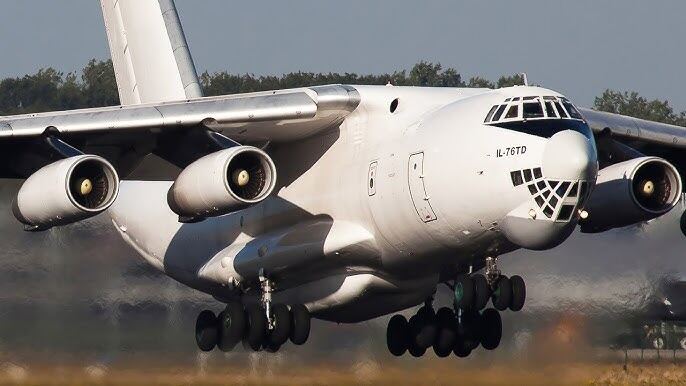
Freighter aircraft departing after loading an oversized out-of-gauge consignment
    24/7 Operations Desk · Active Now

    Out-of-Gauge · Loading-Led Planning

    Oversized Cargo Charter Australia: Will It Fit, and How Does It Load?

    Out-of-gauge movements are decided by apertures and loading method, not tonnage. Send dimensions and we will tell you which aircraft can genuinely take it, and what it will cost to get it to site.

    Already have an RFQ prepared? Email charters@aviall.com.au

    Dimensions
    Drive every decision
    Nose & ramp
    Loading options available
    Site-aware
    Road leg planned with it
    24/7
    Cargo charter desk

    What makes cargo oversized in aviation terms

    Oversized in air freight has a precise meaning, and it is not "big". A piece is out of gauge when it exceeds the dimensions that can be loaded, secured and carried on a given aircraft's main deck, most often because it will not pass through the cargo door aperture, or because it cannot be manoeuvred and turned inside the hold once through.

    That is why the same crate can be routine on one aircraft and impossible on another. A door aperture is a fixed rectangle, and the piece has to pass through it at an achievable angle. Height and width are usually the binding constraints on side-loading freighters, while length becomes the constraint that pushes a requirement towards nose-door loading, because a long item cannot be turned once inside.

    • Door aperture, height and width define what can enter at all
    • Internal manoeuvring, long items must be loaded in line, hence nose loading
    • Contour, the fuselage curves, so height limits vary across the deck width
    • Floor loading, a separate limit that can bind even when dimensions fit

    Loading methods, and what each one unlocks

    There are three practical ways an oversized piece gets onto an aircraft, and they form a cost ladder. Establishing which one you need is the single most valuable thing an early conversation achieves.

    How to measure a piece so we can answer in one pass

    Most delay in oversized quoting comes from incomplete measurement, not from availability. A dimension set that omits a protruding bracket or the skid it sits on can change the answer from feasible to impossible after a quote has already been issued.

    Measure the piece exactly as it will present at the aircraft: crated if it will be crated, on its skid or cradle if it has one, with every protrusion included. Then send it with a drawing or photograph, a drawing frequently answers loadability in one look.

    • Length, width and height at maximum extents, including brackets, bushings and lugs
    • Add the crate, skid, cradle or pallet, measure what flies
    • Weight, footprint and centre of gravity
    • Lifting and tie-down points, and whether the piece is wheeled, tracked or skidded
    • Whether it can be tilted, laid down, split, drained or partly stripped
    • Any handling restriction, orientation limits, shock or tilt sensitivity

    Before you commit: the three cheaper questions

    Oversized charter is the most expensive form of air freight, so an honest broker asks these first even though the smaller answer is the smaller invoice.

    Can the piece be split? Many items ship assembled purely out of habit, and a manufacturer's willingness to send two sections can turn an outsize charter into a conventional freighter movement. Does it need to fly at all? Where the deadline allows, sea freight plus a heavy road leg is dramatically cheaper. Does the whole shipment need to fly, or only the critical-path item, with the balance following by sea? That last compromise is extremely common and extremely effective.

    The Australian reality: apron, pavement and the road to site

    Oversized movements into Australia rarely fail at the aircraft. They fail at the ends. The receiving airport needs pavement classification for the loaded weight, apron space to manoeuvre and work the aircraft, and cranes or low loaders capable of taking the piece off. Not every field that can accept the aircraft can handle the cargo.

    Then the surface leg: an out-of-gauge piece on Australian roads needs a route survey, oversize permits, escorts and sometimes bridge or overhead line assessment. On remote mining, energy and infrastructure destinations that leg can exceed the flight in both time and cost, so we choose the gateway around it rather than after it.

    • Confirm receiving capability, crane capacity, low loaders, hardstand
    • Confirm pavement and apron adequacy for the loaded aircraft
    • Plan the road leg first, survey, permits, escorts, timing windows
    • Consider northern and western gateways where they shorten the surface distance

    Getting an oversized movement quoted

    Send dimensions and dates and we will come back with the aircraft that can genuinely accept the piece, the loading method, an indicative cost structure and the honest alternative if a cheaper one exists.

    Paste or upload your requirement (/submit-rfq?type=cargo) or email Charters@Aviall.com.au. Drawings, dimension schedules and existing RFQs are the fastest possible inputs.

    How we handle out-of-gauge movements

    Aperture-checked before pricing

    Every dimension set is checked against door apertures, deck contour and floor loading so the options you receive are real.

    Loading method specified

    You are told how the piece loads, side, nose or ramp, and what ground equipment and ramp time that requires.

    Cheaper alternatives named

    If splitting the piece, a smaller freighter, or sea plus heavy road meets your deadline for less, we say so and quote it.

    Both ends coordinated

    Gateway selection, receiving equipment, oversize permits and the road leg to site are planned with the flight, not after it.

    Live requirement

    Have a live cargo requirement?

    Send the six details below and our charter desk returns aircraft options, payload feasibility and an indicative wheels-up window. Partial information is enough to start. We will work with what you have while packing is finalised.

    Already have an RFQ? Email charters@aviall.com.au

    Send us

    • 01OriginAirport, city or plant
    • 02DestinationFinal airport or door address
    • 03PayloadGross weight and piece count
    • 04Ready dateWhen cargo is packed and released
    • 05CommodityIncluding any dangerous goods class
    • 06Packing listDimensions per piece, if available

    Urgent charter? Our ops desk is staffed 24/7.

    Aircraft options within the hour and a written quote with an indicative wheels-up window.

    Mission examples · Illustrative

    What this looks like in operation

    Representative mission profiles drawn from recurring work. Identifying details, operators, hospitals, routes, aircraft tail numbers, are intentionally omitted.

    Heavy lift · Project cargo

    Outsize mining component into a remote regional strip

    An ASX-listed resources operator faced a stalled processing line waiting on a single oversized component too large for any scheduled freighter. Aviall sourced an outsize main-deck nose-loader, completed pavement and load-spread checks at the regional destination, and coordinated road movement permits at both ends.

    Outcome

    Component on site inside 72 hours of first call; production line restart same week.

    Pharma · Cool chain

    Temperature-controlled biologics on a single-shipper aircraft

    A global health programme required a high-value biologics consignment moved on a controlled cool-chain into the Asia-Pacific without consolidation risk. Aviall chartered a freighter dedicated to the shipment, with active containers, written ramp-time targets, and continuous data-logger oversight.

    Outcome

    Zero temperature excursions; chain-of-custody documentation closed within 24 hours of landing.

    Out-of-gauge planning reference

    Binding constraint
    Door aperture height and width, then internal manoeuvring
    Long pieces
    Nose-door loading (747F), cannot be turned inside a hold
    Wheeled or tracked
    Ramp loading (AN-124 class), drive-on or winched
    Dense pieces
    Floor loading limits may bind before payload does
    Measure as flown
    Include crate, skid, cradle and every protrusion
    Destination check
    Crane capacity, low loaders, apron and pavement
    Surface leg
    Route survey, oversize permits, escorts
    Fastest input
    A drawing or dimensioned photograph

    FAQ

    Frequently Asked Questions

    A piece that exceeds what can be loaded and secured on a given aircraft's main deck, usually because it will not pass through the cargo door aperture, or cannot be manoeuvred inside the hold once through. The same piece can be routine on one aircraft and impossible on another, which is why aircraft selection follows the dimensions rather than the reverse.

    Not sure it will fit on an aircraft?

    Send dimensions, weight and dates, a drawing or photograph is ideal. We confirm loadability and loading method, and quote the cheapest aircraft that can genuinely carry it.

    Have a live requirement?

    Send us origin, destination, payload and ready date. We return aircraft options. Attach an existing RFQ, packing list or photos straight from your phone, partial detail is enough to start.

    Requirement

    Cargo

    AttachmentsPacking list, cargo dimensions, manifest, RFQ document, images or other supporting documentation. Files up to 20MB each, 10 max. PDF, Word, Excel, CSV, images or email files.

    Goes straight to our charter desk at Charters@Aviall.com.au. Submitting an RFQ does not confirm an aircraft.