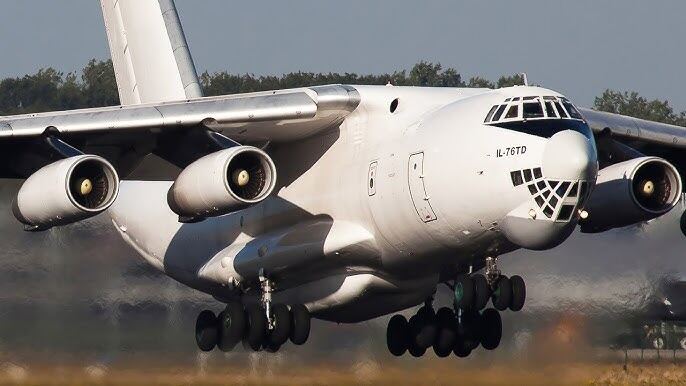
Freighter aircraft departing on a technology infrastructure cargo rotation
    24/7 Operations Desk · Active Now

    Educational Resource · Programme Logistics

    Hyperscale Data Centre Logistics

    At programme scale the question stops being how to move a shipment and becomes how to hold air capacity against a schedule that will change.

    Already have an RFQ prepared? Email charters@aviall.com.au

    Tranches
    Not single shipments
    Volume-led
    Aircraft selection
    Contingency
    Planned, not improvised
    24/7
    Charter desk

    What changes at hyperscale

    A single data hall movement is a freight problem. A hyperscale programme is a capacity problem. Equipment arrives from multiple origins, integrated racks from Taiwan, compute from North America and Southeast Asia, cooling plant from China and Europe, switchgear and UPS from Europe, with independent manufacturing releases and no shared schedule. The programme's constraint is rarely a single late shipment; it is the interaction between many partially late shipments and a fixed energisation and handover sequence.

    That changes what a charter desk is asked to do. Instead of pricing one aircraft, it is asked how much air capacity a programme needs across a quarter, which tranches genuinely require dedicated aircraft, which can ride consolidated airfreight, and how quickly capacity can be added when a release slips. Answering that well requires being told the programme, not just the shipment.

    Plan in tranches tied to installation capacity

    The practical unit of hyperscale air logistics is the tranche: a group of equipment that has to arrive together because it is installed together. A hall's worth of racks is useless without the power distribution and cooling loop that serve it, and delivering compute ahead of the mechanical and electrical fit-out produces expensive stored hardware and site congestion rather than progress.

    Tranche sizing should be set by what the site can receive and install per week, not by what fills an aircraft. A programme that can install two rack rows a week does not benefit from a 747F arriving with eight; it benefits from smaller, more frequent rotations that keep the installation crews continuously fed. Where installation capacity is high and manufacturing is the constraint, the logic inverts and larger single movements win.

    Once tranches are defined, capacity can be mapped against milestone dates and the aircraft type chosen per tranche rather than per programme.

    • Define tranches by installation dependency, not by shipment convenience
    • Size tranches against weekly site receiving and installation capacity
    • Sequence power and cooling ahead of, or alongside, compute
    • Attach each tranche to a named milestone so the cost of slippage is visible

    Volume, pallet positions and door height decide the aircraft

    Technology cargo is volumetric. Crated racks, CDUs, chillers and packaged electronics fill an aircraft's cubic capacity and pallet positions long before the payload limit is reached, so aircraft selection for a hyperscale tranche starts with volume and position count and then checks weight. Density only becomes decisive with transformers, UPS battery banks and switchgear, where floor loading per unit area binds first and is solved with shoring rather than a larger aircraft.

    Door aperture is the other constraint that changes aircraft. Crated racks are frequently close to the usable height at a main-deck pallet position, and tall cooling plant regularly exceeds it. Where a piece cannot be laid down, and many racks cannot be, or can only be with the manufacturer's written approval, the answer is a nose-loading 747F or a specialist ramp aircraft, not a bigger side-door type.

    How capacity is contracted

    There are three realistic structures. Ad-hoc charter prices each movement when it is needed and suits programmes with unpredictable releases; it is the most flexible and the most exposed to market rates and availability. A series or block arrangement fixes a number of rotations over a defined window at agreed terms and suits a programme with a known delivery profile. A standby or call-off arrangement holds an agreed response for urgent movements without committing to a fixed schedule.

    Most hyperscale programmes end up with a blend: a series for the predictable bulk of a build, ad-hoc for the tranches that were never forecastable, and a standby understanding for live-facility failures once the first halls are operational. Aircraft availability is a market condition, not a promise, nobody can guarantee a specific aircraft type or tail on a future date, and any commitment framed that way should be read carefully.

    Working through forwarders and OEM logistics teams

    At hyperscale, the charter desk is rarely the only party. A nominated freight forwarder or 4PL usually holds the customer relationship, an OEM logistics team controls release and packaging, and a construction manager controls site receiving. The air charter provider's job is to fit into that structure, price transparently on the forwarder's terms and not compete for the client relationship.

    Practically, that means quoting to the inputs a forwarder already holds, origin, destination, payload, dimensions, CBM, ready date, commodity, packing list, and returning aircraft options, feasibility and an indicative wheels-up window without demanding information the forwarder has not yet received from the OEM. Estimates are enough to start work.

    Australian gateways, biosecurity and the final leg

    For Australian programmes, gateway choice is a total-cost decision across both legs. Sydney has the deepest handling capability but a night curfew that can delay a late arrival to the next morning; Melbourne, Brisbane and Perth are curfew-free, which matters when a tranche must clear and reach site overnight ahead of an installation window. A gateway with a cheaper international sector and an expensive, slow domestic leg is not the cheaper gateway.

    Australian biosecurity applies to technology cargo like anything else. Timber packaging must be ISPM 15 treated and marked, and contamination or used equipment attracts closer inspection, issues that can cost more schedule than the air movement saved. Site delivery then has to be planned against real receiving capability: access hours, hardstand, vehicle type and the lifting arrangement, agreed with the site team before the international leg departs.

    Contingency is part of the plan, not a reaction

    Every large build eventually needs an unplanned movement: a damaged unit discovered at unpacking, a failed component in a commissioning hall, a supplier release that slipped past the point where scheduled capacity can recover it. Programmes that handle these well have decided in advance who can authorise an urgent charter, what commercial approval path applies, and which contacts the desk can act on out of hours.

    That preparation is what converts a two-day escalation into a two-hour one. It costs nothing to establish before it is needed, and it is close to impossible to assemble at 2am during an outage.

    What our desk does on programme work

    Programme capacity mapping

    Air capacity modelled across tranches and milestones rather than priced shipment by shipment.

    Aircraft selection per tranche

    Volume, pallet positions and door height assessed against the actual crate schedule.

    Series and ad-hoc structures

    Block rotations for predictable volumes, ad-hoc pricing for what could not be forecast.

    Forwarder-aligned quoting

    We quote to your inputs and your client relationship, without competing for it.

    Gateway and domestic leg planning

    Total landed cost across the international sector, clearance and the final leg to site.

    Escalation path

    A 24/7 desk with agreed authority and contacts in place before the urgent movement happens.

    Data centre & AI infrastructure

    Have a live technology shipment?

    Send us the requirement.

    Our charter desk works to the same inputs a forwarder or project logistics team already holds. Send the details below and we return suitable aircraft options, payload and volume feasibility, and an indicative wheels-up window. Estimates are enough to start while crating and release paperwork are finalised.

    Already have an RFQ?

    Email charters@aviall.com.au

    Send us

    • 01OriginAirport, factory, integrator or staging warehouse
    • 02DestinationArrival airport and final site address
    • 03PayloadGross weight, piece count, crated or uncrated
    • 04Dimensions / CBMPer crate: L x W x H, plus total volume
    • 05Ready dateWhen the equipment is crated and released
    • 06CommodityRacks, GPU nodes, UPS, switchgear, cooling plant
    • 07Packing listUpload with the RFQ, the fastest route to an answer

    Packing lists, drawings and crate schedules can be uploaded directly with the RFQ form, up to 10 files.

    Urgent charter? Our ops desk is staffed 24/7.

    Aircraft options within the hour and a written quote with an indicative wheels-up window.

    Mission examples · Illustrative

    What this looks like in operation

    Representative mission profiles drawn from recurring work. Identifying details, operators, hospitals, routes, aircraft tail numbers, are intentionally omitted.

    Heavy lift · Project cargo

    Outsize mining component into a remote regional strip

    An ASX-listed resources operator faced a stalled processing line waiting on a single oversized component too large for any scheduled freighter. Aviall sourced an outsize main-deck nose-loader, completed pavement and load-spread checks at the regional destination, and coordinated road movement permits at both ends.

    Outcome

    Component on site inside 72 hours of first call; production line restart same week.

    AOG · Time critical

    Replacement engine to a wide-body grounded overseas

    A major carrier had a wide-body grounded at a foreign hub, awaiting a replacement engine sitting in a domestic MRO. Aviall positioned a freighter to the MRO, coordinated dangerous goods documentation for the engine and stand, and held a flight-following bridge with the airline's tech ops cell door-to-door.

    Outcome

    Engine wheels-up inside 14 hours of release; aircraft returned to service the next operational day.

    Hyperscale air logistics, quick reference

    Planning unit
    Installation tranche, not shipment
    Binding constraint
    Volume and pallet positions, then weight
    Aircraft shortlist
    747-8F / 747-400F, 777F, A330F, 767F
    Contract structures
    Ad-hoc, series or block, standby call-off
    Australian gateways
    SYD, MEL, BNE, PER, CBR, ADL
    Common failure point
    Site receiving capability, not the air leg

    FAQ

    Frequently Asked Questions

    Less than most people expect, but at very specific moments. Most equipment moves by sea or consolidated airfreight. Dedicated aircraft usually matter for the first large tranche once a schedule has slipped, for outsize power and cooling plant, for recovery after a supplier delay, and for live-facility failures. Sizing it requires the milestone dates and the release profile, not a rate request.

    Planning air capacity for a large technology programme?

    Send origin, destination, payload, dimensions or CBM, ready date, commodity and packing list, or the tranche profile if you are still planning. We return aircraft options, feasibility and an indicative wheels-up window.

    Have a live requirement?

    Send us origin, destination, payload and ready date. We return aircraft options. Attach an existing RFQ, packing list or photos straight from your phone, partial detail is enough to start.

    Requirement

    Cargo

    AttachmentsPacking list, cargo dimensions, manifest, RFQ document, images or other supporting documentation. Files up to 20MB each, 10 max. PDF, Word, Excel, CSV, images or email files.

    Goes straight to our charter desk at Charters@Aviall.com.au. Submitting an RFQ does not confirm an aircraft.