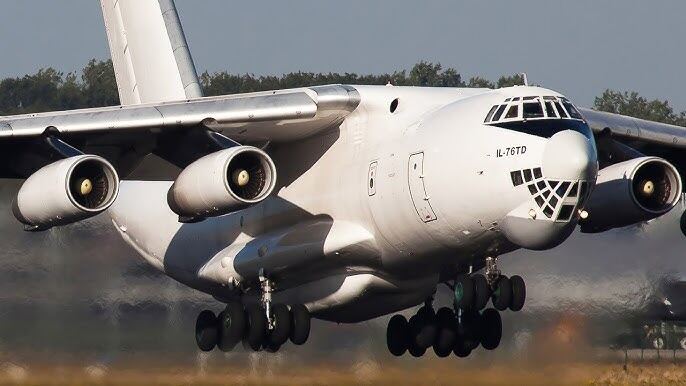
Freighter aircraft departing on a long-haul cargo sector
    24/7 Operations Desk · Active Now

    Corridor · Europe → Australia

    Europe to Australia Data Centre Equipment Charter

    The origin for much of the world's power and cooling plant, and the longest lane, where aircraft selection and routing genuinely change the answer.

    Already have an RFQ prepared? Email charters@aviall.com.au

    AMS · FRA · LGG · LUX · MXP
    Common departure points
    Out-of-gauge
    Nose-loading capability sourced
    Technical stop
    Routing modelled, not assumed
    24/7
    Charter desk

    What moves on the Europe–Australia lane

    Europe is less about compute and more about the physical plant a facility runs on. Medium and low voltage switchgear, transformers, UPS systems, static transfer switches, chillers, computer room air handlers, coolant distribution units and specialist mechanical assemblies are concentrated in European manufacturing, and Australian data centre programmes draw on them heavily.

    That changes the shape of the cargo. Compared with a rack tranche out of Asia, European infrastructure movements are more often heavy, dense, tall or genuinely out-of-gauge single pieces, a transformer, a switchgear line-up section, a packaged chiller. The binding constraint shifts from pallet position count toward door aperture, floor loading and centre of gravity.

    It also changes the commercial trigger. Power and cooling plant sits on the critical path for energisation and commissioning, so slippage does not delay a rack install. It delays the facility going live. That is why charter economics on this lane are frequently justified by programme cost rather than freight cost.

    Long-haul routing, technical stops and aircraft selection

    Europe to Australia is beyond the practical non-stop range of a fully loaded freighter, so a technical stop is normally part of the plan, typically in the Gulf or Southeast Asia. That stop is a routine fuel and crew consideration, not a handling event: the cargo remains loaded. Where a payload is lighter, a longer sector with fewer stops sometimes becomes viable, which is exactly the sort of trade-off worth modelling before committing.

    Aircraft selection is driven by the largest single piece far more than by total weight. A nose-loading 747F accepts long or tall items that will not pass a side door; an AN-124 handles genuinely oversized plant with onboard cranes and a ramp. Aviall is not an aircraft operator; we source across a wide operator base, including nose-loading and ramp-loading types, and shortlist on real availability.

    • Boeing 747-400F / 747-8F, nose loading for long or tall switchgear and chiller sections
    • Antonov AN-124, genuinely oversized or very heavy single pieces, ramp and onboard cranes
    • Boeing 777F, dense, heavy palletised infrastructure within side-door limits
    • Airbus A330-200F / 767F, right-sized loads and single-unit critical movements

    Dangerous goods, dimensions and loadability

    Two categories dominate the acceptance conversation. UPS battery strings and lithium modules require full declaration, UN numbers, watt-hour ratings, packing groups, state of charge conventions and net quantity per package, because those details decide which operators can accept the load and whether segregation reduces usable capacity. Chillers and cooling plant may carry refrigerant charges that are themselves regulated, and shipping a unit charged versus evacuated changes the classification entirely.

    On dimensions, we need each piece as it will present at the aircraft: crated length, width and height, gross weight, and where the lifting and support points are. For heavy items, distributed floor loading and any spreader or cradle requirement matter as much as the raw weight. A drawing or crate schedule at enquiry stage prevents a feasible-looking movement failing at the door.

    Timber crating bound for Australia must be treated and marked to ISPM 15. On heavy European plant, crates are often substantial timber structures, which makes this check more consequential than it first appears.

    Australian arrival, energisation windows and the leg to site

    Gateway choice follows the site and the crane, not the shortest flight. Heavy or oversized plant needs an arrival airport with appropriate handling equipment and an onward road route that can physically take the piece, which sometimes makes a slightly longer sector the faster overall answer.

    Because this equipment usually lands against a commissioning or energisation milestone, the arrival is planned backwards from the site's lifting window and access hours. Oversized road movements in Australia may require permits and escorts, and those are scheduled, not instant, so the domestic leg needs to be planned in parallel with the flight rather than after it.

    Aviall's role on this corridor

    Aviall Group arranges dedicated aircraft charter capacity. We are not the freight forwarder, the customs broker, the data centre builder, the equipment manufacturer or the aircraft operator, in Europe or in Australia.

    Most enquiries on this lane come from freight forwarders, EPC contractors and project logistics teams who already hold the origin and destination ground scope. We quote to them, provide the aircraft, loadability and dangerous goods detail needed to present the option credibly, and coordinate the air segment around the ground plan they control.

    What our desk handles on Europe–Australia movements

    Nose and ramp loading access

    Sourced across operators when a piece will not pass a side door.

    Loadability assessment

    Dimensions, floor loading, lift points and centre of gravity checked before capacity is held.

    Routing and technical stop modelling

    Payload versus stops compared instead of assuming one routing.

    DG acceptance screening

    Battery and refrigerant content assessed against operator acceptance.

    Oversized onward planning

    Gateway chosen for handling capability and a viable road route.

    ISPM 15 verification prompt

    Heavy timber crating checked at origin, not on arrival.

    Commissioning-date planning

    Movement scheduled backwards from the energisation window.

    Forwarder-friendly engagement

    Air movement only, or coordinated handling and the leg to site.

    Data centre & AI infrastructure

    Have a live technology shipment?

    Send us the requirement.

    Our charter desk works to the same inputs a forwarder or project logistics team already holds. Send the details below and we return suitable aircraft options, payload and volume feasibility, and an indicative wheels-up window. Estimates are enough to start while crating and release paperwork are finalised.

    Already have an RFQ?

    Email charters@aviall.com.au

    Send us

    • 01OriginAirport, factory, integrator or staging warehouse
    • 02DestinationArrival airport and final site address
    • 03PayloadGross weight, piece count, crated or uncrated
    • 04Dimensions / CBMPer crate: L x W x H, plus total volume
    • 05Ready dateWhen the equipment is crated and released
    • 06CommodityRacks, GPU nodes, UPS, switchgear, cooling plant
    • 07Packing listUpload with the RFQ, the fastest route to an answer

    Packing lists, drawings and crate schedules can be uploaded directly with the RFQ form, up to 10 files.

    Urgent charter? Our ops desk is staffed 24/7.

    Aircraft options within the hour and a written quote with an indicative wheels-up window.

    Europe to Australia, quick reference

    Common origins
    Amsterdam, Frankfurt, Liège, Luxembourg, Milan, Madrid, London
    Common destinations
    SYD, MEL, BNE, PER, DRW
    Typical routing
    Long haul with a technical stop, cargo remains loaded
    Typical cargo
    Switchgear, transformers, UPS, chillers, CRAH, mechanical plant
    Binding constraint
    Door aperture, piece height and floor loading before total weight
    Watch items
    Battery and refrigerant DG, ISPM 15 timber, oversized road permits
    Response time
    Aircraft options usually within the hour

    FAQ

    Frequently Asked Questions

    Usually yes for a loaded freighter, typically in the Gulf or Southeast Asia. It is a fuel and crew stop rather than a handling event, so the cargo stays loaded. On lighter payloads, routings with fewer stops can become viable, which is worth modelling before the aircraft is fixed.

    Shipping power or cooling plant from Europe to an Australian site?

    Send origin, destination, payload, dimensions or CBM, ready date, commodity and packing list. Our desk returns aircraft options, loadability feasibility and an indicative wheels-up window.

    Have a live requirement?

    Send us origin, destination, payload and ready date. We return aircraft options. Attach an existing RFQ, packing list or photos straight from your phone, partial detail is enough to start.

    Requirement

    Cargo

    AttachmentsPacking list, cargo dimensions, manifest, RFQ document, images or other supporting documentation. Files up to 20MB each, 10 max. PDF, Word, Excel, CSV, images or email files.

    Goes straight to our charter desk at Charters@Aviall.com.au. Submitting an RFQ does not confirm an aircraft.