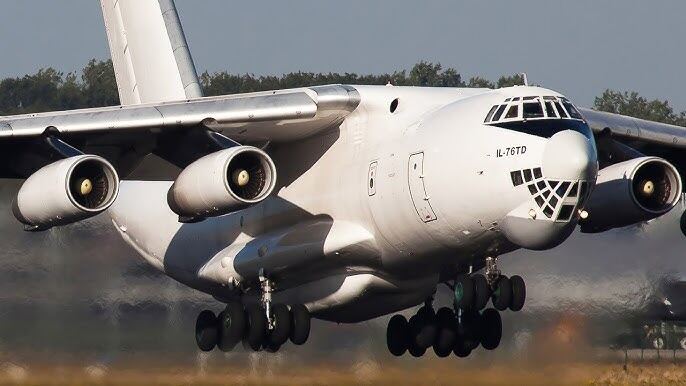
Freighter aircraft departing with oversized mechanical plant cargo
    24/7 Operations Desk · Active Now

    Educational Resource · Mechanical Plant

    Cooling System Air Freight to Australia

    Cooling plant is the bulkiest, most volume-hungry cargo in a data centre build, and increasingly the item that holds up commissioning.

    Already have an RFQ prepared? Email charters@aviall.com.au

    Volume
    Not weight limited
    Door fit
    Modelled before commitment
    Charged units
    Refrigerant DG assessed
    24/7
    Charter desk

    Why cooling equipment ends up on chartered aircraft

    Cooling capacity now sets the pace of data centre delivery almost as much as power does. Liquid cooling has moved from a specialist option to a requirement for dense AI halls, and the equipment involved, coolant distribution units, manifolds, pump skids, dry coolers and high-capacity chillers, comes from a comparatively small manufacturing base with long lead times and limited slack.

    That combination produces a familiar failure mode. The electrical works finish, the compute is on site or on the water, and the hall cannot be commissioned because a cooling module is still in production or in a container queue. At that point the cost of waiting is measured against a customer handover date, and the freight premium of a dedicated aircraft stops being the dominant number.

    The second driver is dimensional. Cooling plant is frequently too large, too tall or too awkward for scheduled airfreight capacity, so where air is required at all, a dedicated aircraft is often the only realistic route rather than a preference.

    This cargo fills an aircraft by volume, not weight

    A chilled water plant, air handling unit or dry cooler is a large, comparatively light assembly. A full cooling shipment will consume every pallet position and most of the usable height profile on a widebody freighter while sitting well below the aircraft's structural payload. Quoting on weight alone will systematically under-specify the aircraft.

    Because of that, the useful data at enquiry stage is dimensional: length, width and height per piece, gross weight per piece, and how many pieces there are. From that we can determine whether the shipment is volume-limited or weight-limited, whether the tallest piece clears the intended deck height, whether the largest piece passes the side door aperture or requires nose loading, and whether one aircraft or two rotations is the cheaper answer.

    Skid-mounted assemblies deserve particular attention. A pump or CDU skid concentrates weight over a small footprint and can exceed permissible floor loading per unit area unless it is spread across shoring or a dedicated pallet arrangement, a plan best made before the aircraft is committed, not on the ramp.

    • Per-piece length, width, height and gross weight, including any crate or shipping frame
    • Whether pieces are skid-mounted, crated or shipped on shipping frames with lifting points
    • Refrigerant or coolant charge status, charged, nitrogen-holding or dry
    • Any tilt, orientation or shock limitation specified by the manufacturer
    • Whether the unit can be partially disassembled for transport and recommissioned on site

    Charged units, refrigerants and dangerous goods

    Whether a unit ships charged is a decision with real consequences for air transport. Refrigerant gases are classified under IATA dangerous goods provisions, and the applicable UN number, class and quantity limits depend on the specific refrigerant and the charge. Some operators will not accept certain charges at all; others require documentation and packing that must be in place before capacity is confirmed.

    Many manufacturers can ship units nitrogen-charged or dry and commission on site, which simplifies acceptance considerably and often widens the operator shortlist. Where the unit must travel charged, that is workable, but it needs to be declared at enquiry stage so we shortlist only operators who can carry it, and so any segregation-driven loss of usable capacity is reflected in the original quote.

    Glycol, coolant and treatment chemicals shipped alongside the equipment have their own classifications, and they are frequently forgotten on the packing list until they surface at acceptance. Listing them with the primary equipment avoids a late reshuffle of the load plan.

    Aircraft matched to cooling plant

    Selection is driven by the largest single piece and the total cubic requirement. Aviall is not an aircraft operator; we source across a wide operator base and return the types genuinely available for your dates.

    • Boeing 747-8F and 747-400F, maximum volume, and nose loading for long or tall single assemblies
    • Boeing 777F, full-deck mechanical loads on Asia–Australia and long-haul lanes
    • Airbus A330-200F, a right-sized option for partial cooling packages
    • Boeing 767F, frequent rotations during a fit-out phase
    • Antonov AN-124 and other outsize types, assemblies that exceed commercial freighter door or floor limits

    Arrival, lifting and the leg to site

    Cooling plant is where site receiving capability matters most. A chiller or air handling unit arriving on a site without the crane capacity, hardstand or access hours to receive it becomes a storage problem rather than a delivery. Rooftop and plant-deck placements often have a lifting window booked days in advance, and missing it can cost more than the flight.

    We plan the arrival gateway, clearance sequence and onward leg around that lifting plan and around the installation order the mechanical contractor needs. Curfew-free gateways such as Melbourne, Brisbane and Perth can matter when an overnight clearance and move is required; Sydney's night curfew shapes arrival timing where the site is in New South Wales.

    What Aviall does on these movements

    Aviall Group arranges dedicated aircraft charter capacity for the air segment. We are not the mechanical contractor, the equipment manufacturer, the freight forwarder, the customs broker or the aircraft operator, and we do not present ourselves as any of those.

    In practice we work alongside the parties who hold those roles, most of this work reaches us through freight forwarders, project logistics teams and contractors, providing aircraft options, volumetric and floor-loading feasibility, dangerous goods acceptance guidance and the onward-leg plan needed to present the option credibly to an end client.

    What our desk plans on cooling movements

    Volumetric modelling

    Per-piece dimensions modelled into pallet positions, deck height and cubic utilisation.

    Door aperture check

    Whether the largest assembly loads through a side door or needs nose or ramp loading.

    Floor loading plans

    Skid-mounted units planned against permissible loading with shoring and load spreading.

    Refrigerant DG screening

    Charge status assessed against IATA provisions and operator acceptance before capacity is held.

    Aircraft options

    Shortlisted across a wide operator base on genuine availability for your dates.

    Lifting-window alignment

    Arrival timed to the crane or lifting slot rather than the earliest possible landing.

    Multi-rotation planning

    Where two smaller rotations beat one oversized aircraft on cost and availability.

    Forwarder-friendly engagement

    Air movement only, or coordinated collection, handling and the leg to site.

    Data centre & AI infrastructure

    Have a live technology shipment?

    Send us the requirement.

    Our charter desk works to the same inputs a forwarder or project logistics team already holds. Send the details below and we return suitable aircraft options, payload and volume feasibility, and an indicative wheels-up window. Estimates are enough to start while crating and release paperwork are finalised.

    Already have an RFQ?

    Email charters@aviall.com.au

    Send us

    • 01OriginAirport, factory, integrator or staging warehouse
    • 02DestinationArrival airport and final site address
    • 03PayloadGross weight, piece count, crated or uncrated
    • 04Dimensions / CBMPer crate: L x W x H, plus total volume
    • 05Ready dateWhen the equipment is crated and released
    • 06CommodityRacks, GPU nodes, UPS, switchgear, cooling plant
    • 07Packing listUpload with the RFQ, the fastest route to an answer

    Packing lists, drawings and crate schedules can be uploaded directly with the RFQ form, up to 10 files.

    Urgent charter? Our ops desk is staffed 24/7.

    Aircraft options within the hour and a written quote with an indicative wheels-up window.

    Cooling equipment air freight, quick reference

    Typical cargo
    Chillers, CDUs, CRAC and CRAH units, dry coolers, pump skids, manifolds
    Binding constraint
    Cubic volume, deck height and door aperture
    Secondary constraint
    Floor loading under skid-mounted units
    DG considerations
    Refrigerant charge, glycol and treatment chemicals
    Aircraft categories
    747F, 777F, A330F, 767F, AN-124 and outsize types
    Australian gateways
    SYD, MEL, BNE, PER, CBR, ADL, DRW
    Response time
    Aircraft options usually within the hour

    FAQ

    Frequently Asked Questions

    Frequently yes, subject to its dimensions and refrigerant charge. The deciding factors are whether the largest piece clears the aircraft's door aperture and deck height, whether the skid weight can be spread within permissible floor loading, and whether the refrigerant charge is acceptable to the operator. Shipping nitrogen-charged or dry and commissioning on site usually widens the options considerably.

    Cooling plant holding up a commissioning date?

    Send origin, destination, payload, per-piece dimensions or CBM, ready date, commodity and packing list. We will confirm aircraft fit and return options with an indicative wheels-up window.

    Have a live requirement?

    Send us origin, destination, payload and ready date. We return aircraft options. Attach an existing RFQ, packing list or photos straight from your phone, partial detail is enough to start.

    Requirement

    Cargo

    AttachmentsPacking list, cargo dimensions, manifest, RFQ document, images or other supporting documentation. Files up to 20MB each, 10 max. PDF, Word, Excel, CSV, images or email files.

    Goes straight to our charter desk at Charters@Aviall.com.au. Submitting an RFQ does not confirm an aircraft.