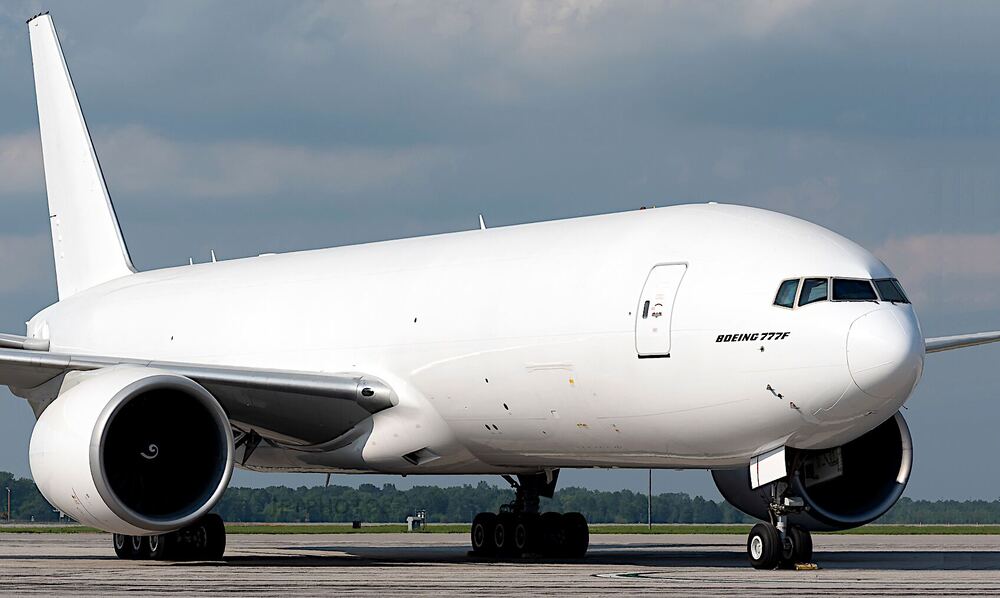
Widebody freighter loading crated technology cargo for a long-haul sector
    24/7 Operations Desk · Active Now

    Corridor · Taiwan → Australia

    Taiwan to Australia Data Centre Equipment Charter

    The origin that matters most for AI compute, and a lane where capacity tightens exactly when deployment schedules do.

    Already have an RFQ prepared? Email charters@aviall.com.au

    TPE + KHH
    Primary departure points
    ~9 hrs
    Typical sector to east coast
    Volume
    Usually the binding limit
    24/7
    Charter desk

    Why this corridor carries so much Australian data centre cargo

    Taiwan sits at the centre of the server and AI compute supply chain. A very large share of the world's rack-scale systems, GPU platforms and integrated compute nodes are assembled, integrated and tested there before shipping, which makes Taipei and Kaohsiung the practical origin for a substantial part of Australian data centre equipment inbound.

    That concentration creates a specific commercial dynamic. When AI hardware allocation releases, a great many buyers need capacity out of the same island in the same weeks, and scheduled airfreight capacity on Asia–Australia routings absorbs that unevenly. Charter demand on this lane is therefore lumpy and tends to spike precisely when the schedule pressure is highest.

    The other feature of the corridor is integration. Equipment shipped from Taiwan is often already built into racks, tested as a system and expected to arrive ready to install. That raises the value per cubic metre, increases the sensitivity to handling, and makes splitting a tranche across carriers and transhipment points considerably less attractive.

    Lane realities: distance, sectors and aircraft

    Taipei to the Australian east coast is a long-haul sector but well within widebody freighter range without technical stops. Perth and Darwin sit shorter; Melbourne, Sydney and Brisbane are the usual destinations for technology programmes. Sector time is measured in hours, so the schedule is shaped by release, documentation, slots and clearance rather than flight duration.

    Aircraft selection follows the crate list. Integrated rack tranches are volume-dominated, so pallet position count, deck height and door aperture normally decide the type well before payload does. Aviall is not an aircraft operator; we source across a wide operator base and shortlist genuine availability for your dates.

    • Boeing 777F, the common widebody choice for full-deck rack and compute tranches on this lane
    • Boeing 747-8F and 747-400F, maximum volume, plus nose loading for tall or long single pieces
    • Airbus A330-200F, right-sized where a 777F exceeds the tranche requirement
    • Boeing 767F, efficient for frequent smaller rotations across a deployment phase
    • Narrowbody freighters, single critical units and urgent partial loads

    Documentation, dangerous goods and origin release

    The recurring constraint on this corridor is not aircraft availability. It is export release and dangerous goods paperwork. Integrated compute systems frequently contain lithium cells, and whether those cells are installed in equipment or packed alongside changes the classification, packing instruction and which operators can accept the load.

    Declaring UN numbers, watt-hour ratings, packing groups and net quantities per package at enquiry stage means we shortlist only operators who can genuinely carry the shipment as packed. It also means any segregation-driven reduction in usable capacity is reflected in the original quote rather than surfacing at acceptance.

    Packaging is the second recurring item. Timber crating bound for Australia must be treated and marked to ISPM 15 and free of bark, soil and contamination. Verifying that at origin is far cheaper than remediating it in an Australian bonded facility after the aircraft has landed.

    Australian arrival, gateways and the leg to site

    Sydney handles the largest share of technology inbound but operates under a night curfew that shapes arrival timing. Melbourne, Brisbane and Perth operate without a curfew, which matters when a tranche must clear and reach site overnight ahead of an installation window. Choosing the gateway around the site and the install sequence often saves more time than any change to the flight.

    The last leg is where schedules are most often lost. Australian data centre sites frequently have restricted access hours, limited hardstand, specific lifting requirements and an installation order that only accepts equipment in sequence. We plan the domestic leg against the site's real receiving capability and the sequence the installation team needs.

    Programme capacity rather than repeated spot buying

    For phased deployments drawing repeatedly from Taiwanese integration facilities, buying spot capacity under pressure each time is usually the most expensive way to run the lane. Where a programme has an approximate equipment pipeline, capacity can be planned as a series of rotations aligned to manufacturing releases and site milestones.

    That planning does not require certainty. Approximate tranche weights, volumes and a milestone calendar are enough to model the aircraft requirement, identify where the schedule is fragile, and pre-agree an escalation path for the movements that will inevitably become urgent.

    Aviall's role on this lane

    Aviall Group arranges dedicated aircraft charter capacity. We are not the freight forwarder, the customs broker, the integrator, the hardware manufacturer or the aircraft operator, in Taiwan or in Australia.

    Most enquiries on this corridor come from freight forwarders and project logistics teams who already hold the origin and destination ground scope. We quote to them, provide the aircraft, volumetric and dangerous goods detail needed to present the option credibly, and coordinate the air segment around the ground plan they control.

    What our desk handles on Taiwan–Australia movements

    Aircraft options, not one quote

    Shortlisted across a wide operator base on real availability for your dates.

    Volumetric feasibility

    Crate list modelled into pallet positions, deck height and door aperture.

    DG acceptance screening

    Lithium content assessed against operator acceptance before capacity is held.

    ISPM 15 verification prompt

    Packaging compliance flagged at origin, not discovered on arrival.

    Gateway and curfew planning

    Arrival timed around curfews, clearance and the installation window.

    Site delivery sequencing

    Onward leg matched to access hours, lifting capability and install order.

    Programme rotations

    Capacity planned across a deployment phase rather than bought under pressure.

    Forwarder-friendly engagement

    Air movement only, or coordinated collection, handling and the leg to site.

    Data centre & AI infrastructure

    Have a live technology shipment?

    Send us the requirement.

    Our charter desk works to the same inputs a forwarder or project logistics team already holds. Send the details below and we return suitable aircraft options, payload and volume feasibility, and an indicative wheels-up window. Estimates are enough to start while crating and release paperwork are finalised.

    Already have an RFQ?

    Email charters@aviall.com.au

    Send us

    • 01OriginAirport, factory, integrator or staging warehouse
    • 02DestinationArrival airport and final site address
    • 03PayloadGross weight, piece count, crated or uncrated
    • 04Dimensions / CBMPer crate: L x W x H, plus total volume
    • 05Ready dateWhen the equipment is crated and released
    • 06CommodityRacks, GPU nodes, UPS, switchgear, cooling plant
    • 07Packing listUpload with the RFQ, the fastest route to an answer

    Packing lists, drawings and crate schedules can be uploaded directly with the RFQ form, up to 10 files.

    Urgent charter? Our ops desk is staffed 24/7.

    Aircraft options within the hour and a written quote with an indicative wheels-up window.

    Taiwan to Australia, quick reference

    Common origins
    Taipei (TPE), Kaohsiung (KHH)
    Common destinations
    SYD, MEL, BNE, PER
    Typical sector
    Long-haul, no technical stop required on widebody freighters
    Typical cargo
    Integrated racks, GPU compute, networking, tested systems
    Binding constraint
    Volume, pallet positions and deck height before weight
    Watch items
    Lithium DG declaration, ISPM 15 timber compliance
    Response time
    Aircraft options usually within the hour

    FAQ

    Frequently Asked Questions

    The sector itself is a matter of hours for a widebody freighter, with no technical stop normally required to the east coast. The realistic end-to-end timeline is driven by export release, dangerous goods documentation, slot and permit availability, and arrival clearance, which is why a complete enquiry with a packing list accelerates things far more than any routing change.

    Moving compute out of Taiwan against a fixed date?

    Send origin, destination, payload, dimensions or CBM, ready date, commodity and packing list. Our desk returns aircraft options, feasibility and an indicative wheels-up window.

    Have a live requirement?

    Send us origin, destination, payload and ready date. We return aircraft options. Attach an existing RFQ, packing list or photos straight from your phone, partial detail is enough to start.

    Requirement

    Cargo

    AttachmentsPacking list, cargo dimensions, manifest, RFQ document, images or other supporting documentation. Files up to 20MB each, 10 max. PDF, Word, Excel, CSV, images or email files.

    Goes straight to our charter desk at Charters@Aviall.com.au. Submitting an RFQ does not confirm an aircraft.