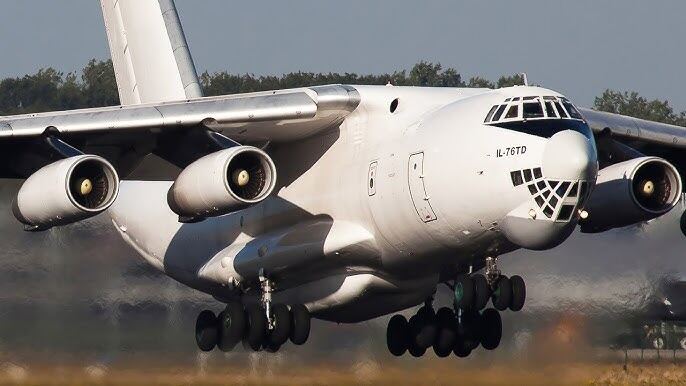
Freighter aircraft departing on a long-haul industrial cargo charter
    24/7 Operations Desk · Active Now

    Corridor · China → Australia

    China to Australia Data Centre Equipment Charter

    The corridor that supplies the physical plant of an Australian data centre, bulky, dense and rarely a good fit for scheduled capacity.

    Already have an RFQ prepared? Email charters@aviall.com.au

    Multi-hub
    PVG, SZX, CAN, HKG and more
    Bulk plant
    Volume-led planning
    DG aware
    Battery and refrigerant
    24/7
    Charter desk

    What moves on this corridor

    Where Taiwan supplies much of the compute, Chinese manufacturing supplies a large share of the physical infrastructure that surrounds it: cooling plant, CRAH and CRAC units, chillers, busbar and containment systems, switchgear, UPS cabinets, battery modules, cabling, containerised modules and rack enclosures.

    That cargo profile is different in kind. It is bulkier, heavier per piece, more likely to be out of gauge, and much more likely to include dangerous goods in the form of refrigerant charges or battery content. It is also the equipment class most exposed to schedule risk, because it is usually ordered against a construction programme that has already been compressed by power and grid connection timing.

    Charter enters this lane for two reasons: pieces that simply do not fit scheduled airfreight capacity, and construction milestones that have moved beyond what ocean freight transit and port dwell can support.

    Departure points and lane characteristics

    Enquiries on this corridor originate across several manufacturing regions, so the practical departure airport depends on where the equipment is built and where it can be trucked economically. Shanghai, Shenzhen, Guangzhou, Hong Kong and other regional gateways all feature, and freighter availability differs meaningfully between them.

    Sector distances to Australia are long-haul but comfortably within widebody freighter capability. Perth and Darwin sit shorter than the east coast, and where an equipment package is destined for Western Australia, a Perth arrival with a domestic leg often beats an east coast entry.

    Because airport capability varies, the origin airport is part of the aircraft decision rather than a given. A large outsize piece may need a specific airport with the handling equipment and ramp access to load it, and identifying that early avoids planning a movement around an airport that cannot execute it.

    • Where the equipment is manufactured and what road access exists to which airports
    • The dimensions and weight of the largest single piece, including its shipping frame
    • Whether cooling units ship charged, nitrogen-holding or dry
    • Battery content by UN number and watt-hour rating, where UPS or storage is included
    • Whether the package must move as one shipment or can be split across rotations

    Dense and out-of-gauge plant: the planning that matters

    This corridor produces more out-of-gauge and floor-loading challenges than any other in the data centre supply chain. A switchgear section may be too long for a side door; a transformer or UPS bank may exceed permissible floor loading over its footprint; a chiller may consume the full usable deck height.

    The answers are engineering answers: nose-loading aircraft for long pieces, ramp-loading outsize types for anything beyond commercial freighter apertures, and shoring or spreader arrangements to distribute concentrated mass. All of them need per-piece dimensions and weights, and all of them affect which aircraft is appropriate, which is why we ask for the piece list before quoting rather than after.

    Partial disassembly is worth exploring on this cargo. Bringing a piece within the envelope of a widely available commercial freighter is frequently cheaper than chartering an outsize aircraft, provided the manufacturer supports disassembly and recommissioning at site.

    Dangerous goods on infrastructure shipments

    Two dangerous goods categories dominate this lane. The first is refrigerant in charged cooling equipment, classified under IATA provisions with requirements that depend on the specific gas and the charge. Shipping units nitrogen-charged or dry, where the manufacturer permits it, usually widens the operator shortlist considerably.

    The second is battery content in UPS systems, battery energy storage modules and their accessories. Classification depends on chemistry, watt-hour rating, net quantity and whether cells are installed in equipment or shipped standalone, and operator acceptance is not universal.

    Glycol, coolant and treatment chemicals shipped alongside the plant have their own classifications and are frequently omitted from the initial packing list. Declaring everything at enquiry stage prevents a late reshuffle of the load plan at the acceptance desk.

    Australian arrival, biosecurity and site delivery

    Timber packaging must be treated and marked to ISPM 15 and free of bark, soil and contamination. On heavy plant shipped in timber frames this is a genuine and frequent point of failure, and non-compliant packaging can be held, treated or destroyed at the importer's cost after arrival.

    Gateway choice should follow the site and the lifting plan. Melbourne, Brisbane and Perth operate without a night curfew, useful when plant must clear and move overnight; Sydney's curfew shapes arrival timing for New South Wales sites. Heavy plant also needs the receiving site to have the crane capacity, hardstand and access hours to take it, and we plan the onward leg against that reality rather than against the fastest route from the airport.

    Aviall's role

    Aviall Group arranges dedicated aircraft charter capacity. We are not the freight forwarder, the customs broker, the manufacturer, the mechanical or electrical contractor, or the aircraft operator, in China or in Australia.

    Most work on this corridor reaches us through forwarders and project logistics teams who hold the origin trucking, export formalities and destination clearance. We provide the aircraft options, volumetric and floor-loading feasibility, dangerous goods acceptance guidance and the onward-leg plan, and we quote to the party engaging us.

    What our desk handles on China–Australia movements

    Origin airport selection

    Departure point chosen for freighter availability and handling capability, not just proximity.

    Out-of-gauge assessment

    Largest piece checked against door apertures, deck height and ramp-loading requirements.

    Floor loading engineering

    Dense plant planned with shoring and load spreading before the aircraft is committed.

    Refrigerant and battery DG

    Charge status and battery content screened against operator acceptance early.

    Disassembly options

    Where partial disassembly brings a piece within a cheaper, more available aircraft.

    ISPM 15 prompting

    Timber packaging compliance flagged before departure, not on arrival.

    Gateway and lifting alignment

    Arrival timed to the crane window and the site's receiving capability.

    Multi-rotation programmes

    Capacity planned across a construction phase against milestone dates.

    Data centre & AI infrastructure

    Have a live technology shipment?

    Send us the requirement.

    Our charter desk works to the same inputs a forwarder or project logistics team already holds. Send the details below and we return suitable aircraft options, payload and volume feasibility, and an indicative wheels-up window. Estimates are enough to start while crating and release paperwork are finalised.

    Already have an RFQ?

    Email charters@aviall.com.au

    Send us

    • 01OriginAirport, factory, integrator or staging warehouse
    • 02DestinationArrival airport and final site address
    • 03PayloadGross weight, piece count, crated or uncrated
    • 04Dimensions / CBMPer crate: L x W x H, plus total volume
    • 05Ready dateWhen the equipment is crated and released
    • 06CommodityRacks, GPU nodes, UPS, switchgear, cooling plant
    • 07Packing listUpload with the RFQ, the fastest route to an answer

    Packing lists, drawings and crate schedules can be uploaded directly with the RFQ form, up to 10 files.

    Urgent charter? Our ops desk is staffed 24/7.

    Aircraft options within the hour and a written quote with an indicative wheels-up window.

    China to Australia, quick reference

    Common origins
    Shanghai, Shenzhen, Guangzhou, Hong Kong and regional hubs
    Common destinations
    SYD, MEL, BNE, PER, DRW
    Typical cargo
    Cooling plant, UPS, switchgear, busbar, enclosures, cabling
    Binding constraints
    Door aperture, deck height, floor loading
    DG watch items
    Refrigerant charge, lithium and lead-acid batteries, glycol
    Biosecurity
    ISPM 15 treated and marked timber required
    Response time
    Aircraft options usually within the hour

    FAQ

    Frequently Asked Questions

    It depends on where the equipment is manufactured and which airports can economically be reached by road, along with freighter availability and handling capability at each. Shanghai, Shenzhen, Guangzhou and Hong Kong all feature regularly. For an outsize piece the origin airport is part of the aircraft decision, because not every airport can load it.

    Infrastructure equipment holding up a build?

    Send origin, destination, payload, per-piece dimensions or CBM, ready date, commodity and packing list. We will confirm feasibility and return aircraft options.

    Have a live requirement?

    Send us origin, destination, payload and ready date. We return aircraft options. Attach an existing RFQ, packing list or photos straight from your phone, partial detail is enough to start.

    Requirement

    Cargo

    AttachmentsPacking list, cargo dimensions, manifest, RFQ document, images or other supporting documentation. Files up to 20MB each, 10 max. PDF, Word, Excel, CSV, images or email files.

    Goes straight to our charter desk at Charters@Aviall.com.au. Submitting an RFQ does not confirm an aircraft.