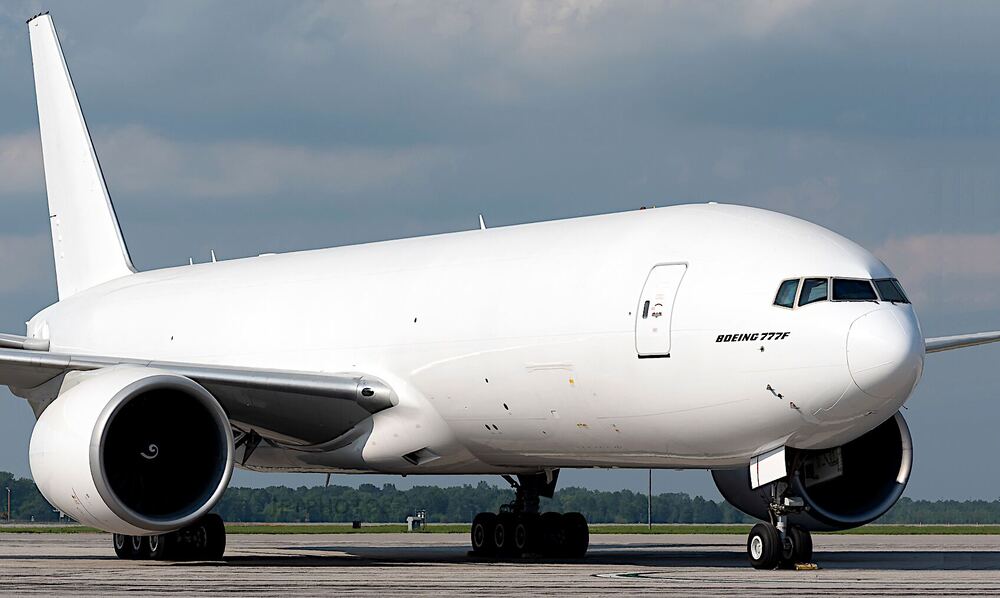
Widebody freighter aircraft prepared for a trans-Pacific technology charter
    24/7 Operations Desk · Active Now

    Corridor · USA → Australia

    USA to Australia Data Centre Equipment Charter

    A long trans-Pacific sector where routing, fuel stops and export documentation shape the plan as much as the aircraft does.

    Already have an RFQ prepared? Email charters@aviall.com.au

    Trans-Pacific
    Routing planned properly
    West or east
    US departure options
    Compliance
    Export controls respected
    24/7
    Charter desk

    Why equipment comes from the United States

    US-origin data centre shipments to Australia typically fall into a few categories: hardware from US integration and configuration facilities, systems held in US distribution for regional supply, specialist power and network equipment manufactured domestically, and critical spares drawn from an existing US-based inventory pool when nothing suitable exists in the region.

    The commercial trigger is often different from Asian corridors. On this lane the equipment frequently already exists and is available immediately, the question is purely how fast it can be moved and whether the tranche can travel intact. That makes the corridor unusually common for recovery movements: replacing a failed unit, or re-supplying a deployment after a delivery elsewhere failed.

    The sector itself: routing and technical stops

    This is one of the longer freighter movements in commercial aviation, and routing is a real planning variable rather than a formality. West coast departures to the Australian east coast can be flown by widebody freighters within range, while east coast or midwest origins usually involve either a domestic positioning leg or a technical stop, most often through the Pacific.

    Each stop adds time, handling exposure and cost, and on high-value technology cargo the handling exposure matters as much as the hours. Part of our job on this lane is minimising stops where possible and, where a stop is unavoidable, planning the ramp handling and security at that stop rather than leaving it to local convenience.

    Payload also interacts with range on long sectors. A freighter operating a long leg may carry less than its maximum structural payload because of fuel requirements, so the achievable payload on this corridor can differ from the same aircraft's figure on a shorter Asian sector. We model that explicitly rather than quoting a nominal capacity.

    • Departure gateway options and whether a domestic positioning leg is cheaper than a longer sector
    • Whether a technical stop is required, and where the handling exposure sits if so
    • Range-limited payload on the specific routing, not the aircraft's nominal maximum
    • Crew duty limitations and slot availability at both ends
    • Whether the tranche must arrive complete or can move across two rotations

    Export documentation and controls

    Some high-performance computing hardware, networking equipment and associated components are subject to US export control regimes, and the responsibility for classification, licensing and compliance sits with the exporter and their customs broker. This is not a formality to be resolved at the airport, and it is the most common reason a US-origin technology charter slips.

    Our practical requirement is simple: we need to know at enquiry stage whether the shipment is subject to controls and whether the necessary authorisations are in place or in progress. That informs routing, particularly whether a technical stop in a given jurisdiction is appropriate, and it informs how realistic a departure window is.

    We do not act as the exporter, the customs broker or the compliance authority, and we will not proceed on the assumption that documentation will catch up with an aircraft.

    Aircraft options on the corridor

    Aircraft selection follows the piece list and the routing together. Aviall is not an aircraft operator; we source across a wide operator base and shortlist what is genuinely available for your dates and origin.

    • Boeing 777F, strong range and payload combination for trans-Pacific technology tranches
    • Boeing 747-8F and 747-400F, maximum volume, with nose loading for long or tall pieces
    • Boeing 767F, viable on shorter routings and where the tranche is modest
    • Airbus A330-200F, right-sized loads where a widebody is warranted but a 777F is not
    • Business jet and narrowbody lift, a single critical unit against a same-week requirement

    Australian arrival and delivery to site

    Trans-Pacific arrivals commonly route into Sydney, Melbourne, Brisbane or Perth. Sydney's night curfew constrains late arrivals; Melbourne, Brisbane and Perth operate without one, which is useful when equipment must clear and move overnight ahead of an installation or maintenance window.

    As on every technology lane, the last leg is where hours are most easily lost. Site access hours, escorted entry, hardstand, lifting capability and the installation sequence all determine when the equipment can actually be received. We plan the domestic leg against those constraints and against the sequence the installation team requires, and we agree the clearance and release plan with your broker before departure.

    Aviall's role on this lane

    Aviall Group arranges dedicated aircraft charter capacity. We are not the freight forwarder, the customs broker, the exporter of record, the hardware manufacturer or the aircraft operator.

    On US-origin movements our contribution is the air segment and the planning around it: routing and technical stop strategy, range-adjusted payload feasibility, operator shortlisting on genuine availability, dangerous goods acceptance screening, and coordination with the broker and site team so the aircraft lands into a working plan.

    What our desk handles on USA–Australia movements

    Routing strategy

    Departure gateway, positioning legs and technical stops assessed on time, cost and exposure.

    Range-adjusted payload

    Achievable payload modelled for the actual routing, not the nominal aircraft figure.

    Aircraft options

    Shortlisted across a wide operator base on real availability for your dates.

    Export control awareness

    Documentation status confirmed before a departure window is treated as real.

    DG acceptance screening

    Battery content checked against operator acceptance before capacity is held.

    Transit stop handling

    Ramp handling and security planned at any technical stop, not left to chance.

    Curfew-aware arrival

    Gateway and timing chosen around curfews and the installation window.

    Site delivery sequencing

    Onward leg matched to access hours, lifting capability and install order.

    Data centre & AI infrastructure

    Have a live technology shipment?

    Send us the requirement.

    Our charter desk works to the same inputs a forwarder or project logistics team already holds. Send the details below and we return suitable aircraft options, payload and volume feasibility, and an indicative wheels-up window. Estimates are enough to start while crating and release paperwork are finalised.

    Already have an RFQ?

    Email charters@aviall.com.au

    Send us

    • 01OriginAirport, factory, integrator or staging warehouse
    • 02DestinationArrival airport and final site address
    • 03PayloadGross weight, piece count, crated or uncrated
    • 04Dimensions / CBMPer crate: L x W x H, plus total volume
    • 05Ready dateWhen the equipment is crated and released
    • 06CommodityRacks, GPU nodes, UPS, switchgear, cooling plant
    • 07Packing listUpload with the RFQ, the fastest route to an answer

    Packing lists, drawings and crate schedules can be uploaded directly with the RFQ form, up to 10 files.

    Urgent charter? Our ops desk is staffed 24/7.

    Aircraft options within the hour and a written quote with an indicative wheels-up window.

    USA to Australia, quick reference

    Common origins
    US west coast gateways, plus east coast and midwest with positioning
    Common destinations
    SYD, MEL, BNE, PER
    Sector characteristics
    Long-haul; technical stop possible depending on origin and payload
    Typical cargo
    Compute, networking, specialist power equipment, critical spares
    Compliance watch item
    US export controls on high-performance hardware
    Payload note
    Range requirements can reduce achievable payload on long routings
    Response time
    Aircraft options usually within the hour

    FAQ

    Frequently Asked Questions

    From west coast gateways to the Australian east coast, widebody freighters can commonly operate the sector directly, subject to payload. From east coast or midwest origins a positioning leg or technical stop is usually involved. We assess whether a domestic positioning leg or a longer sector with a stop is the better answer for your specific load.

    Moving US-origin hardware into Australia?

    Send origin, destination, payload, dimensions or CBM, ready date, commodity and packing list. We will confirm routing feasibility and return aircraft options.

    Have a live requirement?

    Send us origin, destination, payload and ready date. We return aircraft options. Attach an existing RFQ, packing list or photos straight from your phone, partial detail is enough to start.

    Requirement

    Cargo

    AttachmentsPacking list, cargo dimensions, manifest, RFQ document, images or other supporting documentation. Files up to 20MB each, 10 max. PDF, Word, Excel, CSV, images or email files.

    Goes straight to our charter desk at Charters@Aviall.com.au. Submitting an RFQ does not confirm an aircraft.