The 747 freighter and the 777F are the two aircraft most often shortlisted for a serious widebody charter, and they are not interchangeable. The 747 offers more deck, more payload and, on nose-door variants, a loading method the 777F cannot match. The 777F offers markedly better fuel economy and, on many lanes, better availability. Choosing between them is a per-mission decision.
Payload
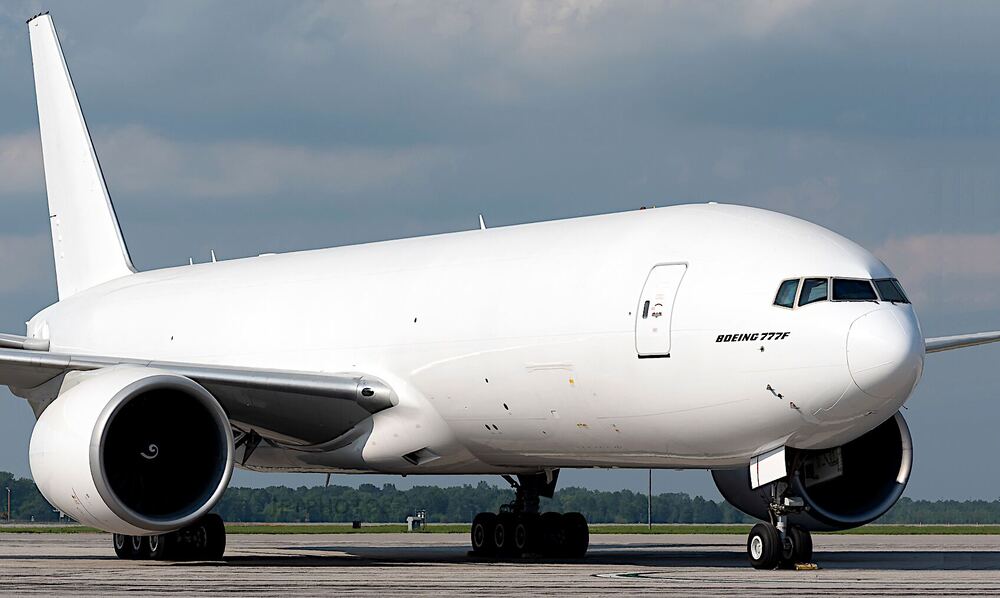
The 777F sits at roughly 100 tonnes. The 747-400F is in the low 110-tonne class and the 747-8F in the mid-130-tonne class. If your consignment is under about 100 tonnes and fits within a side door, the 777F is in play and will usually be the cheaper aircraft to operate.
Volume and density
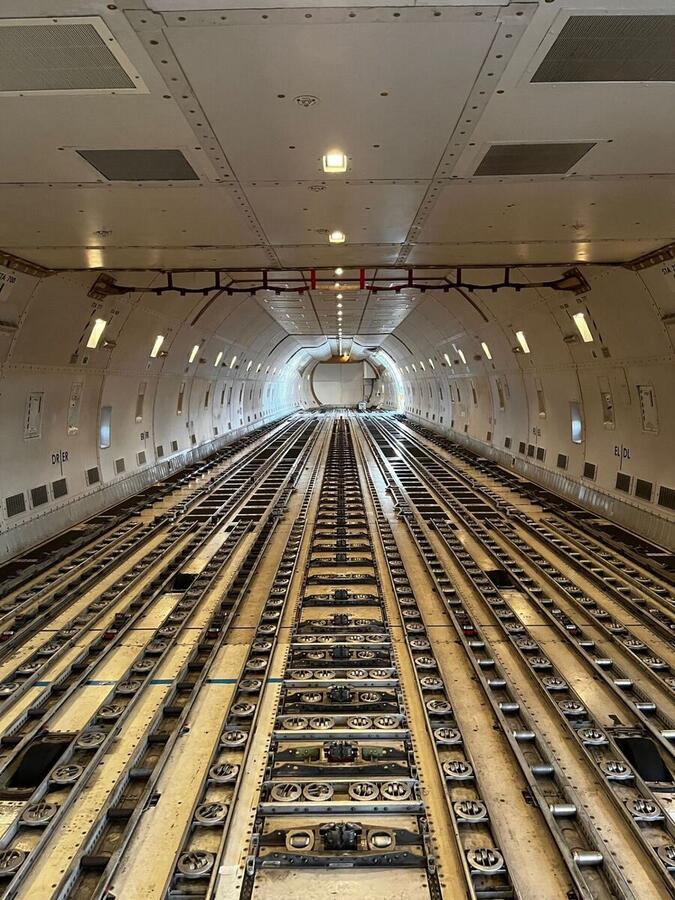
Payload is only half the story. Many consignments, e-commerce, humanitarian relief supplies, insulation, packaging, light industrial goods, reach the aircraft's volume limit long before its weight limit. The 747 family carries considerably more main-deck volume than the 777F, so for low-density cargo it can move materially more in one rotation even where the weight figures look similar. Density, measured as kilograms per cubic metre, is the number that decides this and it is one of the first things our desk calculates.
Loading access, the decisive difference
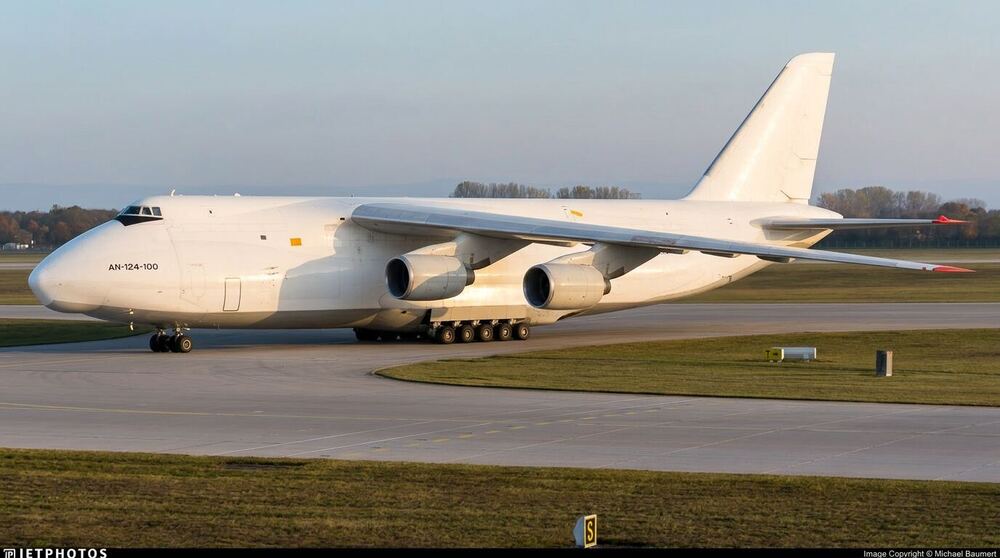
The 777F loads through a large side cargo door. Nose-door 747 freighters load on the centreline through the hinged nose, which allows long pieces to be driven straight in. If you have a single piece whose length exceeds what can be manoeuvred through a side door, the decision is made for you: it is a nose-loading 747, or it is an An-124 with ramp access. Not every 747 freighter has an operable nose door, so this must be specified deliberately.
Efficiency and cost
Two engines versus four is a large difference in fuel burn per hour. On any mission where both aircraft can do the job, the 777F is normally the lower-cost option. The 747 justifies its higher hourly cost when it removes a second rotation, when its deck volume is genuinely used, or when nose loading is required. The comparison that matters is total mission cost, not hourly rate. See how cargo charter pricing is built.
Range with payload
Both are long-haul capable, and both trade payload for range. At heavy loads over very long sectors either may require a technical stop; the specific answer depends on the routing, the weight and the uplift stations, and is calculated per mission rather than read from a brochure figure.
Availability
The 777F fleet is large, modern and widely deployed on Asia-Pacific and intercontinental lanes, which typically means shorter positioning legs. The 747 freighter fleet is smaller and more concentrated, and nose-door aircraft form a smaller subset again. Availability frequently decides the aircraft in practice, especially inside tight activation windows.
The short version
Choose the **777F** for consignments up to about 100 tonnes of reasonably dense, side-door-loadable cargo where operating cost matters. Choose a **747 freighter** for heavier payloads, high-volume low-density loads, or anything requiring nose-door loading. Where neither can take the piece, the conversation moves to heavy-lift and outsize aircraft.