One hundred tonnes puts you into the top tier of the world's charter freighter fleet. There are only a few types capable of it, they are in limited supply, and lead time matters more here than in any other payload class.
The realistic shortlist
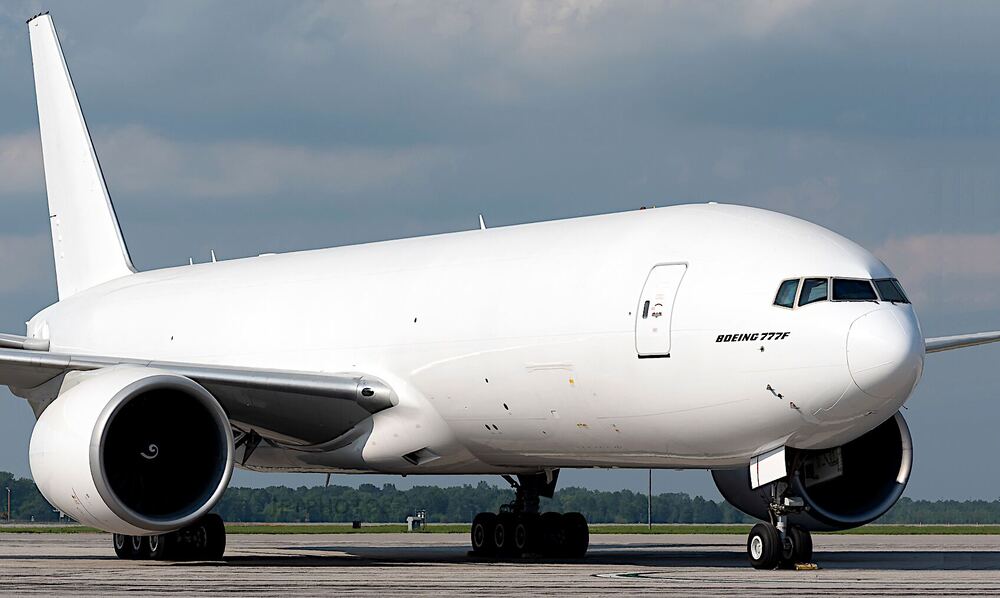
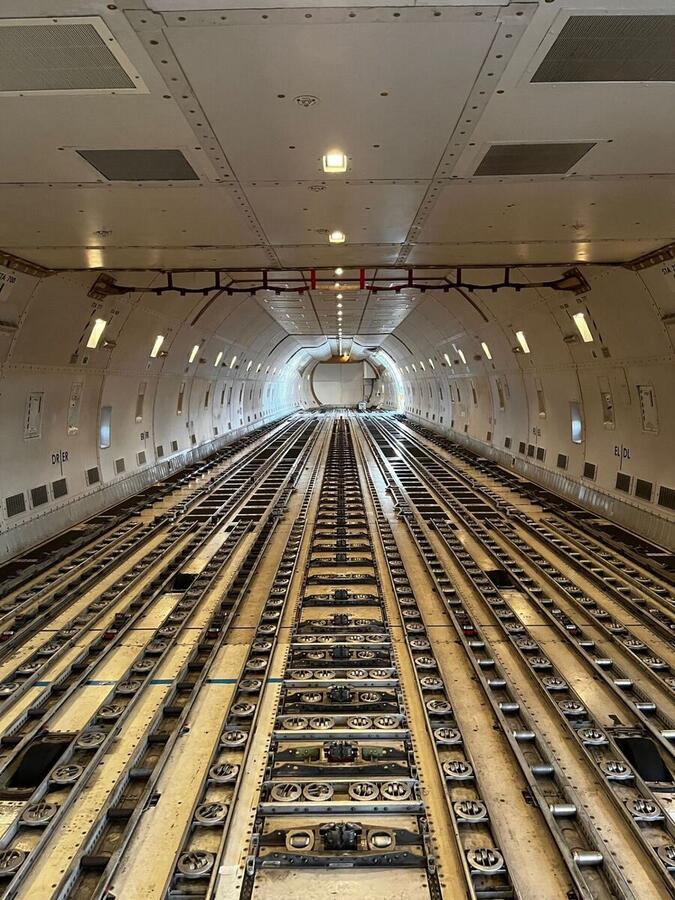
**Boeing 777F**, roughly 100 tonnes, twin-engine and the most fuel-efficient way to move this weight over a long sector. Side-door loading only, so piece height and length are constrained.
**Boeing 747-400F**, payload in the low 110-tonne class with a very large main deck, plus nose-loading on nose-door variants.
**Boeing 747-8F**, the highest-payload commercial freighter in widespread service, in the mid-130-tonne class, with the greatest main-deck volume of the Boeing family.
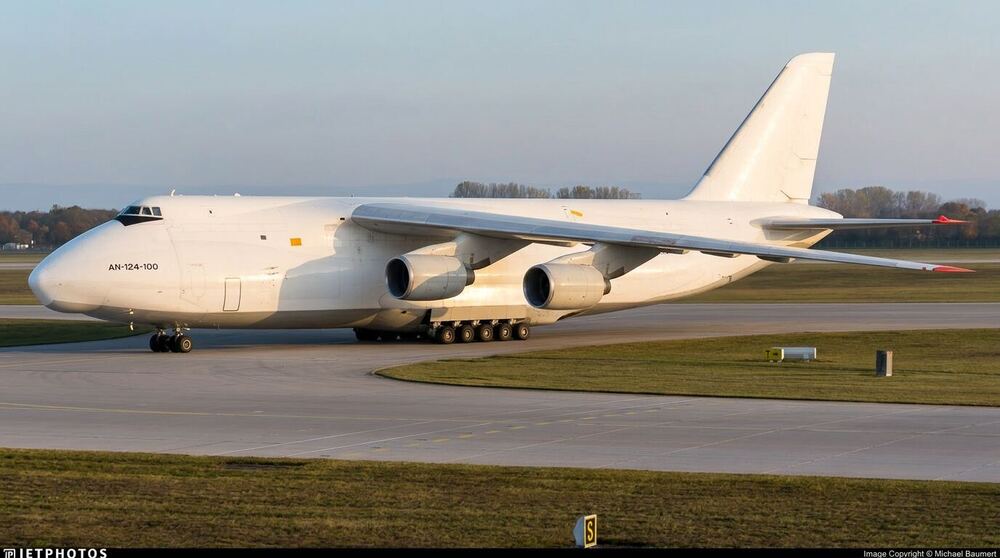
**Antonov An-124**, approximately 120 tonnes with front and rear ramp loading, an internal crane system and a cabin cross-section that accepts pieces no commercial freighter can take. It is the type of choice for outsize and project cargo, and it is in tight supply.
**MD-11F**, around 90 tonnes; close to the mark and worth checking where availability favours it.
| Aircraft | Approx. max payload | Loading access | Strength | Watch for |
|---|---|---|---|---|
| Boeing 777F | ~100 t | Side cargo door | Lowest fuel burn per tonne over long sectors | Side-door height and length limits on tall pieces |
| Boeing 747-400F | ~110–115 t | Nose + side door | Long single pieces on the main-deck centreline | Four-engine fuel burn; older airframes vary |
| Boeing 747-8F | ~135 t | Nose + side door | Highest payload and volume in commercial service | Scarcer and priced accordingly |
| Antonov An-124 | ~120 t | Front + rear ramp, internal cranes | Outsize cross-section nothing else accepts | Very limited fleet; longest lead times |
| MD-11F | ~90 t | Side cargo door | Sometimes the best-positioned airframe | Slightly under 100 t; check against actual weight |
Approximate structural maximums; usable payload falls with sector length. Availability, not capability, most often decides the recommendation at this weight.
Availability at this weight class is genuinely limited. Where a project has a fixed installation window, the aircraft should be secured as early as the scope allows rather than at the point the cargo becomes ready.
Range eats payload
No aircraft carries its maximum payload to its maximum range. At 100 tonnes, long sectors frequently need a technical stop, and each stop adds block hours, landing and handling fees, and crew duty considerations. Routing at this weight is designed around fuel stops from the beginning, not bolted on afterwards.
The airport is often the real constraint
One hundred tonnes of payload arrives on an aircraft weighing several hundred tonnes at brake release. That requires runway length, pavement strength (typically expressed as a PCN rating), apron space for a very large aircraft, and loading equipment capable of the deck height and piece weight. Regional and remote airfields frequently fail on pavement strength or handling equipment rather than runway length, and we survey both ends before committing to a type.
Loading dictates the type as much as weight
If the 100 tonnes is palletised, any main-deck freighter on the list works. If it is a small number of very large, very heavy pieces, transformers, mining components, pressure vessels, rail or energy equipment, the deciding factors become door aperture, floor strength per square metre, ramp access and internal cranes. That is the case in which the An-124 stops being an expensive option and becomes the only one. See how to move oversized cargo by air and our project cargo capability.
What to send
Total weight, a piece list with dimensions and individual weights, centre of gravity and lifting points for heavy single pieces, both airports, and the delivery window. We will confirm the aircraft, the loading method, the airport surveys and the realistic lead time.